

David L. Freedman
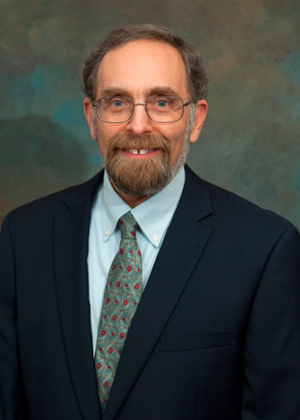 Professor
169 Rich Lab / 436 Brackett Hall
864.656.5566
E-mail: dfreedm@clemson.edu
Ph.D. Environmental Engineering, Cornell University, 1990
M.S. Environmental Engineering, University of Cincinnati, 1985
B.S. Science & Environmental Change, University of Wisconsin - Green Bay, 1978
Classes | Publications | Honors | CV
Faculty Overview
Freedman’s major teaching and research interests include hazardous waste management, water and wastewater treatment, and biodegradation/bioremediation of recalcitrant organic compounds. Freedman's research focuses on applying environmental microbiology to develop enhanced methods for biodegrading hazardous organic contaminants. Of particular interest is elucidating biotransformation pathways and applying this knowledge to the design of biological treatment processes.
Current studies include the development of bioaugmentation cultures for chlorinated ethenes that grow at low pH levels, evaluation of bioremediation strategies to treat high concentrations of halogenated methanes, use of biostimulation to enhance biogeochemical degradation of chlorinated ethenes in fractured sandstone, and investigations into the anaerobic biodegradability of 1,4-dioxane.
Class Information
EES 2010 Introduction to Environmental Engineering I
EES 8040 Biochemical Operations in Wastewater Treatment Systems
EES 8050 Laboratory in Water and Wastewater Treatment Operations
EES 8060 Wastewater Treatment Plant Design
Selected Publications
Wilson, J. T., Wilson, B., Ferrey, M., Freedman, D. L., Rivera-Cruz, A., Groshans, O. D., Adamson, D., Newell, C. Using the Transition Assessment Teaching Assistant to Evaluate a Transition from Pump-and-Treat to MNA, Groundwater Monit. R., https://ngwa.onlinelibrary.wiley.com/doi/10.1111/gwmr.70046 (2026).
Freedman, D. L., Cotter, N., Divine, C. Justica-Leon, S. Effect of moderate heat on TCE reductive dechlorination rates in groundwater, https://doi.org/10.1111/gwmr.70032 (2026).
Carbajales-Dale, M., Freedman, D. L., Drapcho, C., Thompson, M. Civil and environmental engineering perspectives on water and sanitation infrastructure damage in Gaza, Environmental Engineering Science, doi 10.1177/15579018251410717 (2026).
Freedman, D. L., Rivera-Cruz, A., Groshans, O. D., Wilson, J. T. Quantification of degradation rate constants in aquifer materials using carbon-14 chlorinated ethenes, Groundwater Monit. R., https://doi.org/10.1111/gwmr.70021 (2025).
Wilson, J. T., Wilson, B., Ferrey, M., Freedman, D. L., Rivera-Cruz, A., Groshans, O. D., Adamson, D., Newell, C. Using a 14C-assay to assess natural abiotic degradation of chlorinated ethenes in aquifer sediments, Groundwater Monit. R., 45: 113-123 https://doi.org/10.1111/gwmr.70019 (2025).
Wang, H., Yu, R., Iery, R., Murdoch, L., Falta, R., Freedman, D. L. Use of carbon-14 trichloroethene to determine degradation rate constants in rock core microcosms, Journal of Contaminant Hydrology, 276: https://www.sciencedirect.com/science/article/pii/ S0169772225002578?via%3Dihub (2025).
Wang, H., Yu, R., Iery, R., Freedman, D. L. Use of carbon-14 labeled trichloroethene to assess degradation potential in rock core microcosms, Science of the Total Environment, 957: 177540 https://doi.org/10.1016/j.scitotenv.2024.177540 (2024).
Wang, H., Yu, R., Adamson, D. T., Iery, R., Freedman, D. L. Evaluation of passive vapor diffusion samplers to quantify acetylene, ethene and ethane in groundwater, Groundwater Monit. R., 44 (3): 94-105 http://doi.org/10.1111/gwmr.12629 (2024).
Barreto, P., Lemes, M., Jimenez, J., Mack, E. E., Henderson, J., Freedman, D. L. Evaluation of Strategies to Remediate Mixed Wastes at an Industrial Site in Brazil, Groundwater Monit. R., 43 (3): 93-107 (2023).
Ramos García, A. A. and Freedman, D. L. Identification of formate as a principal soluble product from propanotrophic cometabolism of 1,4-dioxane, Environ. Eng. Sci., https://doi.org/10.1089/ees.2023.0060 (2023).
Divine, C., Justicia-Leone, S., Martin Tilton, J., Liles, D., Carter, E., Zardouzian, E., Clark, K., Taggart, D.; Freedman, D. L., Laraia, S., Perrell, F., Gerber, K. Min-Trap® samplers to passively monitor in-situ iron sulfide mineral formation for chlorinated solvent treatment, Groundwater Monit. R., 43 (3): 57-69 (2023).
Palau, J., Trueba-Santiso, A., Yu, R., Mortan, S. H., Shouakar-Stash, O., Freedman, D. L.,, Wasmund, K., Hunkeler, D., Marco-Urrea, E., Rosell, M. Dual C-Br isotope fractionation indicates distinct dihaloelimination mechanisms of 1,2-dibromoethane in Dehalococcoides- and Dehalogenimonas-containing cultures. Environ. Sci. Technol., 57, 1949-1958 https://doi.org/10.1021/acs.est.2c07137 (2023).
McMahan, C. S., Lewis, D., Deaver, J. S., Dean, D., Rennert, L., Kalbaugh, C., Shi, L., Kriebel, D., Graves, D., Popat, S., Karanfil, T., Freedman, D. L. Predicting COVID-19 infected individuals in a defined population from wastewater RNA mass rates. ACS ES&T Water, https://pubs.acs.org/doi/full/10.1021/acsestwater.2c00105 (2022).
Adamson, D. T., Wilson, J. T., Newell, C. J., Strasert, B. A., de Blanc, P. C., Freedman, D. L., Lebrón, C., Danko, A. S. State of the practice worldwide: Development of a quantitative framework for evaluating natural attenuation of 1,1,1-TCA, 1,1-DCA, 1,1-DCE, and 1,4-dioxane in groundwater. Groundwater Monit. R., 42(4), 78-84. https://doi.org/10.1111/gwmr.12509 (2022).
Ramos García, A. A., Walecka-Hutchison, C., Freedman, D. L. Effect of biostimulation and bioaugmentation on biodegradation of high concentrations of 1,4-dioxane. Biodegradation (2022). doi: https://doi.org/10.1007/s10532-022-09971-4.
Wang, H., Yu, R., Webb, J., Dollar, P., Freedman, D. L. Anaerobic biodegradation of chloroform and dichloromethane with a Dehalobacter enrichment culture. Appl. Environ. Microbiol., 88 (4), e01970-21 (2022). doi:10.1128/aem.01970-21
Ramos García, A. A., Adamson, D. T., Wilson, J. T., Lebrón, C, Danko, A. S., Freedman, D. L. Evaluation of natural attenuation of 1,4-dioxane in groundwater using a 14C assay. J. Haz. Mat., 424, Part C, 127540 (2022).
Adamson, D.T., Wilson, J.T., Freedman, D.L., Ramos García, A.A., Lebrón, C., Danko, A.S. Establishing the prevalence and relative rates of 1,4-dioxane biodegradation in groundwater to improve remedy evaluations. J. Haz. Mat., 424, Part D, 127736 (2022).
McMahan, C. S., Self, S., Rennert, L., Kalbaugh, C., Kriebel, D., Graves, D., Colby, C., Deaver, J. S., Popat, S., Karanfil, T., Freedman, D. L. 2021. COVID-19 wastewater epidemiology: a model to estimate infected populations. The Lancet – Planetary Health, 5 (12), e874-e881 (2021).
Yu, R., Murdoch, L.C., Falta, R.W., Andrachek, R.G., Pierce, A.A., Parker, B.L., Cherry, J.A., Freedman, D.L., 2020. Chlorinated Ethene Degradation Rate Coefficients Simulated with Intact Sandstone Core Microcosms. Environ. Sci. Technol. 54, 15829–15839. doi:10.1021/ACS.EST.0C05083
Zhang, X., Kim, D., Freedman, D.L., Karanfil, T., 2020. Source characterization and removal of N-nitrosamine precursors during activated sludge treatment. Environ. Sci. Water Res. Technol. 6, 2432–2443. doi:10.1039/D0EW00425A
Zhang, X., Kim, D., Freedman, D.L., Karanfil, T., 2020. Impact of biological wastewater treatment on the reactivity of N-Nitrosodimethylamine precursors. Water Res. 186, 116315. doi:10.1016/J.WATRES.2020.116315
Barajas-Rodriguez, F.J., Murdoch, L.C., Falta, R.W., Freedman, D.L., 2019. Simulation of in situ biodegradation of 1,4-dioxane under metabolic and cometabolic conditions. J. Contam. Hydrol. 223, 103464. doi:10.1016/J.JCONHYD.2019.02.006
Wilson, J.T., Mills, J.C., Wilson, B.H., Ferrey, M.L., Freedman, D.L., Taggart, D., 2019. Using qPCR Assays to Predict Rates of Cometabolism of TCE in Aerobic Groundwater. Groundw. Monit. Remediat. 39, 53–63. doi:10.1111/gwmr.12321
Awards & Honors
Selected as a Board Certified Environmental Engineering Member (BCEEM) by the American Academy of Environmental Engineers, 2009.
Outstanding Publication Award for 2008, awarded by the Association of Environmental Engineering and Science Professors (for the 1989 Applied and Environmental Microbiology paper entitled "Biological Reductive Dechlorination of Tetrachloroethylene and Trichloroethylene to Ethylene under Methanogenic Conditions"); received with Dr. James M. Gossett (School of Civil and Environmental Engineering, Cornell University).
Second Place, Montgomery-Watson Harza Master's Thesis Award, co-sponsored by the Association of Environmental Engineering Professors (October 1, 2002); received with Meghna Swamy.
Best Student Paper Award, Illinois Water Environment Association Fifteenth Annual Meeting (March 29-31, 1994); received with Steven D. Herz (M.S. thesis advisee).
First Place, Montgomery-Watson Master's Thesis Award, co-sponsored by the Association of Environmental Engineering Professors (October 4, 1993); received with Jennifer Becker.
Post-Doctoral Fellowship Award, American College of Toxicology, funded by the Air Force Office of Scientific Research (1990).
General Electric Teaching Incentive Grant, Cornell University (1988).