
Click for high-resolution images |
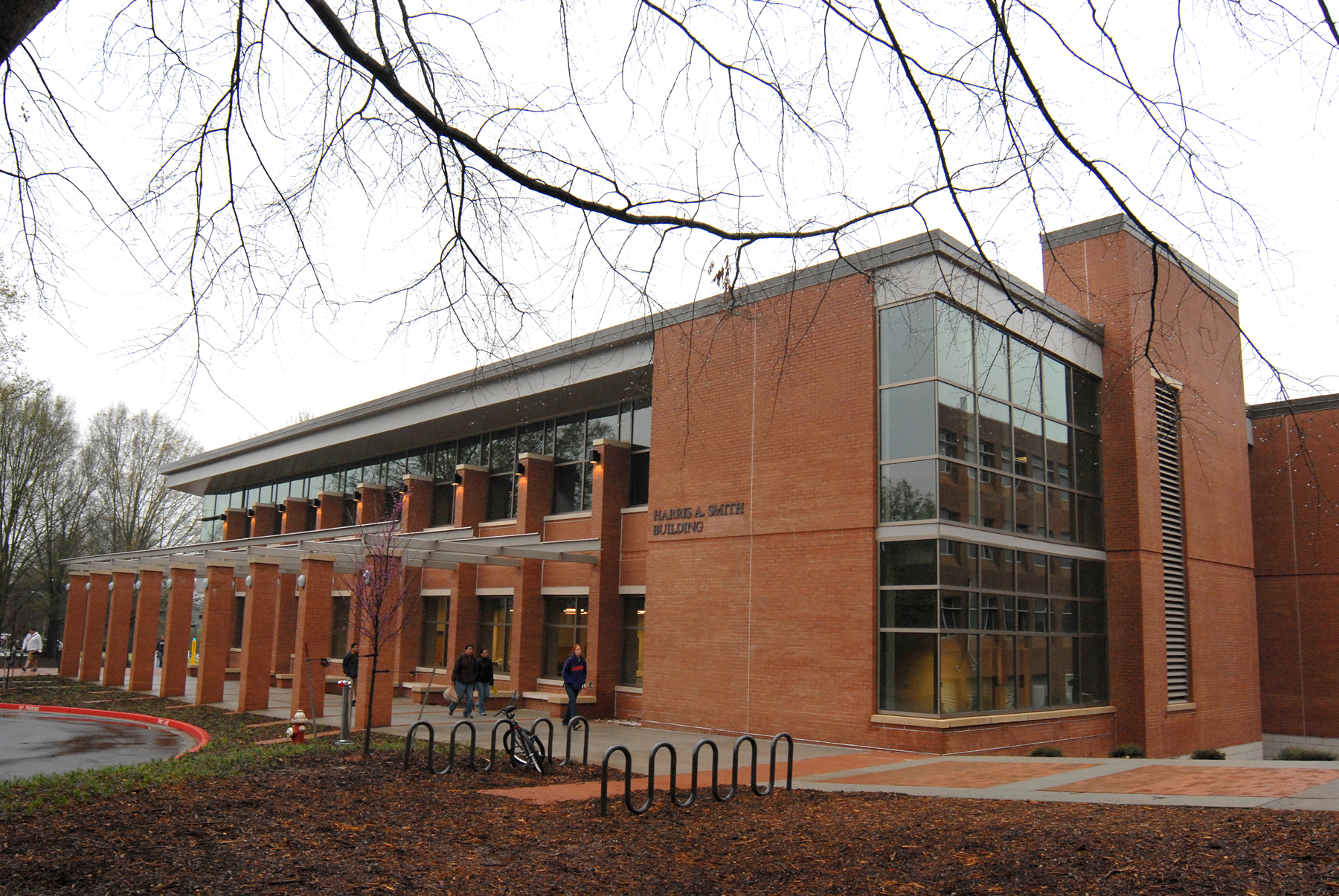 |
The Harris A. Smith Building |
|
|
Harris DeLoach of Sonoco, Harris Smith and President James F. Barker. |
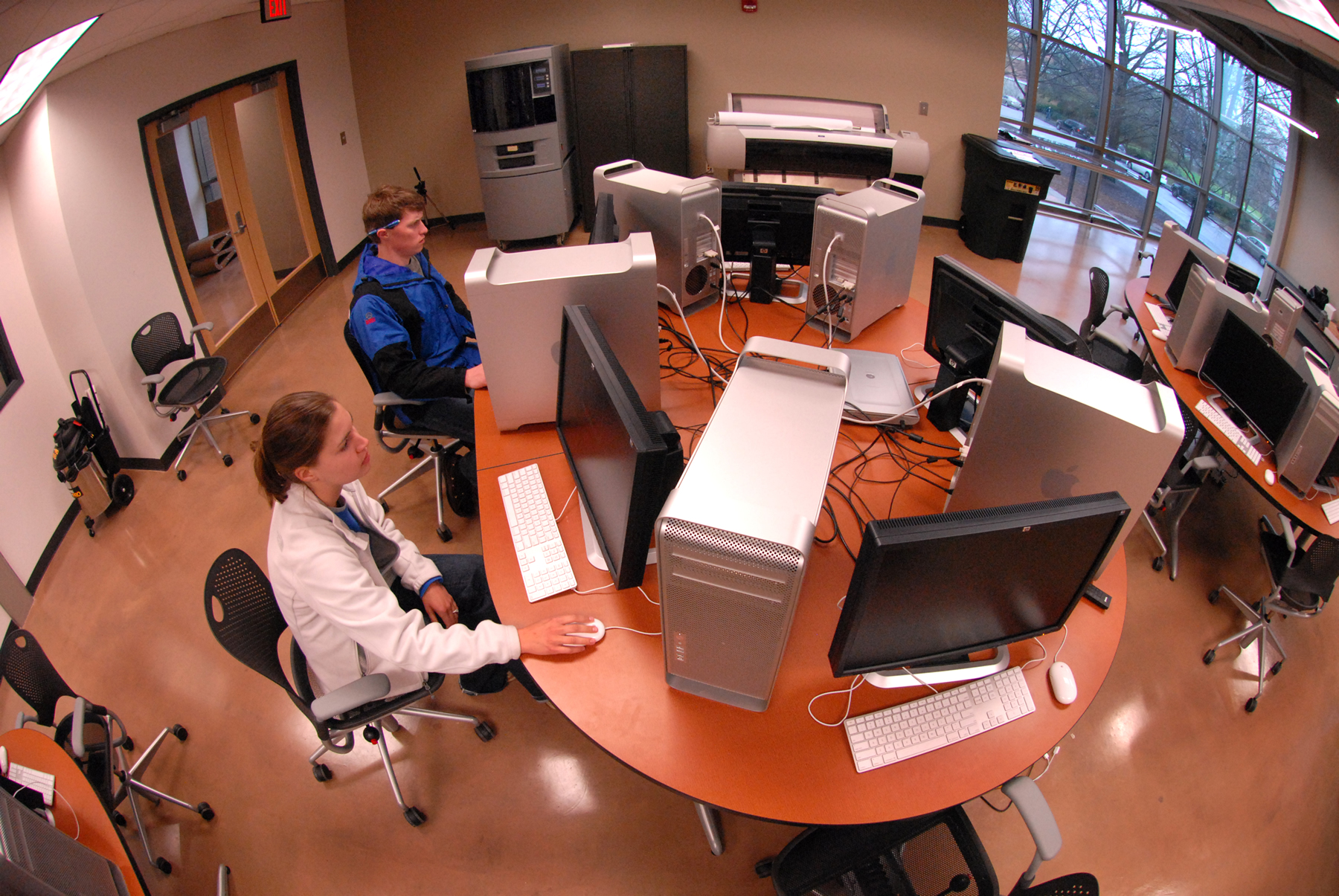 |
Joanna Church, a graduate student, and John Lasitter, a junior, work in one of the building's labs. |
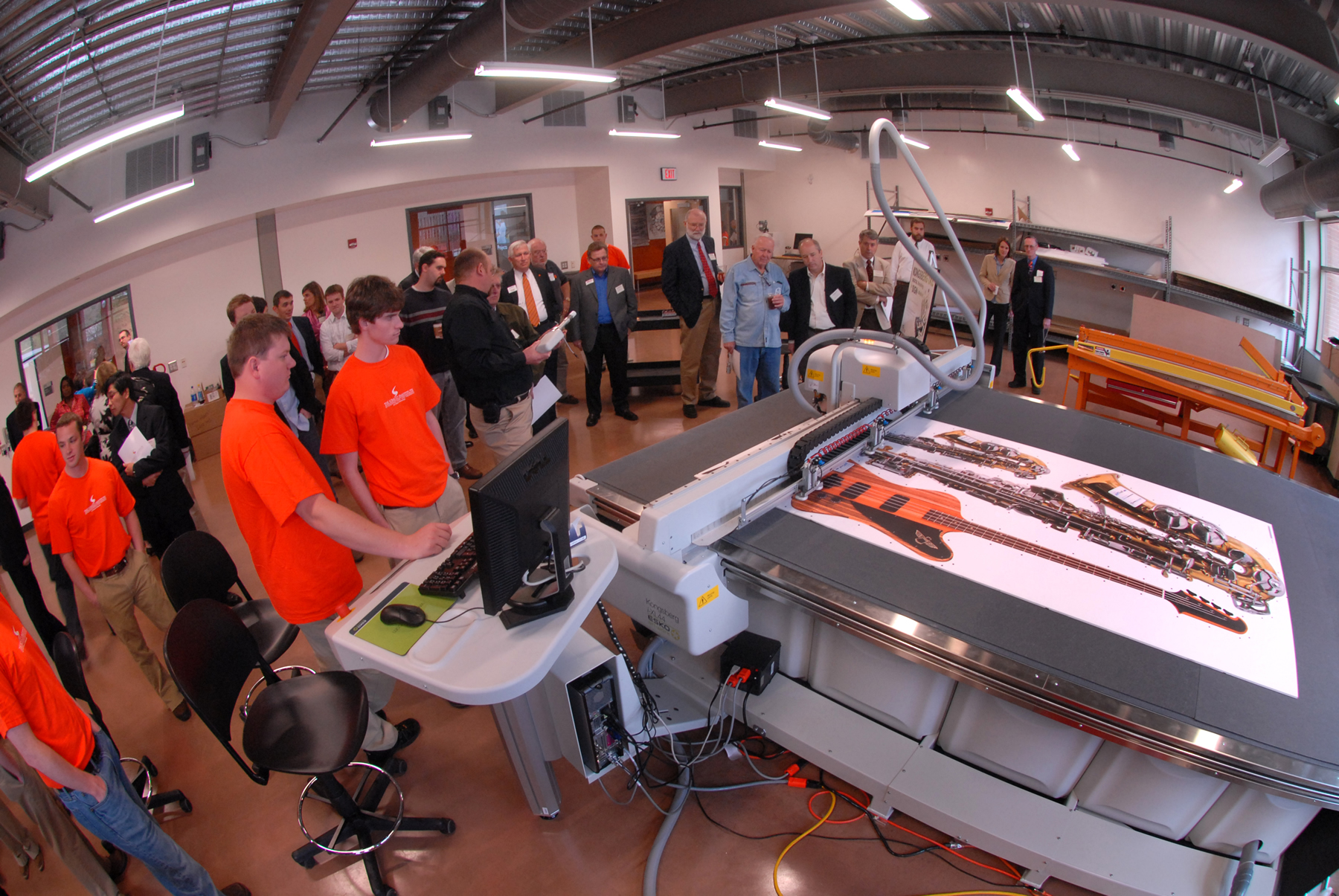 |
Students operate equipment during the open house following the grand opening. |
 |
Chip Tonkin, director of the Sonoco institute. |
 |
Harris A. Smith, for whom the new building is named. |
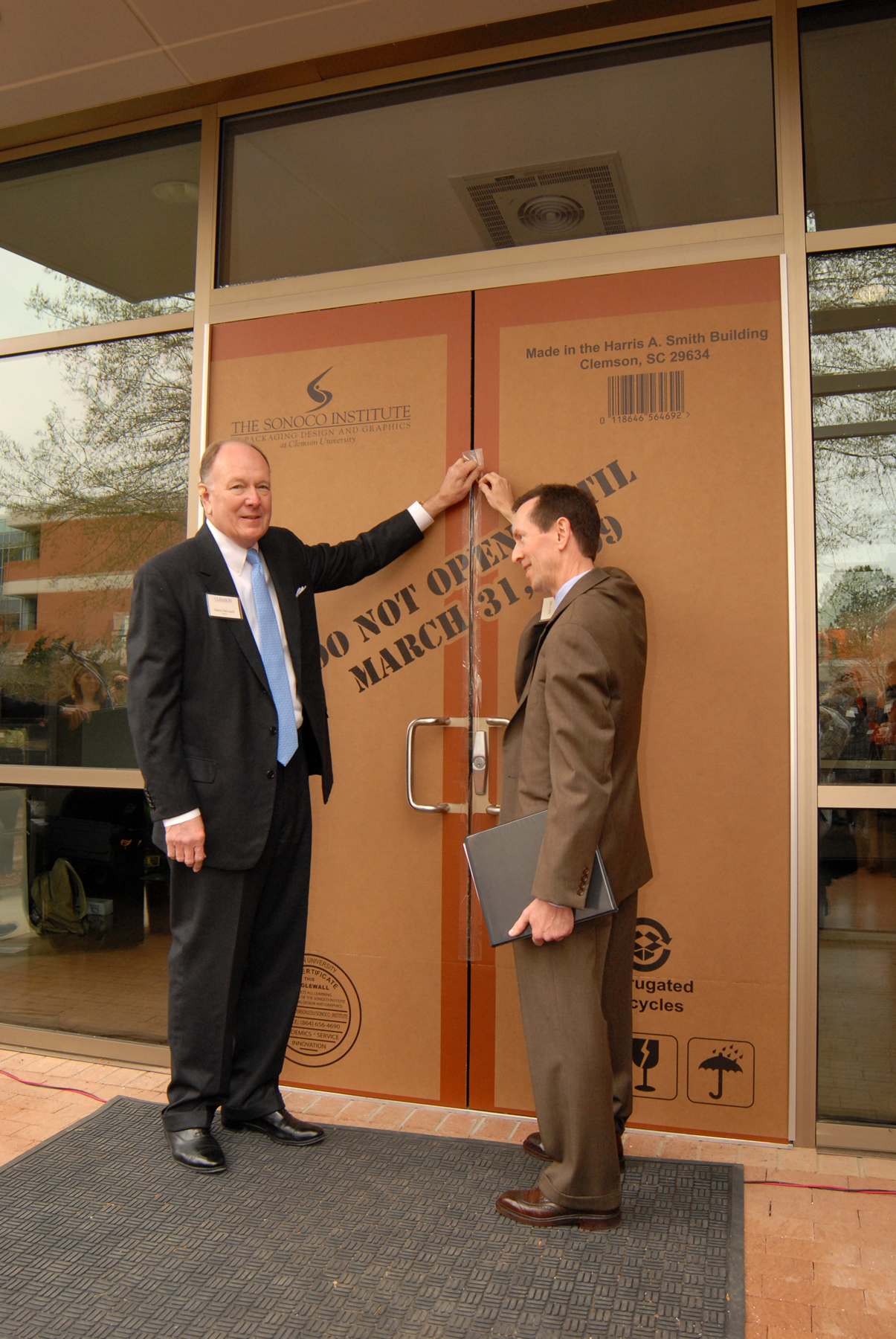 |
Harris DeLoach of Sonoco, left, and Harris A. Smith prepare to "open" the door to the new packaging design and graphics building. |


Vision & Focus
The Sonoco Institute of Packaging Design and Graphics was initially created at Clemson University to exploit the synergies that exist between the graphic communications and packaging science departments. But packaging design incorporates much more than the structural and aesthetic elements that typically come to mind: done properly, this process should incorporate a wide range of disciplines, including material properties, structural attributes, environmental sciences, manufacturing, marketing and psychology. As this became apparent, our mission broadened into something that will have a much greater impact. The goal is to leverage our core campus strengths along with the knowledge and participation of our industry partners to make significant contributions at three levels: as an academic stimulator, an industry resource for training and research and a driving force to bring new technologies and innovations to the packaging and graphics markets.
The current model for training and research is being expanded upon to provide regular industry contact and in turn insight into the needs of the packaging markets for future innovations. This understanding of the market is particularly valuable when making decisions regarding the focus of directed research and development at Clemson University. Thus the institute is becoming a breeding ground of sorts for game-changing technologies — this could be unusual research, crossover technologies or other innovations that can be coaxed out of collaborations within the university, with other universities or industry partnerships. The final goal and the real asset of the institute will be to take these unique developments and convert them to practical reality. The focus of these activities will be in areas that are both of significant interest to the industry and are in fields that the university as a whole has a lot to offer. Based on this criteria, we have identified four initial areas to devote resources to: printed electronics, sustainability, the consumer experience and the total package workflow.
Sustainability
There has always been buzz and interest around sustainability, but what is different today is that it has teeth. It appears to be driving consumer behavior and buying decisions. From the beginning Clemson University has had strong agriculture underpinnings with a tremendous amount of experience and resources devoted to the natural life cycle, but now combined with our research-oriented films and fiber development and deep understanding of packaging needs, we can approach sustainable package design packaging in a unique, holistic way.
Printed Electronics
Using traditional printing methodologies to economically create functionality on a package is something the market is clearly interested in and could include things like displays, RFID, environmental and/or biological sensors. Advancing the applications and usage of printed electronics in packaging is a natural fit for Clemson because of our practical applied, approach to the printing process, advances in optical materials research, high-quality engineering and science programs and thorough knowledge of the packaging requirements and test procedures.
Consumer Experience
The functionality and manufacturing processes that go into producing a package are obviously very important, but what happens if the package does not convert into consumer hands? If we do not understand what impact a design has on consumer attention, buying patterns and their ability to use and dispose, then it is truly impossible to gauge the overall effectiveness of a design. By tapping into other programs at Clemson, such as psychology’s usability and human-factors programs, marketing’s brand-management focus, computer science’s eye-tracking technology and visual arts design concentrations; we are able to begin fully truly evaluating packaging effectiveness.
Package Workflow
In most places the overall package design occurs as a disjointed set of steps with very little (effective) communication to tie them together. Technology now is at the point where most aspects of the design process can be integrated fluidly into a single workflow allowing functional, structural, protective and graphic elements to be developed and evaluated simultaneously. We are utilizing our knowledge of the entire packaging design cycle together with specialized Clemson computer resources and strategic industry partners to build and teach an integrated workflow combining virtual environments and simulations other modern prototyping approaches.