

Wells - Objectives
Areas
Slug testing
Upon completion, students will be able to:
-
- Plan and conduct a slug test to estimate aquifer conductivity.
- Analyze a slug test using both graphical methods and software (Aqtesolv).
- Conduct slug tests in an open hole, a screened well, and with packers to test a single fracture.
- Understand the advantages and disadvantages of the test.
- Describe the uncertainty in your measurements
Pumping test in fractured bedrock
Upon completion, students will be able to:
- Plan, conduct and analyze a pumping test in a confined aquifer.
- Characterize well efficiency and specific capacity.
- Use software to analyze pumping test results.
- Explore potential sources of uncertainty in your results.
- Assess your data for evidence of interactions with hydrologic boundaries.
Pumping test in a confined aquifer
Upon completion, students will be able to:
- Plan, conduct and analyze a pumping test in a confined aquifer.
- Characterize well efficiency and specific capacity.
- Use software to analyze pumping test results.
- Explore potential sources of uncertainty in your results.
- Assess your data for evidence of interactions with hydrologic boundaries.
Well-drilling and installation
Upon completion, students will be able to:
- Learn how to prepare documents for a well permit.
- Oversee drilling, completing, and developing a new well in the field.
- Create a log of the well boring during drilling.
- Describe the well construction and completion.
-
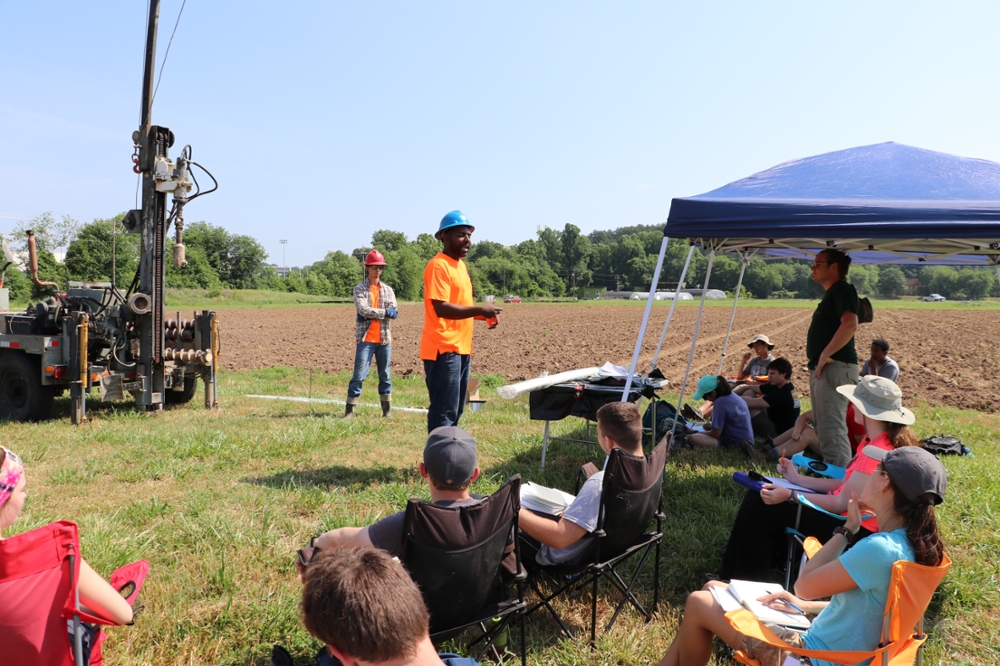
Ken Pimienta explaining the drilling process
-
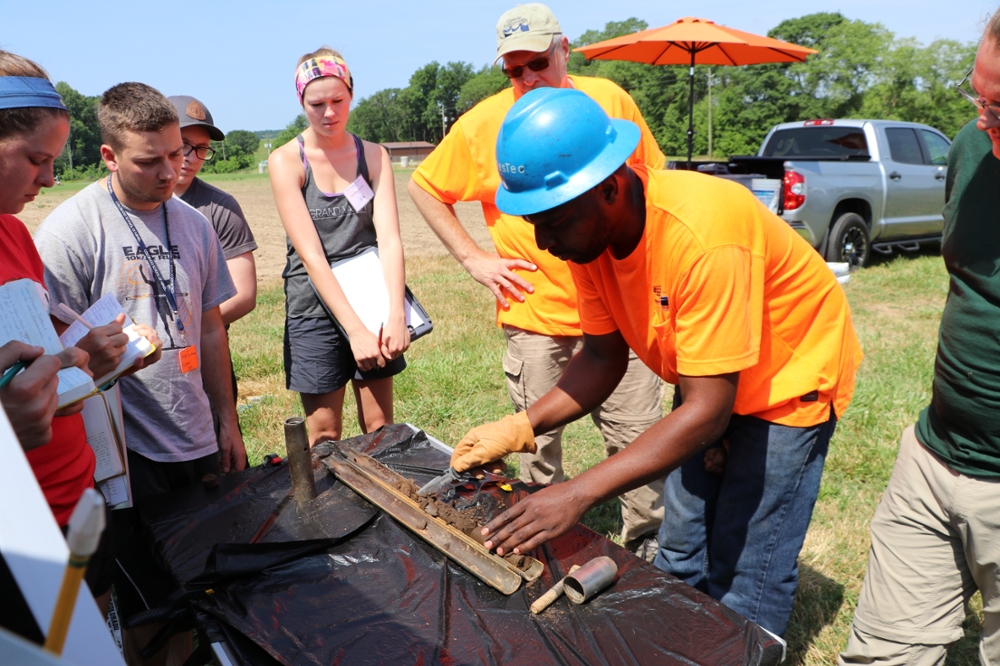
Ken showing how a split spoon sampler works
-
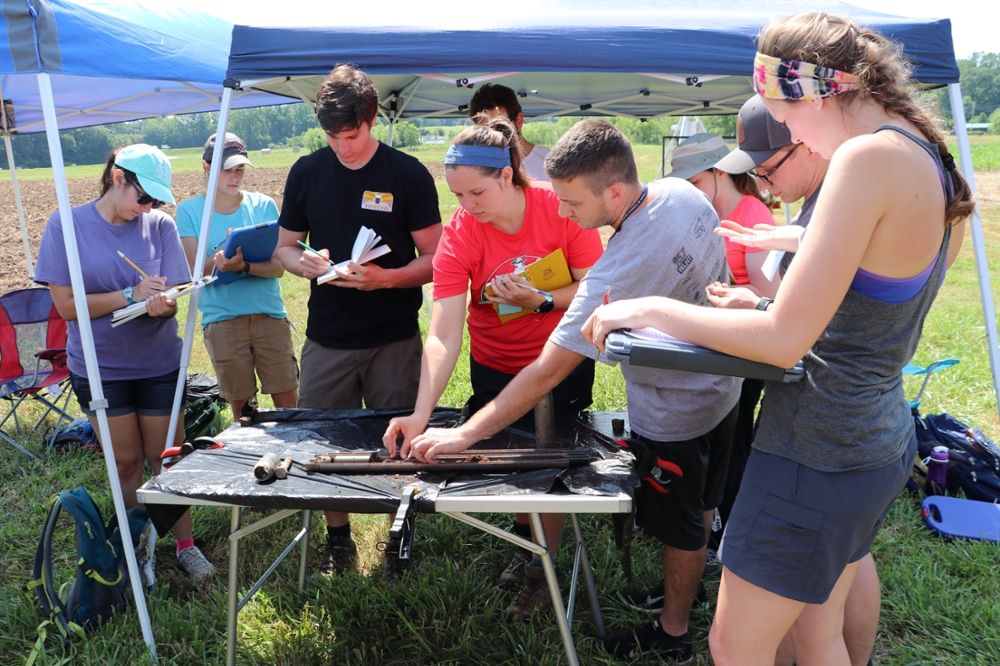
Students describing split spoon sample
-
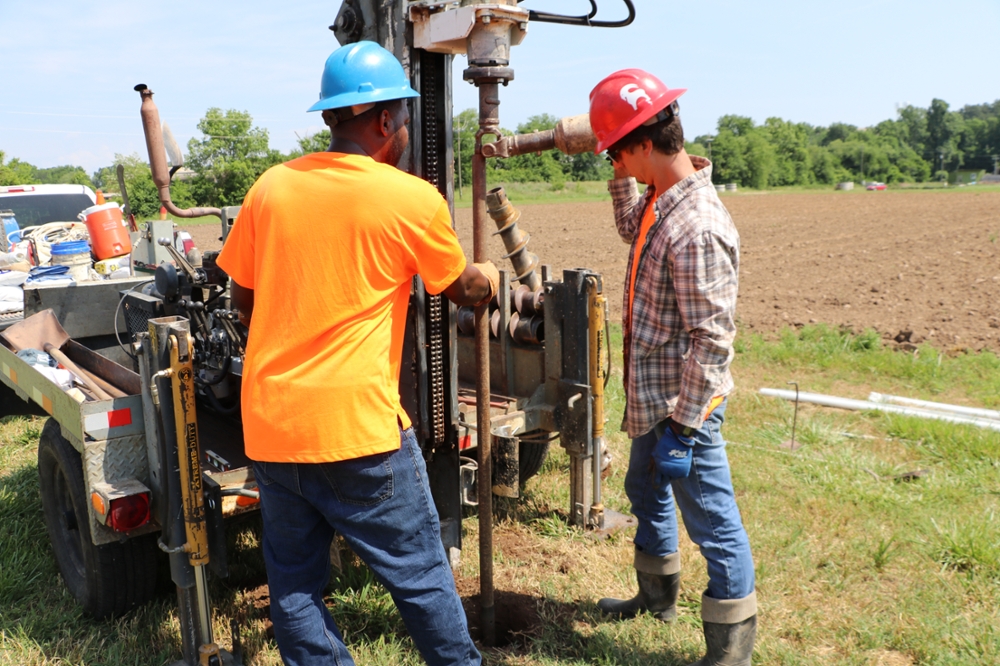
Ken and Jeff installing well casing
-
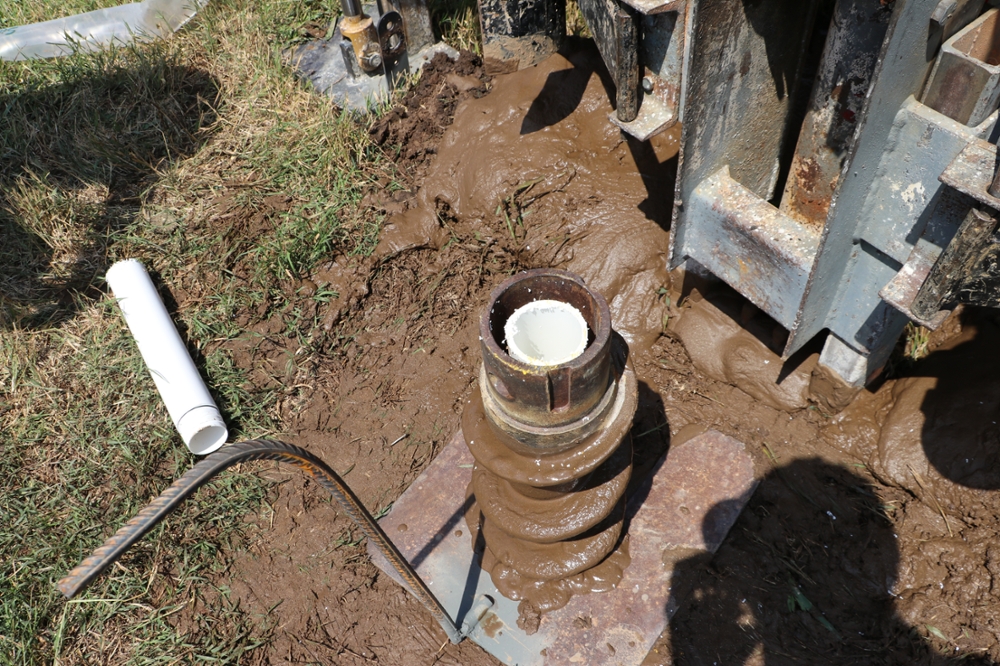
Completed well with augers still in hole
-
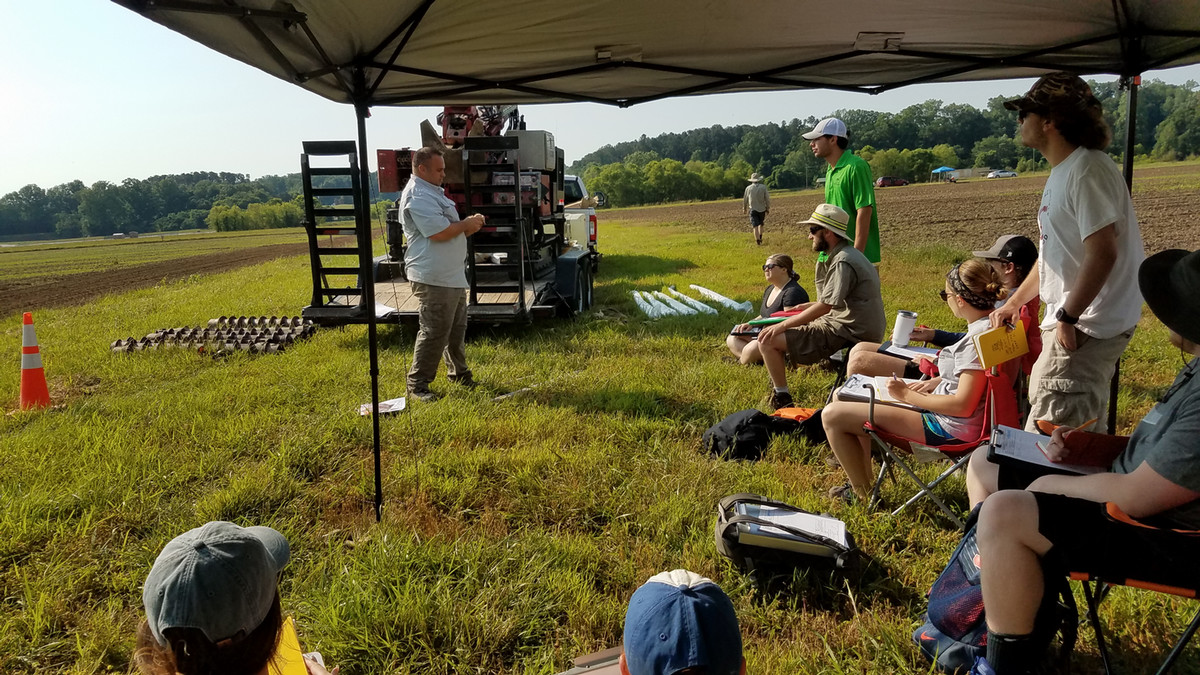
Trevor Slack explaining the process of a drilling a new well, May 2019