
Robert J. Rutland Institute for Ethics
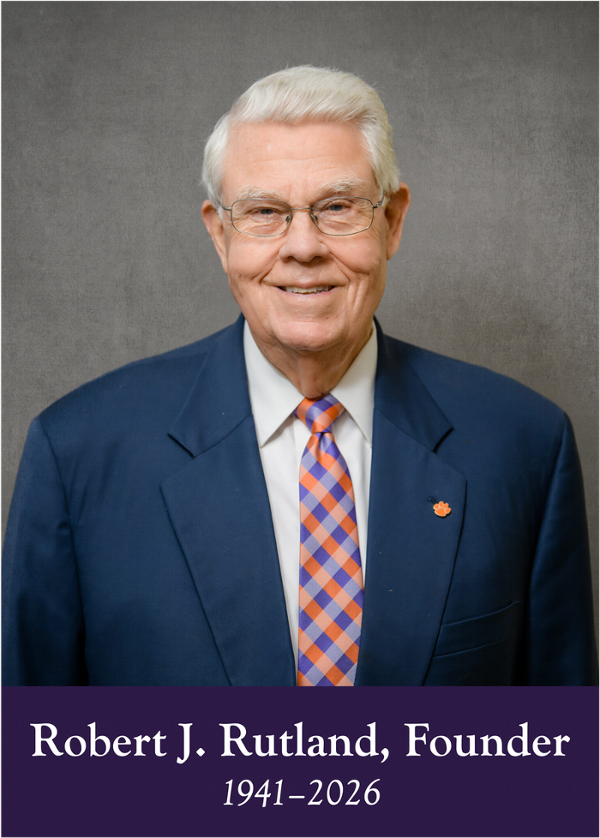
A Tribute to Our Founder: In Memory of Robert J. Rutland
The CEO Who Hugged Teamsters
Authored by John C. Knapp, Ph.D., of Knapp Leadership Insights
I was taken aback the first time I heard the word “love” in a meeting of executives at a major public company. The Chief Financial Officer and an expert from one of the big accounting firms had spent the morning presenting reams of data in a detached and clinical manner to explain the need for closing some of Allied Holdings’ operating locations and reducing staffing. North America’s largest transporter of automobiles at that time — moving about one million a month from factories to dealers — the company was grappling with tough choices in challenging economic conditions.
After lunch, Chairman and CEO Robert J. Rutland pulled his chair closer to the conference table, leaned forward, and said quietly but firmly, “I know we have no choice but to proceed with these layoffs. But as we go about it, let’s remember that we love these people.”
With those simple words, he moved the discussion from cost cutting to caring for employees losing their jobs. The tone of the meeting was entirely different from that moment on, as the conversation turned from calculations of “head count” to creative ways to ease difficult transitions for real people with real families and financial needs.
I was an executive communication consultant at the time, and in my next meeting with Bob I asked about his management philosophy. “I’m a Christian,” he said. “That’s no secret around here. I remind our managers that Love, Care and Hope should define the way we do business — even when that’s easier said than done.”
In August, Bob passed away at the age of 85. As news spread among former colleagues, employees, and friends, many remembered not only his success in business but the uncommon kindness with which he led.
A Different Kind of CEO
Bob was one of the first business leaders to join the board of The Southern Institute for Business & Professional Ethics, a non-profit executive education center I founded in the early 1990s, and soon became a regular participant in our executive forums, roundtables, seminars, and other programs to develop ethical leadership.
Memorably, he addressed an Institute gathering of Atlanta CEOs and other senior leaders on April 14, 2000, in a speech titled, “Have You Hugged a Teamster Today?” He explained that the phrase was often repeated throughout the company “to emphasize that we have a good relationship with our Teamster workforce, contrary to the popular perception” of labor relations.
“To many of you, ‘Hug a Teamster’ may sound like a funny expression,” he told the audience, “but to us it is a serious commitment. It may not always be a physical hug, but emotionally and socially we send a message that we respect you, that we honor you with integrity, and that you are very much a part of our company.”
He showed that caring for people was not at odds with business success but reinforced it. Describing many above-and-beyond ways his company cared for employees and their families, he said, “It ultimately improved our turnover in the workforce, which in the trucking industry can be close to 100 percent a year. Through these types of initiatives and applying our core values, we reduced turnover to just 5 percent. We also had a 30 percent increase in productivity and quality.”
He concluded with a challenge to his audience of corporate leaders. “Whatever your business may be, if you are looking for a success strategy, it must not be one that is so focused on efficiency and profitability that you forget about the integrity and respect that is due to your employees.”
His Lasting Legacy
That same year, inspired by the work of The Southern Institute, Bob asked how something similar could be created at Clemson University, his alma mater. Soon we were meeting with Dr. Jim Barker, the university’s president, to outline a plan that ultimately established the Rutland Institute for Ethics, one of the nation’s leading university centers for education in ethics across all areas of academic study.
“The purpose is to encourage discussion on campus, in businesses, and in the community about how ethical decision-making can be the basis of both personal and professional success,” Bob explained.
Twenty-five years later, the Rutland Institute continues to prepare students to practice ethical leadership — a fitting legacy for a man who believed success should never come at the expense of caring for people. I encourage you to learn more about this impactful work throughout this site.
Many executives are remembered for the companies they built or the wealth they created. Bob Rutland will be remembered for something even rarer: leading a successful corporation without sacrificing compassion. He never mistook people for payroll costs or mere head count. By respecting their dignity, even in the hardest moments, he left a lasting lesson for all.
Learn more about the life and legacy of Bob Rutland through our 25th Anniversary retrospective, below: