

Matthew Berens
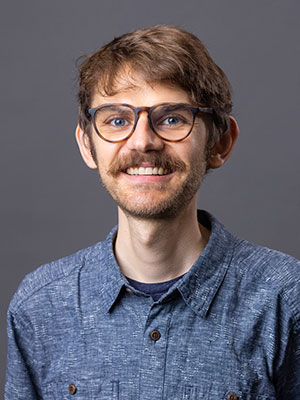 Research Assistant Professor
133 Rich Lab
864.656.3276
E-mail: berens@clemson.edu
Ph.D., Civil Engineering, University of Minnesota, 2020
M.S., Civil Engineering, University of Minnesota, 2018
B.S., Biochemistry/Molecular Biology, Bethel University, 2015
B.A., Chemistry, Bethel University, 2015
Professional Registration
Professional Engineer, North Carolina, 2025, No. 060477
Faculty Overview
Matthew Berens joined Clemson University in June 2026 as part of a partnership with Savannah River National Laboratory designed to address the legacy of radioiodine contamination at the Savannah River Site. Before Clemson, Berens was a postdoctoral research associate at Oak Ridge National Laboratory (2023-2025) and the Natural Resources Research Institute of the University of Minnesota (2020-2023). Dr. Berens has M.S. and Ph.D. degrees in Civil Engineering from the University of Minnesota (2018 M.S., 2020 Ph.D.) and undergraduate degrees in Chemistry (B.A.) and Biochemistry/Molecular Biology (B.S.) from Bethel University (2015). He has also served as an environmental engineer for the state of North Carolina Division of Soil and Water Conservation.
Berens’ research combines biogeochemistry, hydrology, and environmental engineering to examine how redox processes driven by water movement influence the reactivity of iron (oxyhydr)oxide minerals, organic matter cycling, and the fate and transport of contaminants in environmental systems. He has conducted research on diverse projects spanning bioremediation, biogeochemistry, contaminant screening, engineering design, microbe-mineral interactions, reactive transport modeling, and related topics. His work has also spanned a broad range of ecosystems, including coastal Louisiana, the Appalachian foothills, urban lakes and streams, mining-impacted wetlands, and permafrost zones in the Arctic tundra. Berens' overarching goal is to understand how environmental change is impacting biogeochemical processes in environmental systems and to translate that knowledge into advanced predictions of future Earth system function and the design of novel engineering technologies. He has published over 15 peer-reviewed journal articles, given over 30 technical presentations, and contributed to several book chapters, datasets, and technical reports.
Berens is committed to scientific service as a technical reviewer for the NSF National Ecological Observatory Network Aquatic Biogeochemical Technical Working Group (2023-present) and a proposal reviewer for two programs at the DOE Environmental Molecular Sciences Laboratory (2023-present). Previously, Berens served on the AEESP Student Services Committee (2021-2023) and as co-chair of the University of Minnesota Postdoctoral Association Steering Committee (2021-2022). Berens has mentored two M.S. students and ten undergraduate students, and has taught or lectured in ten university courses covering environmental engineering and earth science. In 2022, he received the Postdoc and Faculty Award for Teaching and Mentoring from the University of Minnesota.
Selected Publications - Google Scholar
Berens MJ, Schwaner GW., Herndon, EM. (2026). Carbon and nutrient mobilization across inundation gradients in an emerging freshwater delta. Environmental Processes: Science & Impacts. doi:10.1039/D6EM00129G
Herndon, E, Pilla, RM, Berens, MJ, Schwaner, GW. (2025). Temporal patterns in soil redox potential vary across a freshwater coastal delta. Hydrological Processes, 39(11), e70338. doi:10.1002/hyp. 70339
Guimond, J., Grande, E, Michael, H, Pratt, D, Herndon, E, Noyce, G, Ward, N, Forbich, I, Regier, P, Berens, MJ, Arora, B. (2025). The hidden influence of terrestrial groundwater on salt marsh function and resilience. Nature Water, 3, 157-166. doi:10.1038/s44221-024-00384-6
Rooney EC, VanderJeugdt, E, Avasarala, S, Miah, I, Berens, MJ, Kinsman-Costello, L, Weintraub, M, Herndon, E. (2024). Decoupling of redox processes from soil saturation in Arctic tundra. Communications Earth & Environment, 5, 746. doi:10.1038/s43247-024-01927-1
Berens MJ et al. (2024). Phosphorus interactions with iron in undisturbed and disturbed Arctic tundra ecosystems. Environmental Science & Technology, 58 (26), 11400-11410. doi:10.1021/acs.est.3c09072
Berens MJ, Deen TW, Chun CL. (2024). Bioelectrochemical reactor to manage anthropogenic sulfate pollution for freshwater ecosystems: Mathematical modeling and experimental validation. Chemosphere, 357, 142054. doi:10.1016/j.chemosphere.2024.142054
Tong Y, Berens MJ, Ulrich BA, Bolotin J, Strehlau JH, Hofstetter TB, Arnold WA. (2021). Exploring the utility of compound-specific isotope analysis for assessing ferrous iron-mediated reduction of RDX in the subsurface. Environmental Science & Technology, 55 (10), 6752-6763. doi:10.1021/acs.est.0c08420
Berens MJ, Capel PD, Arnold WA. (2021). Neonicotinoid insecticides in surface water, groundwater, and wastewater across land-use gradients and their potential effects. Environmental Toxicology & Chemistry, 40 (4), 1017-1033. doi:10.1002/etc.4959
Berens MJ, Bolotin J, Hofstetter TB, Arnold WA. (2021). Assessment of 2,4-dinitroanisole transformation using CSIA after in situ chemical reduction of iron oxides. Environmental Science & Technology, 54 (9), 5520-5531. doi:10.1021/acs.est.9b07616
Berens MJ, Ulrich BA, Strehlau JH, Hofstetter TB, Arnold WA. (2019). Mineral identity, natural organic matter, and repeated contaminant exposures do not affect the carbon and nitrogen isotope fractionation of 2,4-dinitroanisole during abiotic reduction. Environmental Science: Processes & Impacts, 21, 51-62. doi:10.1039/C8EM00381E
Strehlau JH, Berens MJ, Arnold WA. (2018). Mineralogy and buffer identity effects on RDX kinetics and intermediates during reaction with natural and synthetic magnetite. Chemosphere, 213, 602-609. doi:10.1016/j.chemosphere.2018.09.139