

Daisy Ning
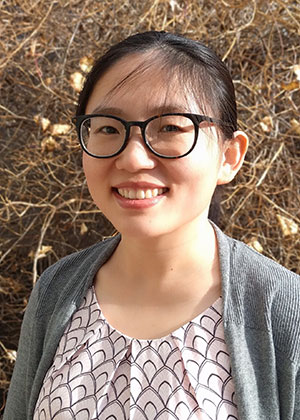 Assistant Professor
430 Brackett Hall
Clemson, SC 29634
864.656.1253
E-mail: yning2@clemson.edu
Ph.D., Colorado School of Mines, 2017, Petroleum Engineering & Geophysics
M.S., University of Wyoming, 2013, Environmental Engineering
B.S., China University of Petroleum, 2011, Petroleum Engineering
Classes | Publications | CV
Faculty Overview
Dr. Ning’s teaching and research focus on multiphysics processes in subsurface systems, particularly the coupled interactions among fluid flow, stress, temperature, and geochemical reactions in porous and fractured media. Her work develops predictive frameworks that integrate thermal-hydrological-mechanical-reactive (THM-R) modeling, distributed fiber-optic sensing, and physics-informed machine learning to characterize fracture evolution, multiphase transport, and fluid-rock interactions. Her research is broadly applied to geoenergy and subsurface engineering systems, including geothermal energy, subsurface hydrogen storage, and hydrocarbon production in unconventional reservoirs, with additional applications in carbon sequestration and critical mineral systems. These efforts aim to enable quantitative assessment of subsurface stability and leakage risks and to support the design and monitoring of safe, efficient, and sustainable energy systems.
Class Information
GE3850 - Geohydrology, Spring 2027
Selected Publications
Ning, Y., Bailey, J. R., Bourdier, J., Prasad, P., and Momoh, I., “Optimizing Production Well Geometry in the Utah FORGE Geothermal Project Using Machine Learning and Fluid Flow Modeling,” Renewable Energy, 237, p.121767 (2024)
Ning, Y., Tura, A., Herman, D., Bridgeman, J., and Clark, D., “Feasibility Study on Large-Scale Geologic Carbon Sequestration in Southern Colorado,” International Journal of Greenhouse Gas Control, 147, 104462 (2025).
Ning, Y., Tura, A., and Guiltinan, E., “Repurposing a Depleted Natural CO₂ Dome for Permanent CO₂ Sequestration,” SPE Journal, 30(06), pp.3881-3895 (2025).
Ning, Y., Jin, G., Tura, A., and Gale, M., “Exploring Variations in Orientation and Velocity of Hydraulic Fracture Propagation in Denver-Julesburg Basin,” SPE Journal, 30(02), pp.687-698 (2024).
Jin, G., Ning, Y., Gale, M., Simmons, J. and Tura, A., Impact of natural fractures on hydraulic fracture propagation in Denver-Julesburg Basin: Insights from a decade of research. The Leading Edge, 43(12), pp.806-814 (2024).
Ning, Y., Boak, J., Tura, A., and Prasad, M., “Assessment of CO₂ Sequestration Potential and Economics in Colorado, USA,” International Journal of Greenhouse Gas Control, 141, 104301 (2024).
Ning, Y. and Tura, A., “Economic and Operational Investigation of CO₂ Sequestration through Enhanced Oil Recovery in Unconventional Reservoirs in Colorado, USA,” Geoenergy Science and Engineering, 226, p.211820 (2023).
Ning, Y., Jin, G., Zhu, X. and Tura, A., Well interference and fracture geometry investigation using production and low-frequency distributed acoustic sensing data in an unconventional reservoir. SPE Reservoir Evaluation & Engineering, 25(03), pp.509-519 (2022).
Ning, Y., Kazemi, H., Tura, A., and Davis, T., “Carbon Neutral Oil Assessment Using a Dual-Porosity Compositional Model in Unconventional Reservoirs,” Geoenergy Science and Engineering, 221, 111227 (2023).
Ning, Y. and Jin, G., Challenges and best practices in interpreting crosswell strain signals to monitor multicrew zipper-fracturing operations. Interpretation, 11(2), pp.SB21-SB32 (2023).
Ning, Y., Kazemi, H., Tura, A., and Davis, T. L., “Tracer Analysis in Flow Channel Characterization and Modelling of Gas and CO₂ Injection EOR in Unconventional Reservoirs,” Journal of Petroleum Science and Engineering, 212, 110349 (2022).
Ning, Y., Schumann, H., and Jin, G., “Application of Data Mining to Small Datasets: Identification of Key Production Drivers in Unconventional Resources,” SPE Reservoir Evaluation & Engineering, 26(02), pp.411-421 (2022).
Ning, Y., Kazemi, H., and Tahmasebi, P., “A Comparative Machine Learning Study for Time Series Oil Production Forecasting: ARIMA, LSTM, and Prophet,” Computers & Geosciences, 164, 105126 (2022).