

Brian A. Powell
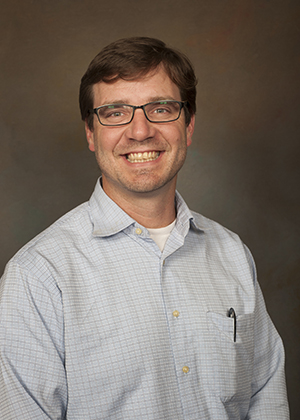 Professor
Fjeld Professor in Nuclear Environmental Engineering and Science
Rich Lab, 342 Computer Court
Anderson, SC 29625
864.656.1004
E-mail: bpowell@clemson.edu
Ph.D. Environmental Engineering and Science, Clemson University, 2004
M.S. Environmental Engineering and Science, Clemson University, 2001
B.S. Chemistry, University of Montevallo, 1999
Classes | Publications | Honors | CV
Faculty Overview
Dr. Brian A. Powell holds the Fjeld Professorship in Nuclear Environmental Engineering and Science and is jointly appointed in the Department of Environmental Engineering and Earth Sciences, School of Civil and Environmental Engineering and Earth Sciences as well as the Department of Chemistry at Clemson University. Dr. Powell is also a joint appointee at the Savannah River National Laboratory (SRNL) with the objective of building research collaborations between Clemson and SRNL. He previously held postdoctoral appointments at the Lawrence Livermore National Laboratory (2006-2008) and the Lawrence Berkeley National Laboratory (2005-2006). He has a B.S. degree in Chemistry from the University of Montevallo (1999), and M.S. and Ph.D. degrees in Environmental Engineering and Science from Clemson University (2001 M.S., 2004 Ph.D.). Dr. Powell returned to Clemson as an Assistant Professor in 2008 and was promoted to associate Professor in 2013 and Full Professor in 2016. Dr. Powell’s academic training is in chemistry and environmental science. Dr. Powell has combined radiochemistry with environmental science, environmental engineering, and geochemistry to encompass both fundamental laboratory studies as well as mesoscale and field-based studies. This has allowed the Powell group to quantify radionuclide chemical speciation in laboratory studies and then develop and test conceptual models describing how the radionuclides will behave at meso-scales or field-scales in either natural or engineered systems.
Dr. Powell’s is an environmental radiochemist whose research focuses on the treatment and storage of radioactive waste and the migration of heavy metals and radionuclides from natural or engineered systems. He has conducted sponsored research in a wide range of projects dealing with topics of radiochemistry, environmental chemistry, geochemical reaction modeling and thermodynamic database development, evaluation of colloid facilitated radionuclide transport, subsurface migration of actinides and fission products, and related topics. These research projects have received over $23M in funding from multiple federal agencies, particularly the Department of Energy (DOE) and the National Nuclear Security Agency. The knowledge gained from this work can be used to evaluate risk to human and environmental health posed by environmental contamination by nuclear materials, to design remediation strategies for contaminated sites, and to facilitate the use of safe disposal practices. Professor Powell has published over 120 peer-reviewed journal articles (h-index 41, i10-index 116, 5,398 citations as of 08/13/2026), 2 book chapters, given over 200 technical presentations, and has graduated 16 Ph.D. students, 20 M.S. students, and advised 14 postdoctoral researchers. He currently advises a group of 9 Ph.D students, 2 M.S. students, and 3 Research Assistant Professors. Based on this body of work, Dr. Powell was awarded the 2014 South Carolina Governor’s Young Researcher Award for Excellence in Scientific Research, a 2013-2018 U.S. Department of Energy Early Career Research Award, the 2018 Citizens for Nuclear Technology Awareness - Fred C. Davidson Distinguished Scientist Award, and named the 2022 Clemson University Senior Researcher of the Year.
Dr. Powell’s expertise in environmental nuclear chemistry has also been sought out by industrial and governmental groups. He Dr. Powell serves on the US EPA Science Advisory Board and is a member of the National Council on Radiation Protection and Measurement (NCRP) Program Activity Committee 5 on Environmental Radiation and Radioactive Waste Issues. He previously served on the DOE Office of Environmental Management Advisory Board, the DOE National Analytical Management Program Education and Training Subcommittee, and the USEPA Science Advisory Board’s Radiation Safety Committee.
Professor Powell has served the broader nuclear community in a number of ways. Most recently, he has co-organized and led a series of workshops for nuclear waste educators. Co-organizer and co-founder Professor Haruko Wainwright (MIT) and Professor Powell developed the concept of the workshops to have better communication between nuclear engineers who are designing nuclear power systems and nuclear/environmental scientists dealing with nuclear waste. The workshops brought educators, industrial partners, and governmental regulators together to systematically determine the overlapping information need for each field’s curriculum. This workshop concept was expanded in 2024 and 2025 at Vanderbilt University to encompass nuclear workforce development needs as well as nuclear waste disposition. Dr. Powell served the American Chemical Society Division of Nuclear Chemistry and Technology (NUCL) in the role as treasurer from 2015-2025. During his tenure, Dr. Powell helped to increase the total savings of the division to help maintain long-term financial stability of the division. Dr. Powell was also the co-chair of the 19th International Conference on the Migration of Actinides and Fission Products in the Geosphere (Migration ‘25) held in New Orleans, LA in September 2025. This is an international forum highlighting some of the best research in environmental radiochemistry. Dr. Powell and his research team have given over 20 invited presentations at this meeting over the past 17 years.
In addition to research and teaching efforts, Dr. Powell has been committed to University service serving on the Vice President for Research Advisory Board (2016-2020), Faculty Senate from 2019-2022 including the roles of lead senator for his college from 2020-2022, chair of the Senate Research Committee in 2021, and as the Faculty Representative to the Clemson University Board of Trustees from 2021-2026.
Class Information
For current syllabi, please search the Clemson University Syllabus Repository.
EES 8130 Environmental Radiation Measurements Laboratory
EES 8420 Environmental Actinide Chemistry
EES 8430 Environmental Chemistry
EES 8450 Environmental Organic Chemistry
GEOL 3180 Geochemistry
Selected Publications
Magidson, S., Kosson, D., Krahn, S., Harkema, M., Wainwright, H. and Powell, B. 2026. Insights from a Stakeholder Engagement Workshop: Advancing Sociotechnical Competencies in Nuclear Education. Nuclear Technology, 1-10.
Neumann, J., Montgomery, D.A., Nayak, S., Seifert, S., Powell, B.A. and Wilson, R.E. 2026. Ion-Specific Effects on PuO2 Nanoparticle Aggregation and Dissolution in Concentrated Electrolytes. Langmuir.
Williams, R. F. and Powell, B.A., 2026. Visualization of the influence of sodium citrate on iron and uranium precipitation in a 2D laboratory scale tank.
Bliznyuk, V.N., Noskov, Y.V., Karniłowicz, K., Ogurtsov, N.A., Husson, S.M., Powell, B.A., DeVol, T.A., Lvov, Y.M. and Pud, A.A. 2025. Halloysite/polyaniline Nanocomposites for Enhanced Actinide Sorption. ACS Applied Materials & Interfaces 17(35), 49784-49797.
Coutelot, F., Kaplan, D.I., Kersting, A.B., Zavarin, M. and Powell, B.A. 2025a. Effect of seasonal anoxia on geochemical cycling in a stratified pond: Comparison to cooler pond conditions 40 years ago. Science of The Total Environment 976, 179337.
Coutelot, F., Riss, M., Wang, D.L., Olive, D.T., Schnurr, A. and Powell, B.A. 2025b. Examination of Np(V) sorption to montmorillonite as a function of temperature (25–55 °C) and ionic strength. Applied Geochemistry 190, 106466.
Donaher, S.E., Wang, J., Martinez, N.E. and Powell, B.A. 2025. Comparison of measurement techniques and sorption of radium-226 in low and high salinity aqueous samples. Applied Radiation and Isotopes 222, 111851.
Powell, B.A. 2025. Assessing the risk of tritiated water tritium. Nature Sustainability.
Donaher, S.E., Estes, S.L., Dunn, R.P., Gonzales, A.K., Powell, B.A. and Martinez, N.E. 2024. Site- and species-specific metal concentrations, mobility, and bioavailability in sediment, flora, and fauna of a southeastern United States salt marsh. Sci Total Environ 922, 171262.
Kaplan, D.I., Smith, R.J., Parker, C.J., Roberts, K.A., Hazenberg, P., Morales, J., O'Loughlin, E.J., Boyanov, M.I., Weisenhorn, P., Kemner, K.M. and Powell, B.A. 2023. Natural attenuation of uranium in a fluvial Wetland: Importance of hydrology and speciation. Applied Geochemistry 155, 105718.
Li, C., Hassan, A., Palmai, M., Xie, Y., Snee, P.T., Powell, B.A., Murdoch, L.C. and Darnault, C.J.G. 2023. Experimental measurements and numerical simulations of the transport and retention of nanocrystal CdSe/ZnS quantum dots in saturated porous media: Effects of electrolytes, organic ligand, and natural organic matter. Science of The Total Environment 897, 165387.
Merino, N., Wasserman, N.L., Coutelot, F., Kaplan, D.I., Powell, B.A., Jiao, Y., Kersting, A.B. and Zavarin, M. 2023. Microbial community dynamics and cycling of plutonium and iron in a seasonally stratified and radiologically contaminated pond. Scientific Reports 13(1), 19697.
Wainwright, H.M., Powell, B.A., Hoover, M.E., Ayoub, A., Atz, M., Benson, C., Borrelli, R.A., Djokic, D., Eddy-Dilek, C.A., Ermakova, D., Hayes, R., Higley, K., Krahn, S., Lagos, L., Landsberger, S., Leggett, C., Regalbuto, M., Roy, W., Shuller-Nickles, L. and Ewing, R.C. 2023. Nuclear waste Educator's workshop: What and how do we teach about nuclear waste? Journal of Environmental Radioactivity 270, 107288.
Wasserman, N.L., Merino, N., Coutelot, F., Kaplan, D.I., Powell, B.A., Kersting, A.B. and Zavarin, M. 2023. Sources, seasonal cycling, and fate of plutonium in a seasonally stratified and radiologically contaminated pond. Scientific Reports 13(1), 11046.
Aragón, O.R., Pietri, E.S., Powell, B.A., 2023. Gender bias in teaching evaluations: the causal role of department gender composition. Proc. Natl. Acad. Sci. U. S. A. 120, e2118466120. doi:10.1073/PNAS.2118466120/SUPPL_FILE/PNAS.2118466120.SAPP.PDF
Coutelot, F., Wheeler, J., Merino, N., Kaplan, D.I., Owings, S., Taillefert, M., Zavarin, M., Kersting, A.B., Powell, B.A., 2023. Temporal evolution of Pu and Cs sediment contamination in a seasonally stratified pond. Sci. Total Environ. 857, 159320. doi:10.1016/J.SCITOTENV.2022.159320
Donaher, S.E., Dunn, R.P., Gonzales, A.K., Wattier, B.D., Powell, B.A., Martinez, N.E., 2023. Tissue-Specific Toxicokinetics of Aqueous Radium-226 in an Estuarine Mussel, Geukensia demissa. Environ. Sci. Technol. 57, 3187–3197. doi:10.1021/ACS.EST.2C09421/ASSET/IMAGES/LARGE/ES2C09421_0005.JPEG
Fallon, C.M., Bower, W.R., Powell, B.A., Livens, F.R., Lyon, I.C., McNulty, A.E., Peruski, K., Mosselmans, J.F.W., Kaplan, D.I., Grolimund, D., Warnicke, P., Ferreira-Sanchez, D., Kauppi, M.S., Vettese, G.F., Shaw, S., Morris, K., Law, G.T.W., 2023. Vadose-zone alteration of metaschoepite and ceramic UO2 in Savannah River Site field lysimeters. Sci. Total Environ. 862, 160862. doi:10.1016/J.SCITOTENV.2022.160862
Ferguson, B.O., Murdoch, L.C., Trumm, M., Liu, F., Rao, A.M., Powell, B.A., 2022. Mechanisms and kinetics of citrate-promoted dissolution of a uranyl phosphate mineral. Geochim. Cosmochim. Acta 318, 247–262. doi:10.1016/J.GCA.2021.11.023
Fullmer, W.K., Bliznyuk, V.N., Seliman, A.F., Powell, B.A., Husson, S.M., DeVol, T.A., 2022. Hybrid extractive scintillator resin for simultaneous concentration and detection of plutonium from aqueous solutions. J. Environ. Radioact. 255, 107048. doi:10.1016/J.JENVRAD.2022.107048
Montgomery, D.A., Edayilam, N., Page, H., Sheriff, S.A., Tharayil, N., Powell, B.A., Martinez, N.E., 2023. Comparative uptake, translocation, and plant mediated transport of Tc-99, Cs-133, Np-237, and U-238 in Savannah River Site soil columns for the grass species Andropogon virginicus. Sci. Total Environ. 857, 159400. doi:10.1016/J.SCITOTENV.2022.159400
Parker, C.J., Kaplan, D.I., Seaman, J.C., Powell, B.A., 2022. Uranium partitioning from contaminated wetland soil to aqueous and suspended iron-floc phases: Implications of dynamic hydrologic conditions on contaminant release. Geochim. Cosmochim. Acta 318, 292–304. doi:10.1016/J.GCA.2021.11.034
Phillips, S.H., Donaher, S.E., Powell, B.A., Tharayil, N., Martinez, N.E., 2023. The Influence of Iron and Ligand Type on Plutonium Uptake in Two Strains of Hydroponically Grown Corn (Zea Mays). Health Phys. 124, 97–105. doi:10.1097/HP.0000000000001638
Santikari, V.P., Witmer, M., Murdoch, L.C., Kaplan, D.I., Powell, B.A., 2022. Leaching and transport of technetium from reducing cementitious waste forms in field lysimeters. Sci. Total Environ. 841, 156596. doi:10.1016/J.SCITOTENV.2022.156596
Tolmachev, S.Y., Auxier, J.D., Nilsson, M., Powell, B.A., Rucker, T.L., Sudowe, R., 2022. Radiochemistry and nuclear chemistry workforce in the United States. J. Appl. Clin. Med. Phys. 23. doi:10.1002/ACM2.13789
Awards & Honors
2022 Clemson University Class of ’39 Award Recipient
2022 Clemson University Senior Researcher of the Year
2021 College of Engineering, Computing, and Applied Science Researcher of the Year
2018 Citizens for Nuclear Technology Awareness, Fred C. Davidson Distinguished Scientist Award
2018 Inaugural Clemson University Research, Scholarship, and Academic Achievement Award
2018 McQueen Quattlebaum Award, Clemson University, College of Engineering, Computing, and Applied Science
2014 South Carolina Governor’s Young Researcher Award for Excellence in Scientific Research
2013 U.S. Department of Energy, Early Career Research Award