Visit Clemson
Come experience the culture, community and commitment to excellence that drives Tigers forward every day on campus. We are excited to invite you to discover campus through in-person and virtual visits.
Visit in Person Visit VirtuallyWhere is Clemson?

You’ll find our main campus in Upstate South Carolina, within view of the Blue Ridge Mountains. Clemson University is situated along the shores of Lake Hartwell and across the street from downtown Clemson, a small-town community we share with approximately 20,000 local residents.
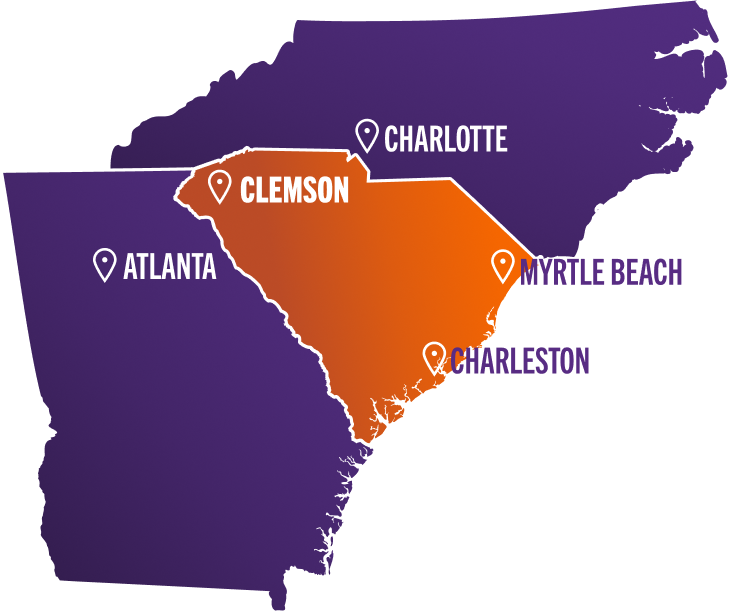
Nearest Cities
- Greenville, South Carolina
- 45-minute drive
- Atlanta and Charlotte, North Carolina
- 2 1/2-hour drive
-
Asheville, North Carolina
- 2 hour drive
Local Attractions
- Arts — Brooks Center for the Performing Arts
- Sports — Clemson Athletics and Walker Golf Course
- Nature — South Carolina Botanical Garden and The Clemson Experimental Forest
- Shopping — Downtown Clemson
- Accommodations — James F. Martin Inn
Campus Highlights
- Bowman Field
- Memorial Stadium
- R.M. Cooper Library
- ’55 Exchange
Clemson University Tours
When touring college campuses, there’s a lot to take in. As you look, listen, walk and ride, pause to consider how you feel in the environments you’re exploring. Do you feel safe, excited and confident that you can find your way forward? If so, that means you’ve found your perfect college fit.

Campus Tours
We provide resources for self-guided tours and the opportunity to register for campus walking tours guided by current undergraduate students.
Choose Your Tour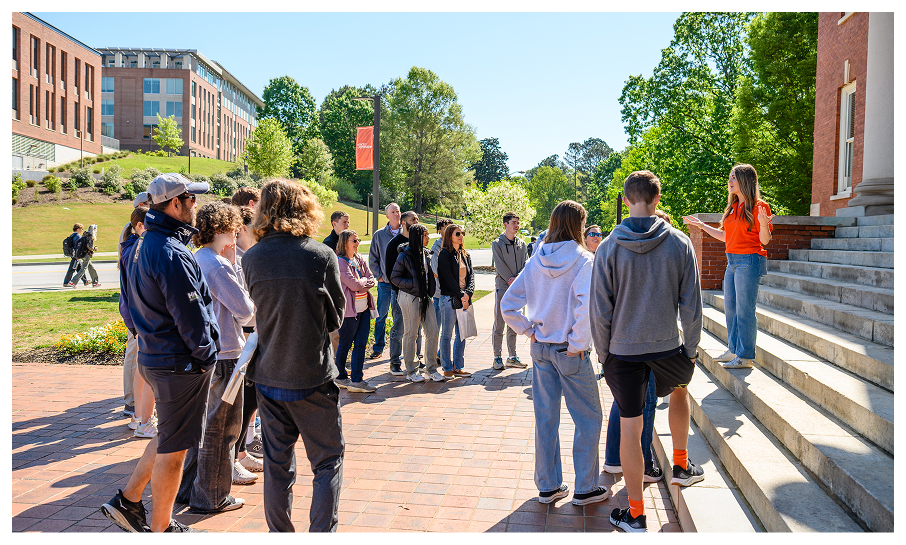

Campus Tour Tips
From Ava Joiner,
industrial engineering '25
Choose the place where you feel at home.
“First, choose what feels like home. That’s how I felt when my older sister told me, ‘Imagine yourself walking to the library and lead me there.’ I could imagine myself taking that route to and from classes, after studying late at night.”
See if the campus community is supportive with one simple question.
“If you’re visiting campus as a potential student, stop someone random and ask them for help. Ask them a question. Ask for advice. You can really see how they respond to someone they don’t owe anything to. I know that if I needed help and went up to a random student I didn’t know on campus, they would take five to 10 minutes of their day to help me get what I needed. And, in my opinion, that’s the kind of place you want to be.”
Plan Your Visit
Campus is growing and evolving. Check out our campus map before you arrive to get a lay of the land and explore our visitor parking options to make the most of your time on campus.
We offer accessibility services to help you have your best day yet in Tigertown. Please reach out to our hospitality team at the visitors center while planning your trip to Clemson so we can provide assistance based on your unique needs.
Accessibility Requests
Contact The Visitors Center
Nieri Family Alumni and Visitors Center | 220 Madren Center Drive, Clemson, SC 29634
864-656-4789 | Email Us