About
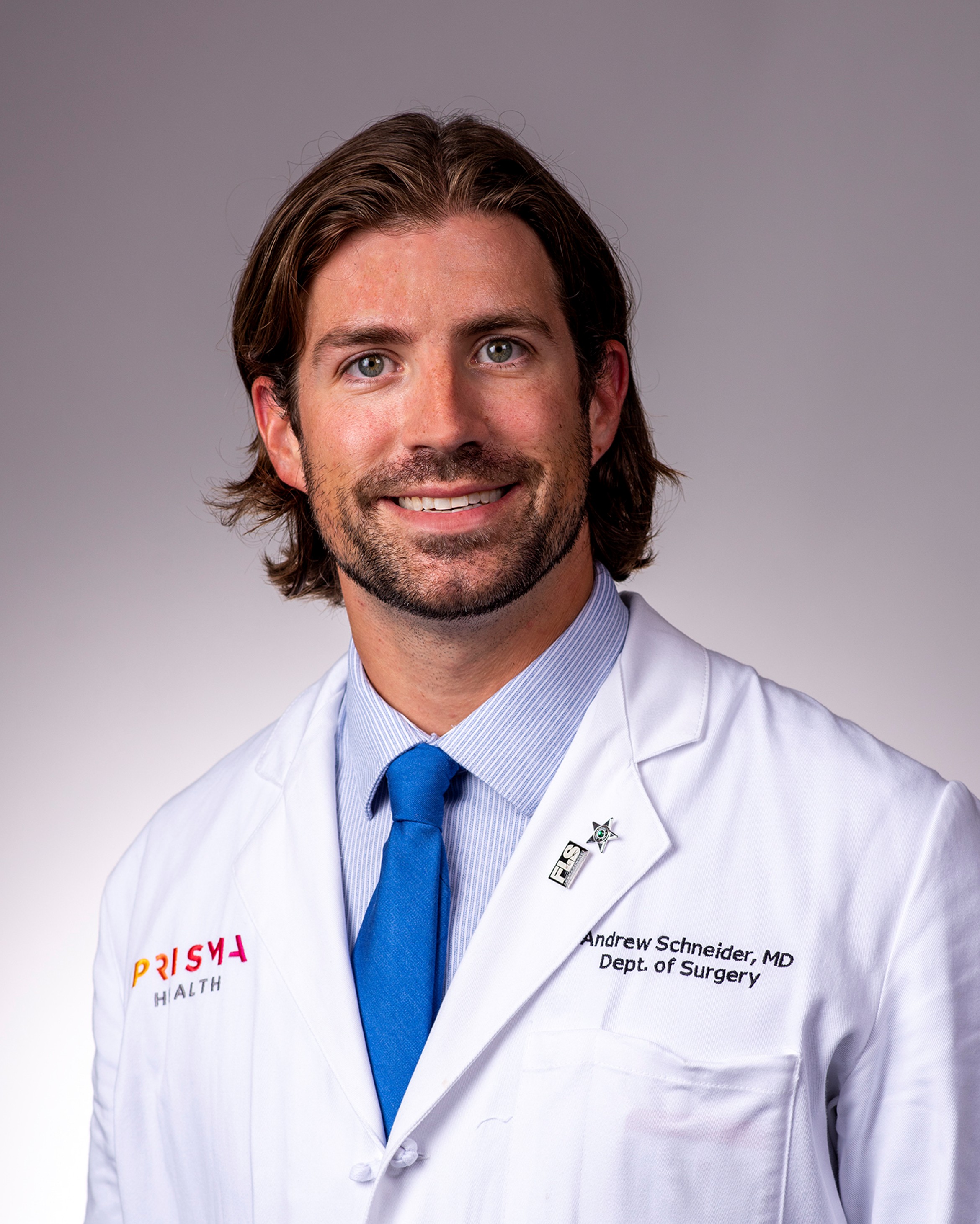
Dr. Andrew Michael Schneider is a board-certified General Surgeon practicing with Prisma Health in Seneca, South Carolina, and serves as a Clinical Assistant Professor of Surgery at the University of South Carolina School of Medicine Greenville. He earned his medical degree from the University of South Alabama and completed his residency at Prisma Health Greenville, where he was recognized with the Outstanding House Staff Research Award and induction into the Alpha Omega Alpha (AOA) Honor Medical Society.
Specializing in advanced robotic-assisted and minimally invasive surgery, Dr. Schneider is a Fellow of the American College of Surgeons (FACS). His clinical practice focuses on complex abdominal procedures, including hernia repair, cholecystectomy, foregut surgery, and colon resection. Beyond his clinical duties, Dr. Schneider is deeply committed to academic mentorship and interdisciplinary research. He has served as a mentor for pre-med students as well as resident physicians, leading projects that evaluate surgical outcomes and the integration of new technologies like indocyanine green (ICG) in robotic surgery.
A resident of Lake Keowee, Dr. Schneider is dedicated to the health of the Oconee community. His appointment to CUSHR aims to further bridge the gap between clinical excellence at Prisma Health and the engineering and health sciences expertise at Clemson University.
How their research is transforming health care
My research is focused on improving healthcare through the optimization of surgical technology and the improvement of surgeon-patient outcomes. By investigating the comparative efficacy of laparoscopic versus robotic-assisted approaches—specifically in high-volume procedures like appendectomies and cholecystectomies—I aim to identify pathways that reduce recovery time and minimize post-operative complications.
These key pillars to my work could be strengthened significantly through interdisciplinary collaboration with Clemson University. Research in robotics is vital to the long-term sustainability of the healthcare workforce, as it addresses the musculoskeletal strain inherent in modern surgery, potentially extending the careers of highly skilled surgeons. Additionally, my work with indocyanine green (ICG) diagnostics in robotic platforms represents the leading edge of precision medicine, allowing for better intraoperative visualization and safer surgical outcomes. By integrating these technical innovations with clinical education, my research ensures that the next generation of healthcare providers is equipped with data-driven techniques that prioritize both patient safety and provider well-being.
Health research keywords
Minimally Invasive Surgery, Surgical Robotics, Surgeon Health and Ergonomics
