About
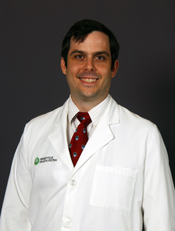
Dr. Cull completed medical school at Wake Forest School of Medicine. He did his surgery residency at Rush University Medical Center and his Critical Care/Trauma fellowship at Cook County Hospital. He received grant funding from the Gift of Hope Grant Program to perform research identifying structural barriers to organ donation. Dr. Cull began working for Prisma Health-Upstate in 2015 as a trauma/critical care surgeon. He is the medical director of the Medicine/Surgery ICU and serves as program director for the newly created Surgical Critical Care Fellowship. He is also an associate professor of surgery at the UofSC School of Medicine, Greenville. He has worked closely with Clemson on multiple projects. Dr. Cull along with Dr. Sehorn has developed a Clemson/Prisma Health research collaborative that pairs Clemson Undergraduate students to assist UofSC-Greenville medical students to complete student developed research ideas. Over the last 10 years he has successfully partnered with Clemson faculty resulting in the following ongoing research projects: Early detection of shock using micro pH probes (Dr. Hai Xiao). Improving screening, assessment and training tools for surgical education (Joseph Singapogu) Machine Learning to Grade Image Quality Performed on FAST Examinations (Dr. D Hudson Smith) Machine Learning to Determine Fluid Responsiveness in Patients (Dr. D Hudson Smith) Teamwork and ICU design to improve outcomes (Dr. Susan O'Hara) Moral Distress of Nurses in the ICU (Dr. Marissa Shuffler) Pilot Animal Study for a Novel Hemostatic Tissue Adhesive (Dr. Jiro Nagatomi).
How their research is transforming health care
Sepsis is the leading cause of death in U.S. hospitals and kills over 26 million people worldwide each year. Mortality from sepsis increases 8 percent for every hour that treatment is delayed and as many as 80 percent of sepsis deaths could be prevented with rapid diagnosis and treatment. Dr. Cull is working with Dr. Xiao to test a micro pH probe that could serve as early detector of sepsis, hopefully saving many lives. Dr. Cull is also working with Dr. D. Hudson Smith to use machine learning to determine how much fluid to give to critically ill patients. If too little fluid is given, then patients are not able to supply blood and oxygen to their tissues. If physicians give too much fluid, patients will develop pulmonary edema and possibly develop heart failure. Dr. Cull and Dr. Smith are attempting to use machine learning to learn when to appropriately give fluid to critically ill patients.
Health research keywords
sepsis, machine learning, teamwork, shock, fluid management, critical care, trauma
