
Leading Research at Clemson
One Health has been identified as a research emphasis area at Clemson University.
The One Health Research Group, including members from multiple Colleges, holds regular monthly meetings to promote the use of One Health approaches in research areas such as antimicrobial resistance mitigation, comparative medicine/translational research, zoonotic diseases, disaster preparedness and response, food safety, food insecurity, human – animal bond, education and training of the next generation of One Health professionals, well-being of animals, and wildlife conservation.
The group was initially led by Dr. Jeri Jones, AVS professor and veterinary radiologist. Currently, three Clemson faculty with expertise in human health, animal health and environmental health are co-leading the group: Lior Rennert, Ph.D., Michael Neault, DVM, and Debora Rodriguez, Ph.D.

One Health Research Matters
The College of Behavioral, Social and Health Sciences is advancing One Health research in partnership with researchers across the University. New academic programs and curriculum development efforts are preparing future leaders to address complex global health challenges. Faculty are conducting impactful research on topics to improve health outcomes for both humans and animals, as well as conservation and environmental health efforts. Together, these initiatives demonstrate Clemson’s commitment to innovative, collaborative solutions that strengthen public health, environmental sustainability and animal welfare and resilience in South Carolina and beyond.
Healthy People. Healthy Environments. Healthy Animals.
CBSHS recognizes the importance of One Health research application.
The application of One Health research is essential for addressing complex health challenges that affect people, animals and the environment. By fostering interdisciplinary collaboration among experts in human, animal and environmental health, One Health promotes more comprehensive and effective solutions to the shared challenges.
This collaborative approach is also increasingly prioritized by funding agencies, which recognize that evidence-based solutions require cross-sector expertise and innovation.
One Health Goals
One Health seeks to promote and facilitate the use of its research principles in the following areas:
- antimicrobial resistance mitigation
- comparative medicine/translational research
- zoonotic diseases
- disaster preparedness and response
- food safety
- food insecurity
- human-animal bond
- education and training of the next generation of One Health professionals
- welfare/well-being of animals
- wildlife conservation
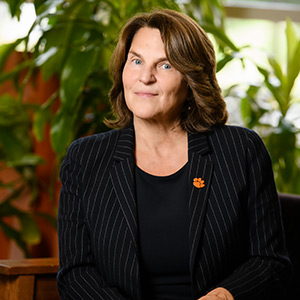
"Through innovative research, teaching and outreach, we are advancing the One Health mission by bringing together expertise from across the University to develop solutions that improve the health of people, animals and ecosystems. This work demonstrates the power of interdisciplinary collaboration to create lasting, evidence-based solutions that strengthen public health, animal resilience and conservation efforts across South Carolina and beyond."
Leslie Hossfeld, Ph.D.CBSHS Dean
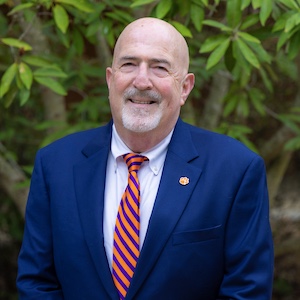
“The land-grant mission calls us to tackle society's most pressing challenges and ensure the benefits of discovery reach the people we serve. One Health is a powerful example of that commitment, bringing together knowledge and experience from across Clemson to advance the well-being of communities, economies and natural systems.”
Matt Holt, Ph.D.College of Agriculture, Forestry and Life Sciences Dean

“The One Health concept recognizes the fundamental interconnection between human, animal and environmental health. Veterinary medicine occupies a central role within this framework because veterinarians and veterinary scientists work at the interface of people, animals and the environments they share. As multispecies clinicians, veterinarians are uniquely positioned to contribute to zoonotic disease surveillance and control, food safety and security, wildlife and ecosystem health, antimicrobial stewardship and the promotion of the human–animal bond. Through these diverse contributions, the veterinary profession plays a critical role in advancing the health and well-being of all species and the ecosystems on which they depend.”
Steven L. Marks, Ph.D.Harvey S. Peeler Jr. College of Veterinary Medicine Dean
-
Interdisciplinary One Health Curriculum Development
The College of Behavioral, Social and Health Sciences (CBSHS) is supporting curriculum development for Clemson University’s collaborative One Health initiative with a strategic new hire in the Department of Public Health Sciences. Dr. Lídia Gual-Gonzalez is an Assistant Professor of One Health in the Department of Public Health Sciences. She is developing new interdisciplinary undergraduate and graduate courses on the interconnections between humans, animals, plants and ecosystems. Her work will enhance collaborations across the University to optimize human, animal and environmental health outcomes and advance the mission and vision of CBSHS and One Health.
-
New Doctor of Veterinary Medicine Degree Program
The Harvey S. Peeler Jr. College of Veterinary Medicine (PCVM) at Clemson University has received a Letter of Reasonable Assurance from the American College of Veterinary Medicine to begin accepting applications for enrollment into their new Doctor of Veterinary Medicine (DVM) degree program. The first class will begin in Fall 2026. A top priority for this professional degree program will be to produce graduates who are highly skilled and dedicated to the underserved communities of SC with an emphasis on farm animal, general practice and population medicine. To this end, the PCVM will also contribute to cutting-edge veterinary research and science, continuing education, disease control, animal agriculture and engagement of the citizens of SC. One Health approaches and applications will be integrated throughout the program.
-
Improving the Effectiveness of Risk Communication Surrounding New World Screwworm Fly Re-emergence in the U.S.
The New World screwworm Fly (Cochliomyia hominivorax), eradicated in the U.S. in the 1970s, poses a serious health threat for pets, livestock, wild animals, and humans. The fly has re-emerged in Mexico and is now present 70 miles from the U.S. border. The U.S. response involves the reintroduction of technology used in the initial eradication and potential new technologies that can be adapted to address the renewed threat. Dr. Timothy Sellnow, Professor in the College of Behavioral and Social Health Sciences, and his team are studying risk communication surrounding the fly’s re-emergence. Specifically, the re-emergence of the of the pest as a threat in the U.S. involves the simultaneous revival of a past narrative and discussion of novel strategies to address the threat. Although well-known five decades ago, many Americans currently have little understanding or awareness of the threat the fly poses to their health and the health of their animals. Thus, the fly’s re-emergence poses a pressing need for effective risk communication.
-
Conservation of Wild Tigers
Over the last 100 years there has been a 95% decline in the wild tiger population. Cambodia, Laos, and Vietnam have completely lost their wild tigers. Tiger habitats provide essential ecosystem services, that underpin livelihood security health and overall human prosperity. There are a little over 5,000 wild tigers remaining today. Tigers are multidimensional indicators of biodiversity and societal health; they embody the intricate balance between nature and humanity. Drs. Greg Yarrow and Hrishita Negi in the College of Agriculture, Forestry, and Life Sciences are co-directing the Clemson Tigers United Program and helping to grow the numbers of wild tigers. Current projects include forging partnerships globally, innovating AI technology in the field to help manage human-tiger interactions, working to empower future leaders, sharing success stories, and strengthening protection on the frontlines.
-
Helping to minimize transmission of highly pathogenic avian influenza
Highly pathogenic avian influenza (HPAI) is a contagious virus that continues to cause severe respiratory disease and death in wild birds and poultry flocks worldwide. Between March 2024 and May 2025, 70 human cases of HPAI A(H5N1) were identified in the United States, including two cases associated with backyard poultry. Most reported illnesses were mild, and no human-to-human transmission was detected. HPAI has been detected in wild birds across numerous states, according to the U.S. Department of Agriculture’s Animal and Plant Health Inspection Service (USDA APHIS). Significant detections of the H5N1 strain have continued into early 2026, with thousands of wild birds affected nationwide as of January. Dr. Michael Neault, State Veterinarian and Director of Clemson Livestock Poultry Health, and his team have recently contributed content for news articles to help poultry producers and owners of backyard waterfowl or poultry flocks detect signs of HPAI and improve their environmental management practices. Articles also provide instructions on how to report cases and help the USDA minimize transmission of this disease: article one and article two.
-
H5N1 Wastewater Testing in Cattle Farms
The Disease Modeling and Analytics to inform outbreak Prevention, Response, Intervention, Mitigation, and Elimination in South Carolina project (DMA-PRIME, Dr. Lior Rennert, Lead PI), funded by the Centers for Disease Control and Prevention/Center for Forecasting and Outbreak Analytics, initiated H5N1 wastewater surveillance at Clemson Dairy Farm and with goals to expand to additional farms across South Carolina. Collaborating with the SC State Veterinarian, SC Department of Public Health, Clemson Livestock and Poultry Health, and Clemson Extension, H5N1 monitoring of wastewater and milk samples on cattle farms was initiated to enhance outbreak prevention, response, and mitigation efforts in South Carolina.
-
Helping forage producers and livestock owners develop more sustainable management practices for hotter and drier climates
Production animals such as cattle, sheep, goats and chickens are important sources of protein for humans worldwide. Areas of the world with increasing temperatures and decreasing rainfall can have difficulties growing forage crops that are essential for these production animals. Dr. Liliane Silva, Assistant Professor and Extension Specialist in the Department of Animal and Veterinary Sciences, and her team are developing management strategies to improve the resilience of important forage crops for production animals such as bermudagrass, tall fescue, bahiagrass and alfalfa. She also provides continuing education workshops and seminars to help South Carolina producers learn how to apply these improved management strategies and improve the production, resilience and feasibility of operations.
-
Helping to keep peanuts and other crops safe from toxins
Aflatoxins are toxic compounds produced by certain fungi and are important contaminants of critical food crops for humans and production animals such as peanuts, corn, and tree nuts. Contamination of these food crops can cause health threats for consumers, major economic losses for producers and weaken market confidence in U.S. crops. Dr. Sachin Rustgi, Associate Professor of Molecular Breeding in the Dept. of Plant and Environmental Sciences, and his team are developing techniques for creating more sustainable strains of harmless organisms that can crowd out the harmful, toxin-producing organisms. His long-term goals are to make these technologies available for commercial producers.
-
Improving Farm Animal Welfare
Improving welfare practices can help to reduce stress and disease susceptibility in farm animals. Dr. Ahmed Ali, Associate Professor in Animal and Veterinary Sciences, is conducting a variety of research projects examining the effects of housing systems, diet, and management practices on the behavior, welfare, and performance of farm animals including laying hens, dairy cows and horses. Dr. Ali is also working to develop non-invasive, automated methods for collecting behavior and welfare data from individual animals in their home environments using wireless sensors for measuring activities in laying hens and measuring heart rate variability in horses and dairy cows.
-
Reducing Zoonotic Disease Risks in Humans by Improving Poultry Gut Health
Campylobacter and other bacteria are responsible for many food-borne illnesses in humans. Poultry are considered one of the main sources. Dr. Khaled Abdelaziz, Assistant Professor in the College of Agriculture, Forestry, and Life Sciences’ Department of Animal and Veterinary Sciences, and his interdisciplinary team are researching the use of probiotics and other interventions to improve poultry gut health and reduce the risks of disease transmission to humans.
-
Improving Nutrition in Broiler Chickens
Broiler chickens are an important source of protein for humans worldwide. Dr. Mireille Arguelles-Ramos, Assistant Professor in the College of Agriculture, Forestry, and Life Sciences’ Department of Animal and Veterinary Sciences, and her interdisciplinary team are researching the effects of environmental factors on feed quality and effects of feed additives and other management practices on gut health and meat quality in broiler chickens. She is also applying One Health approaches in her interdisciplinary graduate course entitled “AVS 8080 Comparative Human and Monogastric Animal Nutrition.”
-
Helping to Reduce Adverse Effects in Non-Target Wildlife Due to Rat Poison
Researchers with Clemson University’s Department of Forestry and Environmental Conservation, along with other published and unpublished scientific data, have shown that active ingredients in second-generation anticoagulant rodenticides (SGARs) have a high potential to cause adverse effects to non-target wildlife, even when used correctly under current pesticide label directions. These ingredients include: brodifacoum, bromadiolone, difethialone, and difenacoum. In a recent project, researchers reviewed studies from around the world that sought to document wild mammal carnivores’ exposure to anticoagulant rodenticides. Many animals tested in these studies were already dead; others were alive and a part of other studies. Rodenticides were detected in about one-third of the animals in these analyses, including bobcats, foxes and weasels. They directly linked the poisons to the deaths of one-third of the deceased animals – typically, by finding the chemicals in the animals’ liver tissues. Based on these and other research findings, Clemson University pesticide regulators have extended a statewide restriction on the use of SGARs. The original one-year restriction was enacted on February 1, 2025, under state pesticide regulation, Chapter 27–1075, Section B. The restriction will be extended indefinitely.
-
Global Partnerships Advance One Health Solutions for Sustainable Agriculture
A Clemson University research project supporting smallholder farmers in Ethiopia demonstrates how global collaborations can generate practical solutions for agriculture both abroad and in South Carolina. By working alongside local farming communities, researchers are identifying sustainable practices that improve food production while strengthening resilience and informing future research and Extension programs. The project exemplifies a One Health approach by recognizing the interconnectedness of human health through improved food security and livelihoods, animal health through better livestock management and nutrition, and environmental health through sustainable land stewardship and resource conservation. Together, these efforts show how addressing the health of people, animals, and the environment can create more resilient agricultural systems and healthier communities worldwide.
To learn more, visit this Clemson News article.
-
Penguin Diets from Space: A One Health View of Antarctic Environmental Changes
Clemson researcher Dr. Casey Youngflesh is using satellite imagery to determine what Adélie penguins are eating by analyzing the color of their guano from space. This innovative research helps scientists track changes in penguin diets over time, providing clues about the health of penguin populations, shifts in Antarctic marine ecosystems, and the impacts of environmental changes on sea ice and food availability. By improving our understanding of how environmental changes affect wildlife, the research also supports better conservation and resource management decisions that benefit both healthy ecosystems and the people who depend on them, demonstrating the interconnectedness of animal, environmental, and human health through a One Health approach.
To learn more, visit this Clemson News article.
-
Summer Creative Inquiry Research
Clemson featured undergraduate research projects spanning eastern box turtle ecology, respiratory infectious disease biology, cancer immunotherapy, and wildlife habitat conservation. Collectively, these projects demonstrate Clemson's interdisciplinary One Health approach by integrating wildlife conservation, biomedical research, and ecosystem health.
To learn more, visit this Clemson News article.
-
New World Screwworm Preparedness
Clemson Livestock Poultry Health experts described surveillance, diagnostics, and preparedness activities following detections of New World Screwworm in the United States. Although primarily an Extension and regulatory story, it reflects One Health by protecting livestock health, agricultural ecosystems, and food security while reducing potential public health risks.
To learn more, visit this Clemson News article.
