Global Impact
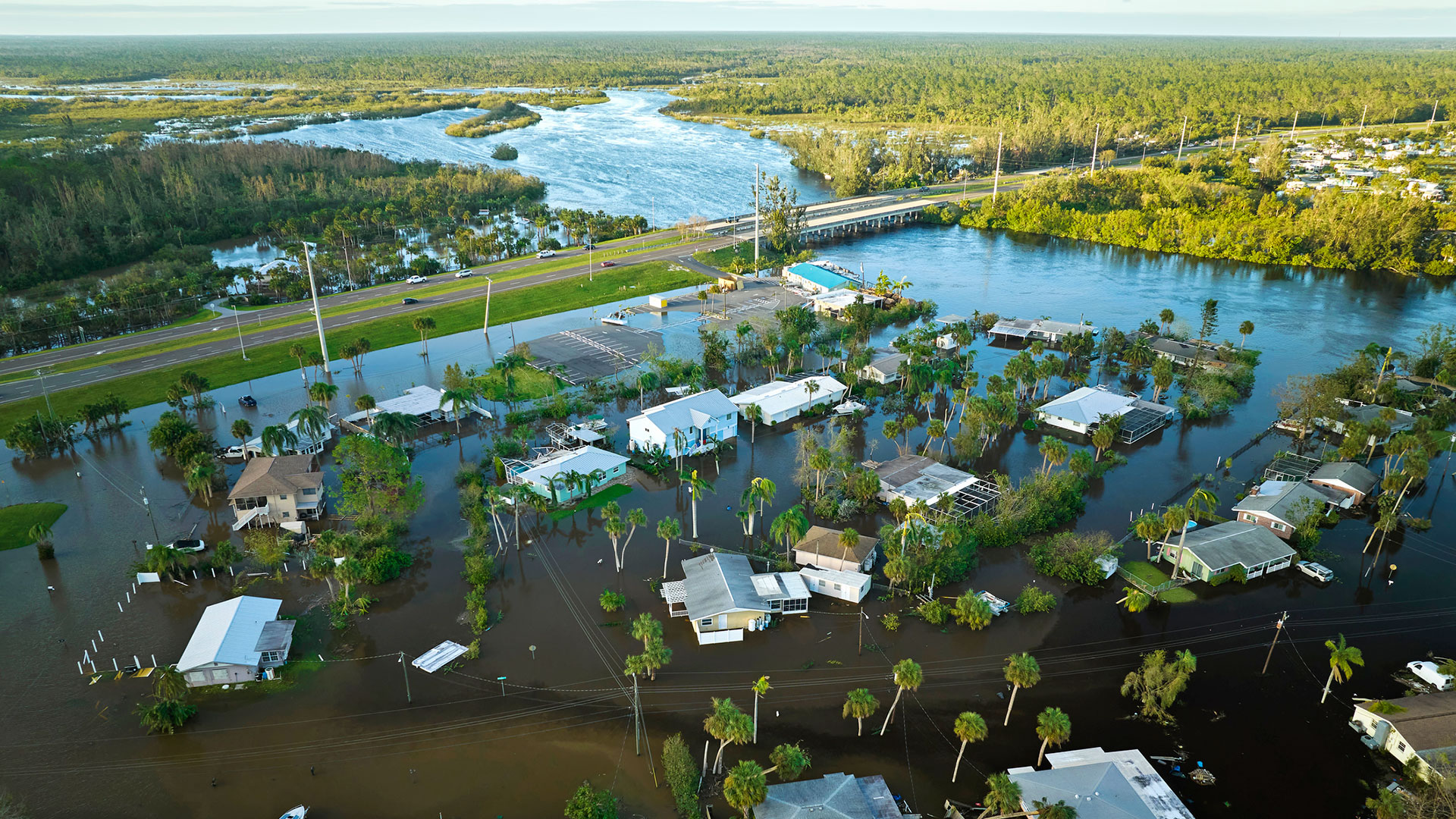
The frequency and magnitude of weather events and other natural disasters have increased tenfold over the past few decades. As we become more interconnected, these impacts and accumulative failures across infrastructure systems rise. Focusing on creating a system that can withstand challenges ensures that resources are used more efficiently and effectively.
This approach to infrastructure development is critical for addressing the challenges posed by extreme events, reducing environmental impacts, and supporting communities.
Vision
We envision sustainable and resilient communities enabled by the research, education, and engagement activities of a high-impact and collaborative institute.
“Too many times when bad things happen, we get to classify these as acts of God or as a black swan event. "The theory of black swan events is a metaphor that describes an event that comes as a surprise, has a major effect, and is often inappropriately rationalized after the fact with the benefit of hindsight." But we have experienced these failures before, they are not black swan events, therefore, we can model the effects of extreme events, understand the impacts, and mitigate vulnerabilities.”
David VaughnOroville Dam - Lessons we are learning about Community Resilience
Mission
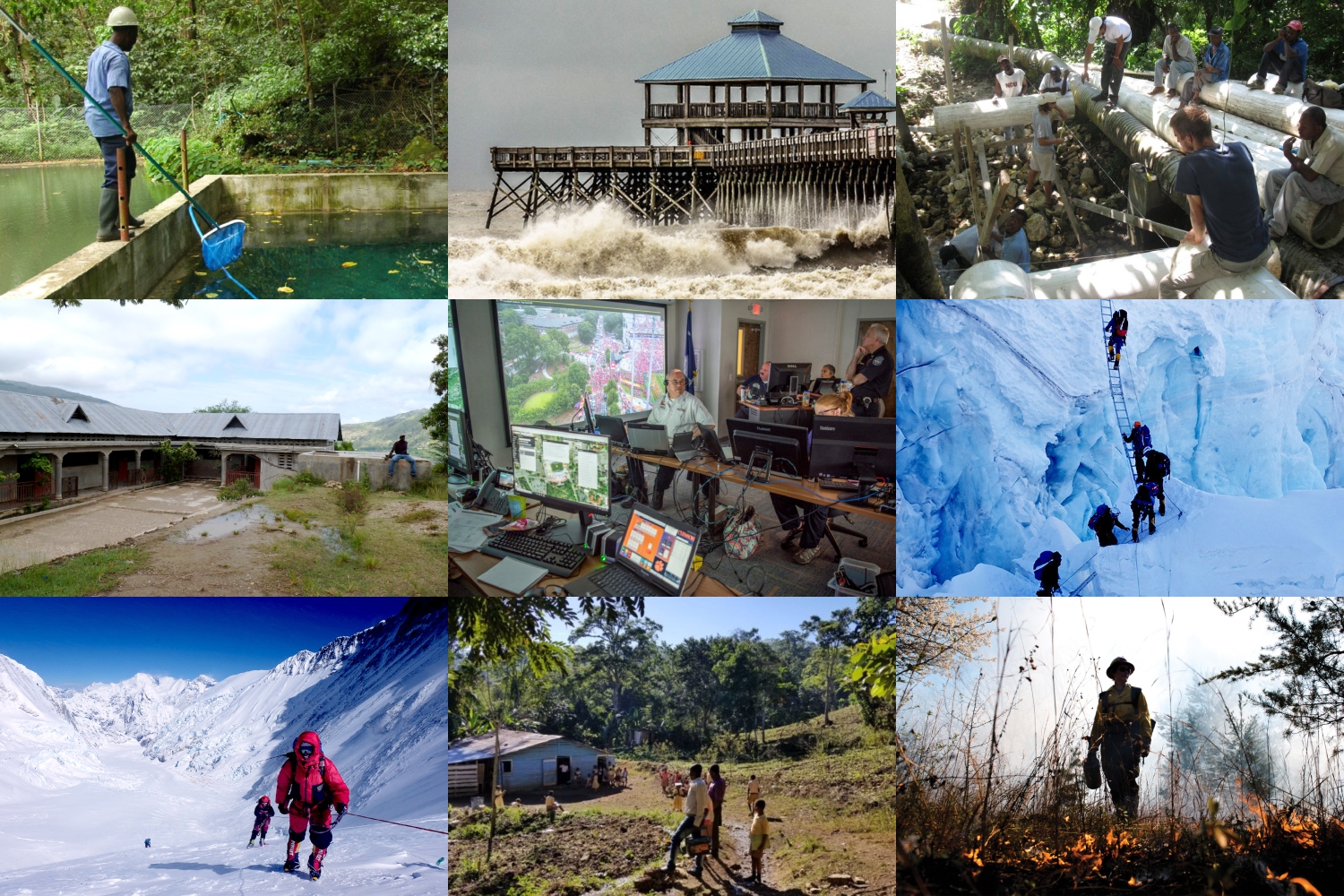
We are dedicated to advancing both the state of the art and the state of the practice in sustainability and resilience by
- Creating a community in which researchers from different disciplines collaborate to address the complex natural-socio-technical challenges associated with sustainability and resilience;
- Building relationships between researchers and communities, nonprofits, private sector professionals, policymakers, and local, state, and federal officials;
- Advancing interdisciplinary knowledge in the areas of acute and chronic hazards and their intersections with socio-technical systems;
- Educating the next generation of resilience and sustainability scholars and professionals;
- Developing educational and technical assistance programs to empower communities to build capacity and capabilities, assess their risks, and make strategic changes; and
- Supporting communities across the state of South Carolina and beyond in areas of sustainability and resilience to promote risk reduction and disaster outcomes.
Education
The Sustainability Minor requires 18 credits and covers scales of sustainability, fundamental issues of sustainability, systems thinking for sustainability, and change agents for sustainability.
Learning outcomes for the minor include scales of sustainability, fundamental issues of sustainability, systems thinking for sustainability, evaluate tools for implementing/measuring, and change agents for sustainability.
Sustainability Minor
CONNECT
Pamela Murray-Tuite
Director; Professor
(864) 656-3802
pmmurra@clemson.edu

David Vaughn
Associate Director for Engagement
(864) 907-8646
dev@clemson.edu
Emily Tucker
Focus Area Lead for Systems Studies
(864) 656-9573
etucke3@clemson.edu

Haizhong Wang
Focus Area Lead for Transportation Studies
(864) 656-1273
haizhow@clemson.edu
People
- Thomas Christos Sharkey, Professor
- Ehsan Mousavi Rizi, Associate Professor
- Prasad Rangaraju, Professor
- Lindsay Shuller-Nickles, Associate Professor
- Christopher J. Post, Professor
- Mark A. Schlautman, Professor
- Amer Hamad Issa Abukhalaf, Assistant Professor
- Elizabeth R. Carraway, Associate Professor
- Venera Balidemaj, Member
- Mark A Small, Emeritus Faculty
- Tom Dodd, Lecturer in Biosystems Engineering
- Ramtin Hadidi, Associate Professor
- Jennifer Margaret Goree, Director of Healthy Campus
- Miguel Cid Montoya, Assistant Professor
- Natallia Sianko, Associate Professor
- Feng Ye, Assistant Professor
- Kalyan Ram Piratla, Professor
- Gary Edward Machlis, Professor
- Chung-Yi Lin, Assistant Professor
- Debora Frigi Rodrigues, Dept Chair/Head
- Mik Carbajales-Dale, Professor
- Abdul A Khan, Professor
- Yongjia Song, Associate Professor
- Lori Ann Dickes, Professor
- Jennifer H Ogle, Dept Chair - Civil Engineering
- Radwa Eissa, Assistant Professor
- Chien-fei Chen, Professor
- Olivia McAnirlin, Research Assistant Professor
- Andrew R. Metcalf, Associate Professor
- Caitlin Dyckman, Associate Professor
- Matthew Boyer, Educational Proposal Writer
- Kevin M. Autry, GIS Project Manager
- M. Z. Naser, Assistant Professor
- Fatemeh Afghah, Associate Professor
- Diana Vanegas Gamboa
- Matthew HEM Browning, Associate Professor
