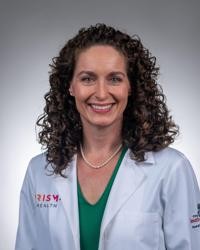
About
Dr. Williams completed her family medicine residency training with MUSC in 2013 and then subsequently obtained a Master of Science in Clinical Research during a 2-year academic generalist fellowship. After her time in Charleston, she spent a decade at the University of Florida culminating in her service as the family medicine program director. While at UF, she was involved in research around tobacco cessation, patient communication, referral rates, medical education, hospital readmissions, as well as other areas.
In 2025, she began her current position with Prisma as the Vice Chair of Quality Improvement for the primary care division of the upstate. In this role, she is working alongside other professionals to advance and improve the quality provided to patients in all their practices, including residency practices. Current initiatives are focused on hypertension control, diabetic eye screening, and annual wellness visits. Additional system metrics they are starting to explore include well-child screenings, tobacco counseling, depression screening, and patient satisfaction.
Dr. William’s research career has included quality improvement, secondary data analysis, and qualitative studies. She is passionate about improving patient outcomes, delivering high value care, and advancing medical education. In her clinical practice, she has always cared for diverse patient populations and seen firsthand the barriers patients face when navigating treatment decisions. She continues to provide care in both the ambulatory and inpatient settings where she has completed various research projects. She looks forward to building a partnership with researchers from Clemson University.
How their research is transforming health care
While my areas of interest may not be very “bright and shiny,” they are foundational and impactful to many in our population. Chronic disease is still a significant driver of the poor health outcomes we see in our country – over 75% of adults are reported as having at least one chronic condition while more than half have more than one chronic disease. Hypertension is considered the leading cause of death worldwide. Tobacco use is the leading cause of preventable death in the US. Health disparities still exist despite our best efforts to eliminate barriers to equitable care. Unnecessary Emergency Department utilization and hospital readmissions continue to drive up health care costs. Even small advances we can make in any of these areas has great potential to transform healthcare by the sheer volume of impacted patients.
Health research keywords
Quality Improvement, Hypertension, Diabetes, High Value Care, Health Disparities, Tobacco Cessation, Medical Education, Social Determinants of Health, Referrals, Readmissions, COPD, Patient Satisfaction, Global Health, Chronic Disease, Obesity
