About
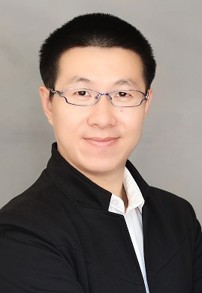
Dr. Zhen Li is the United Mechanical Endowed Associate Professor in the Department of Mechanical Engineering at Clemson University. He earned his Ph.D.(2012) and M.S. (2008) in Fluid Mechanics from Shanghai University and his B.S.(2005) in Engineering Mechanics from Wuhan University, and his research integrates multiscale physics-based simulation with AI/ML (including physics-informed neural networks and neural-operator learning) to accelerate discovery in complex fluids, soft matter, and advanced materials. A major health-related thrust of his research focuses on predictive modeling of cellular biomechanics, fluid-structure interactions, and microvascular hemodynamics and on model-guided design of biomaterials and 3D biofabrication strategies, supported by 70+peer-reviewed journal publications and more than $15 M in sponsored research. At Clemson, he is building interdisciplinary partnerships with faculty across engineering, materials, and life-science areas to strengthen experimental validation, data integration, and translational pathways, while externally he is expanding health system collaborations, including MUSC professors and doctors and broaden engagement with additional regional partners (e.g., Prisma Health/GGC).
Visit Dr. Li's Faculty Profile.
How their research is transforming health care
My research is transforming health and health care by creating predictive, physics-based AI tools that connect fundamental biomechanics to clinically relevant outcomes in vascular disease and blood disorders. Many urgent health problems such as microvascular occlusion, thrombosis, aneurysm rupture risk, and impaired perfusion arise from interactions among deformable blood cells, complex vessel-wall mechanics, and multiphase transport that are difficult to measure comprehensively in vivo. I develop physics-based AI models that learn from high-fidelity computational and experimental data to rapidly predict blood-cell dynamics and hemodynamics across patient-relevant conditions, enabling patient-specific digital twin capabilities for hypothesis testing and personalized therapy exploration at a fraction of traditional computational cost. An example of my translational research is the AI-accelerated design of biomimetic multilayer blood vessels and vascular grafts in collaboration with a MUSC vascular surgeon, aligning engineering design targets with real clinical needs. Looking forward, I will expand these multiscale simulation methods and physics-based AI models through closer clinical and experimental partnerships and NIH-aligned team science, with the goal of delivering validated tools that accelerate device development, reduce trial-and-error in biomaterial design, and ultimately improve patient outcomes.
Health Research Expertise Keywords
Cellular Biomechanics, Physics-Based AI, Model-Guided Biofabrication, Vascular Biomechanics, Patient-Specific Digital Twin
