About
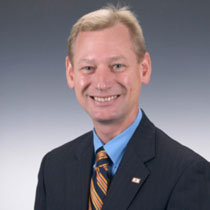
John Whitcomb retired in 2009 from the Navy as a Commander, Nurse Corps after 26 years. He served as the Specialty Advisor to the Surgeon General for Critical Care, Navy (2007-2009). He was on the Board of Directors for the American Association of Critical Care Nurses (2007-2010) and Certification Corporation of AACN (2008-2010). Dr. Whitcomb completed his BSN in Nursing at the Medical University of South Carolina, his MSN in Critical Care at Marymount University in Arlington, VA, and his PhD in Resuscitative Outcomes from the University of San Diego, San Diego, CA. He has been a primary or significant contributor to 40 articles in high level, peer reviewed scholarly journals, and his work is being used by other scholars in critical care as indicated by citations of his work in scholarly publications. He has achieved a national reputation that has resulted in invitations to present at national and international conferences and to serve as a reviewer for top-tier journals and textbooks in the field of critical care. He is a Reviewer for AACN Advanced Critical Care, Critical Care Nurse, and Journal of Advanced Nursing. He serves on the Editorial Board of Dimensions of Critical Care Nursing, the Review Board of the Institute of Medicine Taskforce 3 South Carolina, and as past Chair of the Scientific Review Committee, Society of Critical Care Medicine overseeing awarding of grants $200,000/year. At Clemson, he has received $7,943,752.80 in total for funded programs as a PI, Co-PI, or Consultant since 2003. Dr. Whitcomb is a Fellow of Critical Care Medicine (FCCM), a Fellow of the American Academy of Nursing (FAAN), and serves on the SC State Board of Nursing (SCSBN) as the Vice Chair representing Congressional District 3 and on the National Council of State Boards of Nursing (NCSBN) as Director-at-Large.
Visit Dr. Whitcomb's College Profile.
How their research is transforming health care
Whitcomb's program of research consists of adult critical care in areas or resuscitative outcomes post cardiac arrest, delirium, and neuro assessment. Over the years, based on the outcomes of research conducted, his research has translated to policy and procedure changes within large academic healthcare settings. One example, based on findings from cardiac arrest studies, was protocols and approach to care during emergencies were changed that improved access and outcomes. One of his studies was published and premiered in the Greenville News. He has participated in many studies at Prisma Health.
Health Research Expertise Keywords
Faculty Scholar, Critical Care, Resuscitative Outcomes Post Cardiac Arrest, Delirium, Ethics, Leadership, Military Nursing, End of Life
