Faculty Mentoring at Clemson
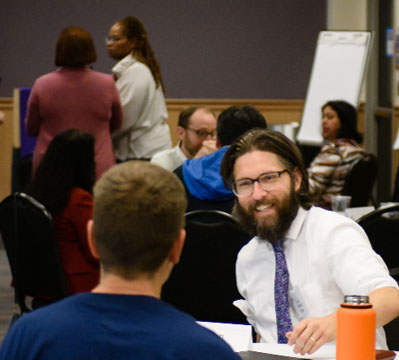
The quality of a student’s educational experience is directly tied to the lives of their faculty. To provide Clemson students with the #1 educational experience, it is critical to also prioritize elevating faculty engagement, success, and job satisfaction. A key component of the multipronged approach taken by Clemson University is the formal faculty mentoring activities provided by academic units.
We define formal mentoring of faculty at Clemson as the intentional pairing between mentee(s) and mentor(s) by unit leadership, with the mentor assuming the responsibility for facilitating the mentee's professional development. Mentor support can include providing advice, institutional or domain knowledge, encouragement, and/or networking connections. The mentor can be from within or external to Clemson University as long as the mentoring relationship is codified and facilitated by the mentee’s department/academic unit or college.
The two most common types of formal mentoring at Clemson include one-on-one mentoring and mentoring circles. The university….
- One-on-One Mentoring: Mentors and mentees are matched and then have formal meetings to discuss topics chosen by the mentee, mentor, or department. This can include a mentee having two or more than one-on-one mentor. For example
- Mentoring Circles: Participants meet in small groups to help mentor one another through discussions and sharing. This group is facilitated by a mentor such as a senior colleague.
Informal mentoring at Clemson refers to mentoring relationships developed outside of structured programs or frameworks facilitated and codified by a department/academic unit or college. While informal mentoring can be impactful for faculty, the ability to access informal mentoring is typically not as effective to access as formal mentoring across faculty. Therefore, Faculty Affairs has intentionally decided to track only formal mentoring at this time. Individual faculty are still encouraged to record both formal and informal mentoring in the Faculty Success system as professional development activities. Formal and informal mentoring is not the same as performance evaluation. While performance feedback and mentoring can sometimes be completed in the same meeting, mentoring is distinct from this process as it provides faculty with advice, insight, and/or information to further develop their potential as scholars and academic professionals.
The University Faculty Mentoring Committee
Clemson has a long history of providing programming and support for early career faculty as they onboard and work towards earning promotion and tenure. Evaluators of past programs identified the need to extend these efforts to mid- and advanced-career faculty. In response to this need and the importance of mentoring broadly, a University Faculty Mentoring Committee (UMFC) was charged to elevate mentoring initiatives across the institution. The UFMC is composed of senior level faculty and Associate Deans for Faculty Success from every college. This committee developed this definition of mentoring for Clemson University: Mentoring is the intentional pairing between mentee(s) and mentor(s) by unit leadership, with the mentor assuming the responsibility for facilitating the mentee's professional development. The UFMC also established that the mentor can be from within or external to Clemson University and that essential details of mentoring relationships should be documented and facilitated by the mentee’s department/academic unit or college.