Explore Our Work
Tigers United turns bold ideas into action through education, technology, science, training and community engagement, protecting wild tigers while supporting the communities who live alongside them.
Membership and Giving Request a ConversationHow we Work
Across every project, Tigers United focuses on implementation: pairing strong partnerships with field-tested tools, practitioner training, and community-rooted approaches so conservation solutions can be adopted, sustained and scaled.
- Translate research into usable tools and decisions for practitioners and managers.
- Pair technology deployments with training, community engagement and stewardship.
- Build capacity across institutions, locally and globally, so solutions endure.
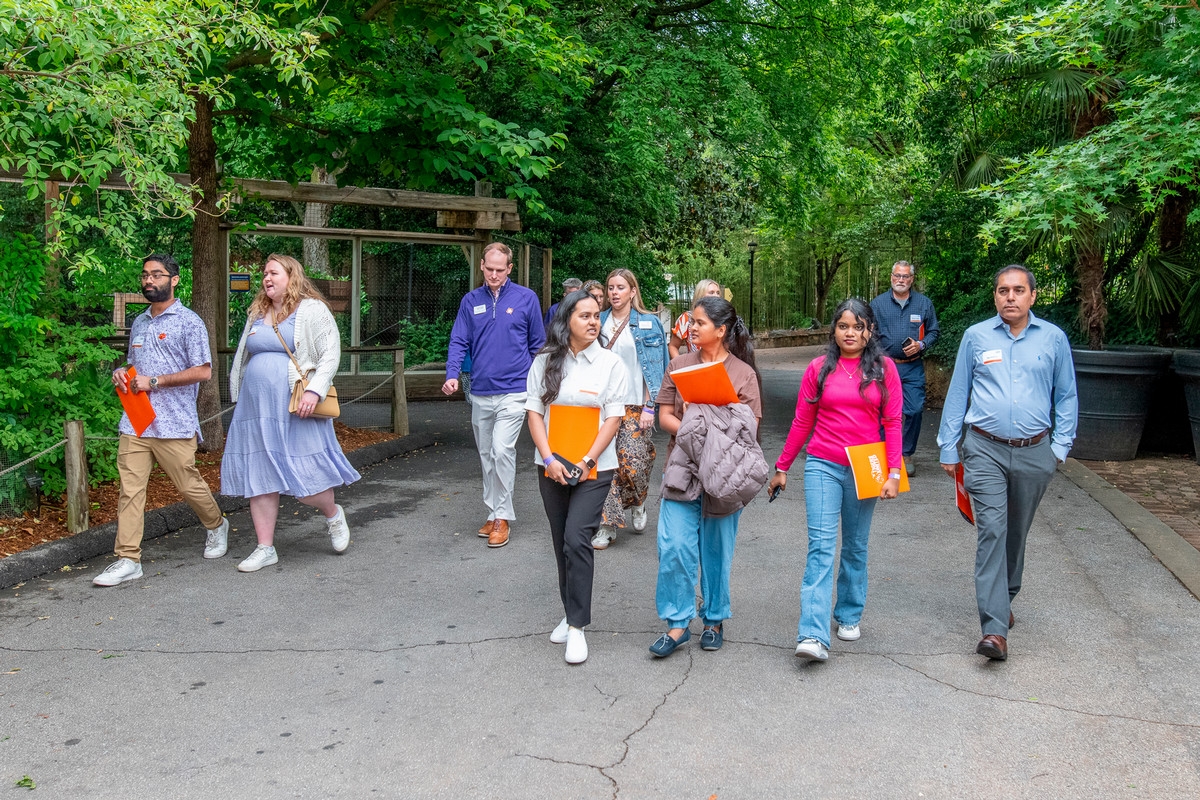
Stewardship Through Education
From local roots to global reach, our education strategy connects South Carolina classrooms with tiger landscapes in India, building early stewardship, cross-cultural understanding and future conservation leaders.
Current Projects
- Team Up for Tigers: a K–5 curriculum (16 lesson plans) developed with IPTAY and Clemson Cooperative Extension, covering tiger ecology, threats, cultural heritage, and ways students can help; launched through youth programs like 4‑H and FFA.
- Team Up for Conservation: a K–12 program inspired by “Sister‑scapes,” linking local wildlife learning (e.g., bobcats in South Carolina) to global tiger conservation across three modules: Apex Predators, Where is Wildlife, and Culture & Conservation; piloted through camps and school visits in South Carolina’s Midlands.
- India place‑based education model: locally grounded environmental education for rural, high‑conflict tiger landscapes, developed through field consultations with educators and Forest Department staff; integrates Indigenous knowledge, arts, and local socio‑cultural realities, with a successful pilot curriculum.
Vision Forward
- Replicable educator training across India and South Carolina, including training local facilitators and supporting Extension professionals.
- Digital experiential learning platform enabling virtual exchanges, shared lesson modules and collaborative storytelling across “sister‑scapes.”
- Expanded Clemson student engagement—from curriculum design and educator support to evaluation and digital content creation.
- Global educator toolkits and peer-learning networks that promote local adaptation while advancing a shared standard.
Community Engagement
We build conservation from the ground up by empowering local communities to become active stewards, combining education, stewardship and technology deployment to reduce conflict and foster coexistence.
Current Projects
-
Community Stewardship in high‑conflict landscapes (Kanha–Pench Corridor): developed alongside TrailGuard AI deployments to strengthen trust, communication and shared responsibility.
- Multi‑element education modules on tiger ecology, new technologies and safe coexistence practices.
- Accessible visual posters and facilitated dialogues to support broad participation across literacy levels.
- Village meetings in high conflict areas featuring candid discussions on conflict drivers, Forest Department roles and constraints, local resolution mechanisms and the ecological/cultural significance of tigers.
- A village-based “Community Steward” role to help maintain cameras, record sightings/conflict events, support early warning and data collection and serve as liaison with forest staff.
Vision Forward
- Scale community stewardship training across additional conflict zones, co‑developing locally rooted education modules in accessible visual formats.
- Support Indigenous communities through livelihoods and cultural enterprise (arts, crafts, ethical ecotourism), with Clemson business faculty and students exploring value chains and micro‑enterprise models.
- Adapt community outreach and stewardship tools for South Carolina via the Wildlife Damage Program.
- Create shared learning platforms and toolkits for community-based monitoring across India and the Southeastern U.S.
- Integrate robust education and engagement modules into future technology deployments to reinforce long‑term impact.
Conservation science
Clemson researchers lead science-based strategies to restore tiger populations, safeguard habitats, and reduce human–wildlife conflict, bridging field ecology, technology and education to generate scalable solutions.
Current Research Contributions
- Real-time monitoring for conflict prevention: Clemson faculty co-authored the first scientific paper on TrailGuard AI, supporting immediate response by forest officials and reducing retaliation and poaching risks.
- Coexistence and local ecology research (Kanha–Pench Corridor): uses environmental data and AI-generated images to analyze patterns of human and tiger activity, identify drivers of coexistence and inform management with scalable insights.
- Linking education and stewardship: pilots place‑based environmental education in nearby communities to assess ecological knowledge, amplify local and Indigenous understanding and support long‑term behavior change among youth.
Vision Forward
- Grow an interdisciplinary research platform across natural and social sciences, engineering, education and data analytics.
- Translate findings into scalable solutions that inform conflict mitigation, connectivity and forest management in tiger-range countries.
- Bridge global insights with local application in South Carolina and the Southeast, expanding field-based international research opportunities for Clemson students.

Move Fiercely Forward
Your engagement sustains the work that protects wild tigers and strengthens the communities who share their landscapes.
Membership and Giving