Dr. Mažeika P. Sulliván Fellowship
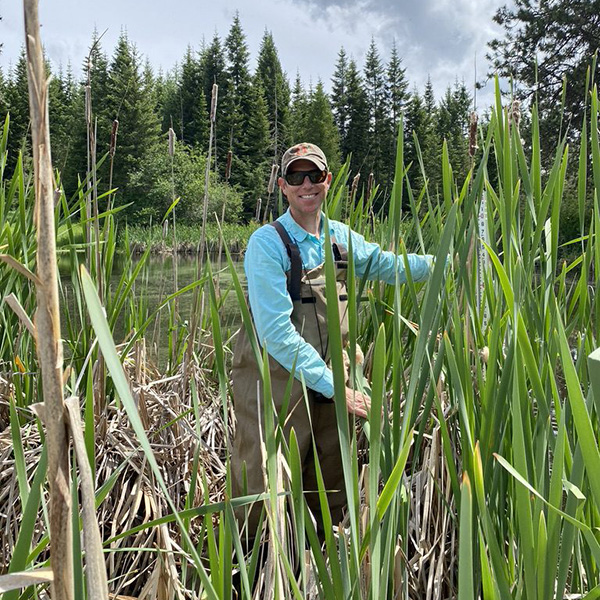
The Dr. Sean-Mazeika P. Sullivan Fellowship aims to support exceptional master's and doctorate students in pursuing their research interests and reaching their dreams. This endowment was created to honor Dr. Mažeika P. Sulliván, former Director of the Baruch Institute of Coastal Ecology and Forest Science (BICEFS) and Professor in the Department of Forestry and Environmental Conservation at Clemson University. Dr. Sullivan passed away on May 31st, 2024, at the age of 51. He served as the Baruch Director from 2022 to 2024. He was a strong and valued student mentor, scientist, and leader who believed in providing opportunities for all those interested in natural resources and the environment.
Nominations should be submitted by May 31st of each year.
-
Eligibility
The Endowment will provide fellowships for graduate students enrolled in a degree program at the College of Agriculture, Forestry and Life Sciences and those who are also engaged in research at BICEFS. Students will be evaluated based on research potential, research productivity, and contributions to a vibrant BICEFS community. Students advised by faculty serving on the selection committee are not eligible.
-
Awards
One award of $4,000 or two awards of $2,000 will be awarded annually in the Fall semester.
-
Selection Process
Faculty in the College of Agriculture, Forestry and Life Sciences can nominate graduate students for the award by submitting a nomination letter and their CV. A three-person committee will evaluate applications and submit recommendations to the BICEFS Director by June 15th. The awards will be announced by July 15th.
-
Submission Process
Faculty should send nominations to Stephanie Li at ssli@clemson.edu. Please include “Sullivan Fellowship-Student’s Name” in the Subject
-
Past Recipients
2026
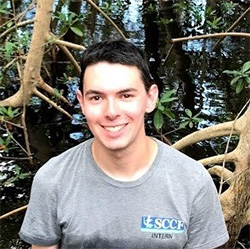
Ph.D. Student Recipient: Justin Robbins
After completing a string of internships in the mangroves of southwest Florida, Justin Robbins went back to school to study their interaction with climate change. Examining the role of nitrogen in coastal ecosystems ultimately led him to Dr. Lydia O'Halloran's lab, where he is now studying the role of soil nutrients and disturbance in grassland productivity and function. His research interests include how both human impacts on the landscape and natural ecosystem processes interact. When he isn't conducting research, his interests include games, high fantasy, and puns.
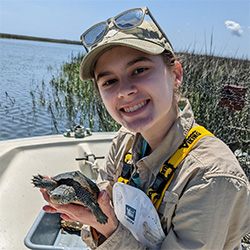
M.S. Student Recipient: Lillian Doll
Lillian Doll is currently pursuing her master's at Clemson University and is co-advised by Dr. Sarah Waickowski and Dr. Amy E. Scaroni. She has previously worked as a research technician at the University of North Carolina-Chapel Hill's Institute of Marine Sciences, and at North Carolina State University in the Crop and Soil Sciences Department. At Clemson, she is studying shoreline erosion in stormwater ponds and testing a rapid assessment tool to monitor erosion severity and predict erosion risk in these systems. Broadly, she is interested in disturbance ecology and watershed management, especially in coastal landscapes. She is also passionate about participatory and community-led science, and is currently preparing outreach materials to share the outcome of her current research via Clemson Cooperative Extension networks.
2025
Kenneth De León Colón
Kenneth Rolando De León Colón is a Ph.D. student from Guayama, Puerto Rico in the Department of Forestry and Environmental Conservation at Clemson University. His research primarily focuses on aquatic and microbial ecology, exploring the dissemination of antimicrobial-resistant bacteria in freshwater ecosystems.
Kenneth completed his bachelor’s degree in industrial microbiology with honors at the University of Puerto Rico, Mayagüez Campus. During his time there, he worked on research projects in collaboration with the University of Puerto Rico – Medical Science Campus and the University of Maryland, Baltimore County, investigating the impact of environmental factors on maternal health, social capital, and community health resilience.
Driven by his motivation to environmental science, Kenneth also participated in a post-baccalaureate research program at the NSF-funded EMERGE Biology Integration Institute. During this program, he contributed to projects focused on understanding methane oxidation in surface waters in arctic lakes and the implications of climate change.