
Skip to content
Temple of Hera
COLLEGE OF ARTS AND HUMANITIES

PHILOSOPHY AND RELIGION

Classics and the Ancient World Minor

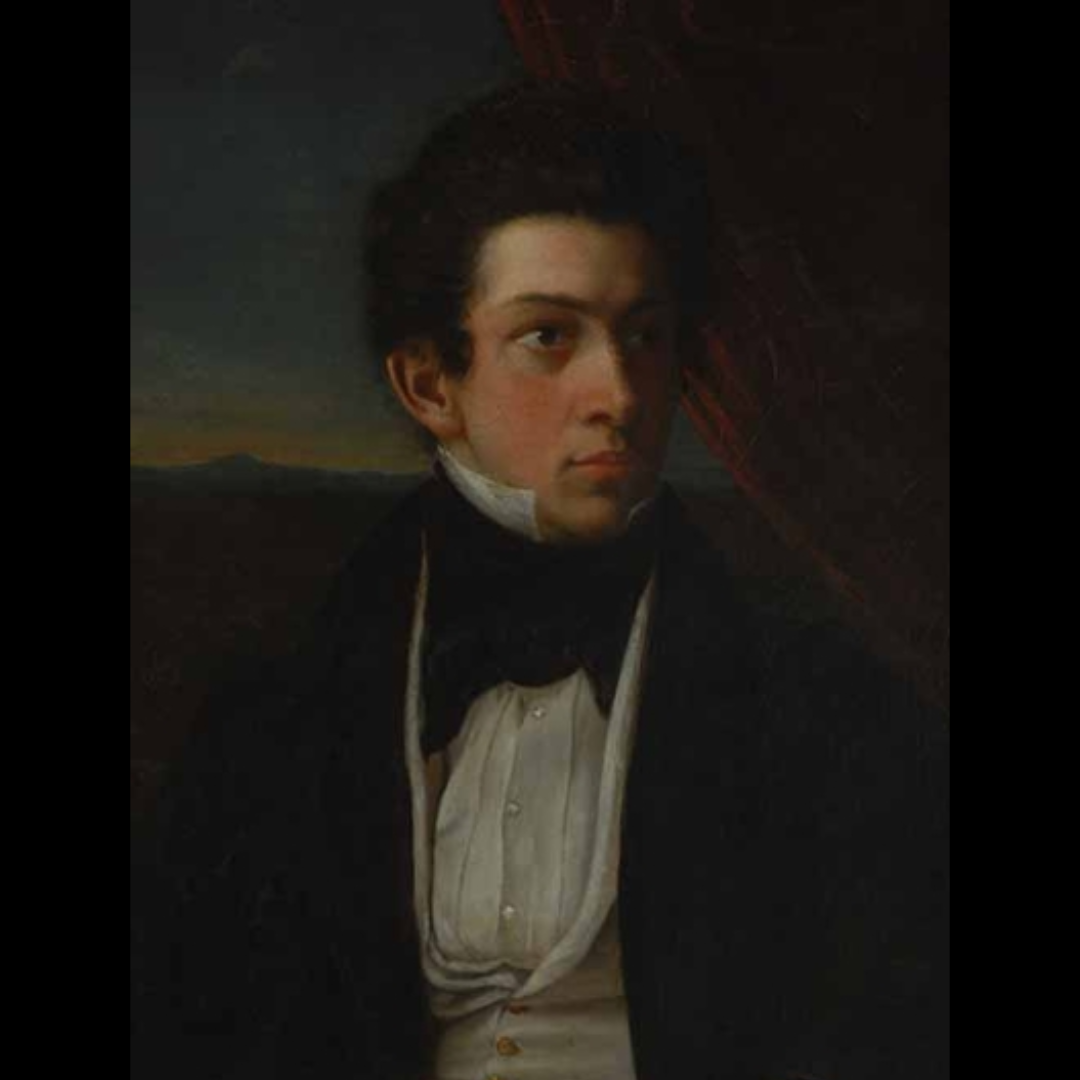
“No one more than myself appreciates the blessings of our civilization which are greatly due to the classics, and I believe that they will continue to have a most happy effect for all time in their sphere.”

Thomas Green Clemson
Founder of Clemson University

Are you looking to make a lasting impact through your life and career? Why not study the works that have stood the test of time?

The flexible, fifteen credit hour minor in Classics and the Ancient World (CLAW) gives students the opportunity to read, reflect on, and wrestle with the great writer and thinkers of the ancient Mediterranean world, including Homer, Sappho, Euripides, Plato and Aristotle, the Epic of Gilgamesh, the Israelite Prophets, Cicero, Seneca, Marcus Aurelius, St. Paul, St. Augustine, and many more. You can even learn to read them in their original languages (Greek, Latin, and Hebrew)!

The minor focuses on ancient Mediterranean histories and cultures, but sets them in a larger Eurasian context that includes their antecedents in south and east Asian mythology, religion, and philosophy, as well as the reception of the Greek and Roman world into the medieval period.

By setting Hammurabi's Code, Athenian democracy, the ethics of ancient Stoicism, the teachings of Jesus, or the five precepts of the Buddha within their ancient historical contexts, students in the CLAW minor investigate some of the world's first global and cross-cultural environments, gaining intellectual resources for navigating the depth and complexity of global issues in the present. Be personally transformed as you are inspired to encounter age-old questions at their source, while developing both an appreciation for and a critical perspective on much of what has been handed to us from the past.


Eligibility

The minor is easy to pair with just about any degree at Clemson, as many of its offerings are part of the General Education program. Since the coursework includes options in history, philosophy, religion, languages, political science, and English, it is maximally flexible to meet a wide range of student interests.

Follow in the long line of illustrious classics students, including J.R.R Tolkien, Toni Morrison, J.K. Rowling, Thomas Jefferson, W.E.B DuBois, and Chris Martin (of Coldplay).

  • Contributing Faculty
    • Keren Shatalov (Philosophy): Coordinator, Greek philosophy, medieval philosophy
    • Kathryn Langenfeld (History): Greek and Roman history, women in antiquity
    • Caroline Dunn (History): medieval history, crusades
    • Kenneth Tuite (Languages): Latin, mythology, Greek and Roman poetry
    • Yanming An (Languages): ancient and medieval Chinese philosophy
    • Benjamin White (Religion): early Christianity, koine Greek, Greco-Roman religions, Second Temple Judaism
    • John Thames (Religion):ancient Near East, Hebrew Bible, classical Hebrew language, Israelite religion, Judaism
    • Robert Stephens (Religion): ancient Hinduism and Buddhism
    • John Correa Reyes (English): medieval English literature
    • Lee Morrissey (English): reception of the classics in English literature
    • Spencer Krauss (Political Science): ancient Greek political thought, wisdom of the ancients
    • Tharon Howard (Interdisciplinary Studies): classics rhetoric, Greek and other ancient drama, reception of the classics in English literature
  • Coursework

    A minor in Classics and Ancient World requires 15 credits, with at least three credits selected from Group I and three credits selected from Group II, with the remaining credits selected from either group. No more than six credits of LATN courses may be counted toward the minor.


    • Group I- History: HIST 1720, HIST 3510, HIST 3520, HIST 3540, HIST 3550, HIST 3610, HIST 3700, HIST 4500, HIST 4510, HIST 4520, HIST 4700, HIST 4720, HIST 4740, LANG 3110, PHIL 3110, REL 3510, REL 4520
    • Group II- Literature and Culture: CHIN 3120, CHIN 4140, ENGL 3500, ENGL 4030, ENGL 4070, ENGL 4080, ENGL 4290, ENGL 4910, LATN 1010, LATN 1020, LATN 2010, LATN 2020, PHIL 3120, PHIL 3150, PHIL 4140, POSC 3510, REL 3010, REL 3020, REL 3060, REL 3080, REL 3120, REL 3130, REL 3520, REL 3530, REL 4010, REL 4210, REL 4220
  • Courses Offered Spring 2026

    Group I: History

    HIST 1720: The West and the World I: Taught by Dr. Langenfield, this course explores historical developments and cultural exchange from pre-history through the Reformation, focusing on cultures of the Mediterranean and Near East, including ancient Greece and Rome and those they influenced and were influenced by. 

    HIST 3610: Britain to 1688: Taught by Dr. Dunn, this course begins with the Roman era of Britain, then focuses on the Medieval era before concluding with the Tudors and Stuarts. 

    HIST 4740: Black Death and Other Catastrophes: Taught by Dr. Dunn, this course explores in detail the causes and consequences of the catastrophic fourteenth-century plague that killed around 50% of the Western population, as well as other crises involving climate change, famine, and warfare during the long fourteenth century. As devastating as these life-altering trials were, medieval survivors showed remarkable resilience in rebuilding their societies after climactic, medical, and military calamities. Preq: Sophomore standing. 

    Group II: Literature and Culture

    ENGL 3500: Mythology: Taught by Dr. Tuite, this course is an examination of the nature of Greco-Roman myth, specifically the story structures used to tell and retell familiar stories. The Argonautica story (in various forms) features prominently here. 

    ENGL 4070: The Medieval Period: Taught by Dr. Reyes, this course examines selected works of Old and Middle English literature, exclusive of Chaucer. 

    LATN 1020: Elementary Latin: Taught by Dr. Tuite, this course is a continuation of Latin 1010. 

    LATN 2020: Intermediate Latin 2: Imperial Authors: Taught by Dr. Tuite, this course is a continuation of Latin 2010, with the introduction of writings from the late Latin and Medieval periods.

    REL 3010: Old Testament: Taught by Dr. Thames, this course is an introductory course for studying the Hebrew Bible in historical context using archaeology, philology, and literary methods. 

    REL 3020: Survey of New Testament Literature: Taught by Dr. Bunnell, this course focuses on close textual analysis of the New Testament, and includes background in Jewish and Roman history. 

    REL 3130: Buddhism: Taught by Dr. Stephens, this course is a study of the history, practices, ideas, and social institutions associated with the variety of Buddhist traditions found throughout the world. Discussion topics focus on the development of classical Buddhism in India and its expansion into Tibet, and includes a treatment of the distinctive developments in China and Japan. 

    REL 4220: Early Greek Manuscripts of the New Testament: Taught by Dr. White, this course focuses on learning to read the Greek New Testament from ancient manuscripts, and discusses textual criticism, papyrology, and epigraphy. 

    ENGL 2120: World Literature: Love and Literature in the Ancient World: Taught by Dr. Pierce, this course is a survey of love and relationships from Homer's Odyssey, Sappho, Theocritus, the Roman Love Poets (Catullus, Propertius, Tibullus, & Ovid), and Vergil's Aeneid.

Benjamin White
Philosophy and Religion Department Chair (CLAW Coordinator until Summer 2025)
Keren Shatalov
Classics and the Ancient World Coordinator (beginning Summer 2025)
Department of Philosophy and Religion
Department of Philosophy and Religion | 126D Hardin Hall, Clemson, SC 29634