Outreach
Hands-On Activities
Tiny Channels, Huge Potential:
Hands-on Training in Microfluidics for High School Students
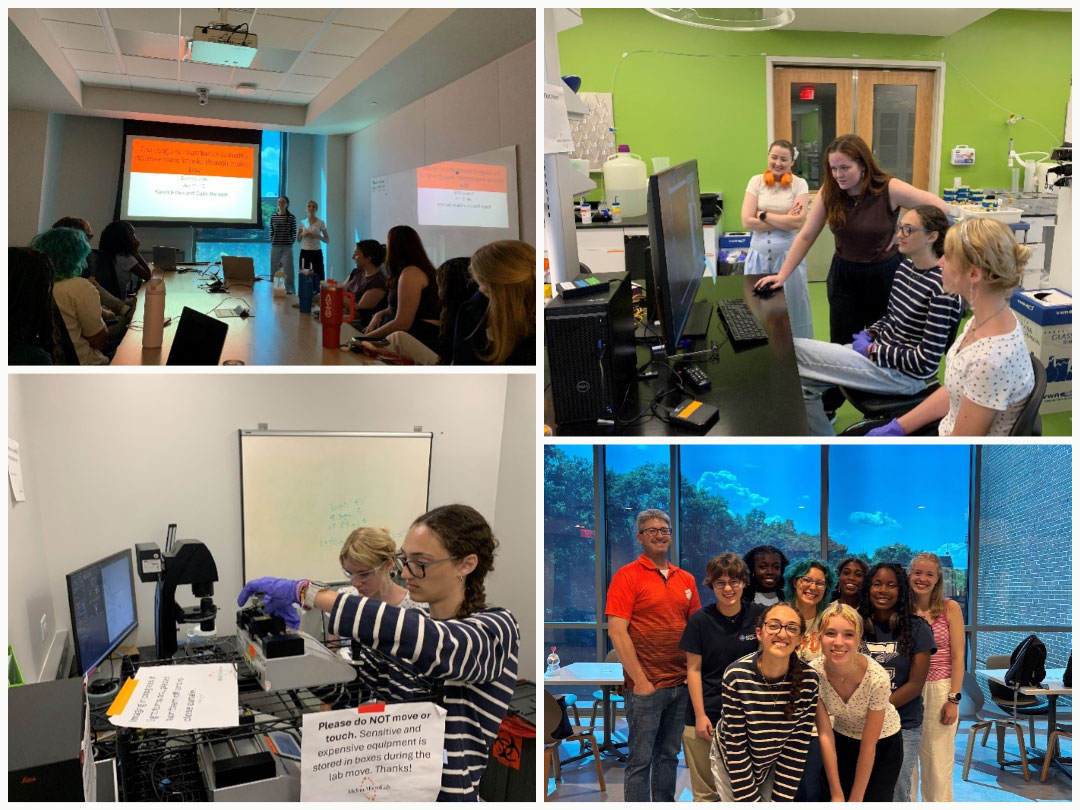
The newly developed three-day immersive experience for high school students exposes them to the field of microfluidic devices and highlights numerous applications that they can be used to interrogate biological systems.
Students developed skills in how to fabricate and use microfluidic devices, culminating in performing their own research project with a microfluidic gradient generator. Students also received training in fluorescence microscopy, image analysis, 3D printing, and effective presenting.
Students in 2026 got a chance to observe ongoing projects focused on (1) cell-to-cell communication in the tumor microenvironment, (2) mechanoporation of amoeba using deformation to deliver genetic cargoes to cells, (3) the uptake mechanism of novel cell-penetrating peptides, and (4) the effect of ammonia gradient steepness on the chemotactic response of algae.
Bioengineering 101: A design challenge to teach high school students about how engineers can help doctors
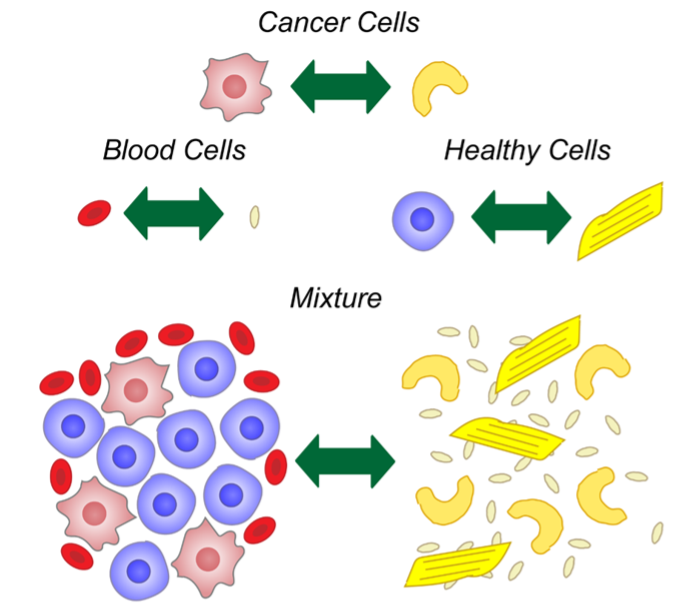 Developed by Dr. Melvin, this module helps to teach high school students about the engineering design process in the context of a common problem facing doctors, engineers, and scientists – isolating circulating tumor cells. Students are challenged with building their own engineered system from household items (e.g., plates, bowls, cups, etc.) to sort a mock patient biopsy consisting of rice (blood cells), macaroni noodles (cancer cells), and penne noodles (healthy cells).
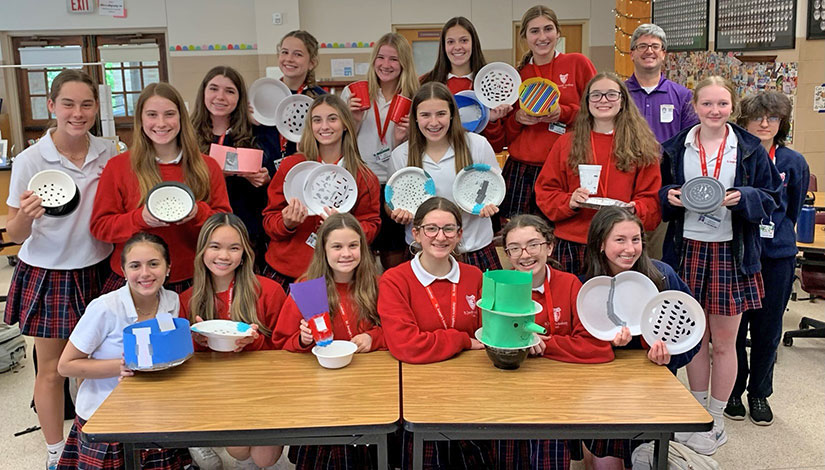
Students go through the entire engineering design process for sketching out the initial design, building it, and testing it by collecting important, real-world metrics like capture efficiency, purity, and throughput.
The design challenge can be modified for a single afternoon or a weeklong event. Please view the more detailed summary of the program. Teachers interested in implementing the program in their classroom are encouraged to reach out to Dr. Melvin.
