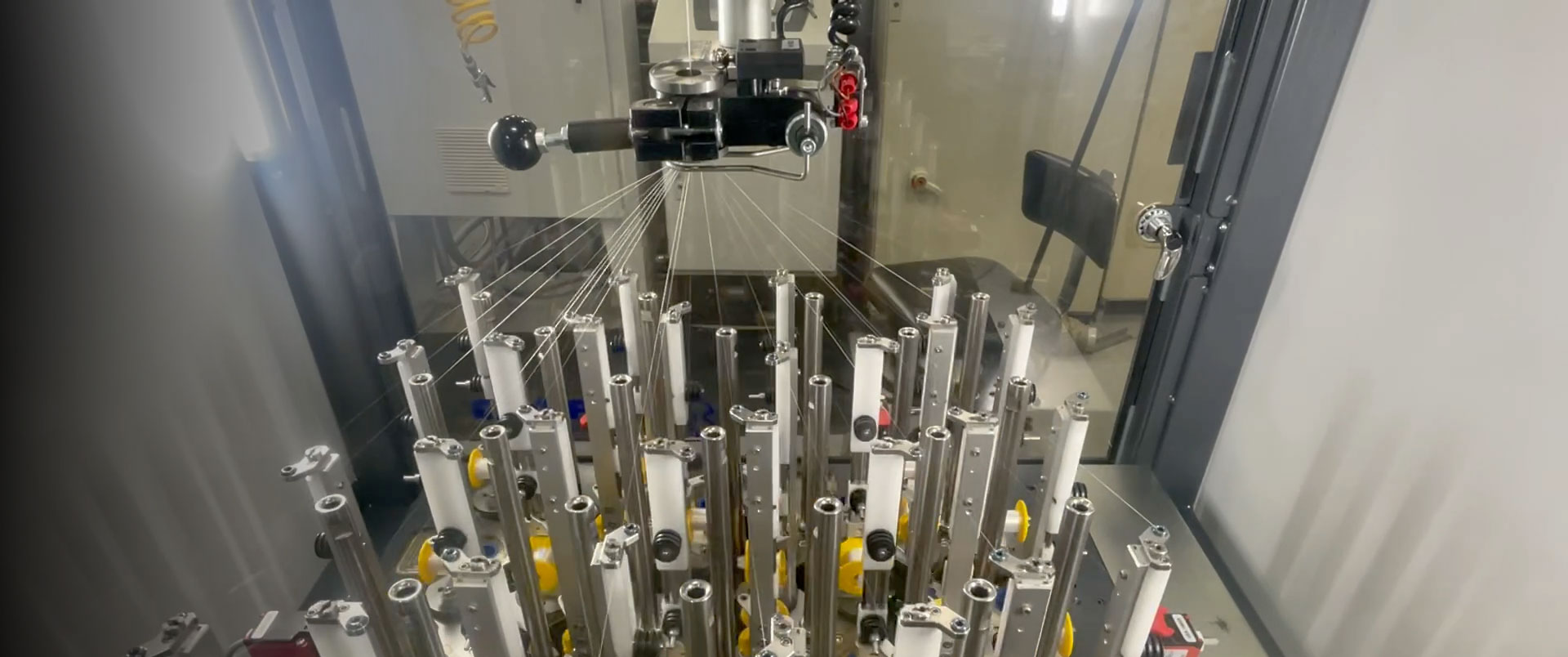
Innovate. Prototype. Deliver.
Advancing Textile Solutions from Research to Real-World Impact
From Department of Defense initiatives to NASA-supported technologies, our work is advancing textile innovation through solutions that enhance performance, improve safety, and address today's most demanding challenges.
Clemson Textiles partners with government, industry, and academic collaborators to transform innovative ideas into high-impact textile technologies. Our projects span advanced protective materials, smart textiles, wearable systems, aerospace applications, and next-generation fabrics, all developed with scalability and real-world deployment in mind.
Current Projects
Human Health in Space
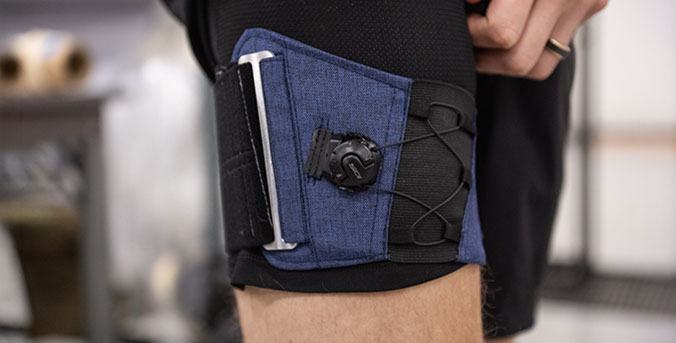
The Spaceflight Associated Neuro-ocular Syndrome (SANS) countermeasure project explores whether wearing venoconstrictive thigh cuffs can counter SANS by keeping more bodily fluids in the legs. Thigh cuffs are compact, lightweight, and easy to use, which makes them appealing for potential use during long-duration, deep-space missions. For this study, astronauts wore the thigh cuffs for 6 hours across 2 inflight sessions. To help researchers assess how well the cuffs work, crew will record ultrasound images of blood flow in their legs and neck veins during these data-collection sessions. Researchers will also compare this data against ultrasounds taken without the cuff to examine flow differences.
Members of the NASA Johnson Space Center Cardiovascular and Vision Laboratory (CVL) and Clemson Textile Laboratory at Clemson University designed and manufactured a set of Veno-constrictive thigh cuffs (VTCs) that were documented to counter cephalad fluid shifts in ground and analog experiments, for example, choroid thickness, intraocular pressure, and IJV area. The purpose of this study is to evaluate the efficacy of using the NASA VTC to reverse the headward fluid shift during spaceflight and inform the use of VTC as a potential SANS countermeasure
Our team was responsible for the design and assembly of the thigh cuff garment, utilizing various sewing techniques to create a final wearable that is both comfortable and functional for astronauts during spaceflight.

Image Caption (right): Exploring ways to prevent upward fluid shifts in microgravity to safeguard vision. Image courtesy of NASA Johnson Space Center.
“Thigh cuffs like these may allow researchers to better investigate medical conditions that result in extra fluid in the brain or too much blood returning to the heart.”
Brandon MaciasNASA Johnson Space Center
Active smart textile (AST) research is a burgeoning field in which fabrics are designed to adapt and change their functionality in response to external environmental conditions and/or user input. Unlike passive smart textiles (PST), such as Gore-Tex®, which rely on their structure to function, ASTs employ energy to power built-in sensors and/or actuators that sense, store, interpret, and/or react to information from their environment.
The SMART ePANTS goal is to build sensor systems that are comfortably integrated into primary clothing (e.g., shirts, pants, socks, and underwear). SMART ePANTS is an Intelligence Advanced Research Projects Activity (IARPA) program. Clemson Textiles was a participant.
“Imagine a stretchable computer. People are much harder on their T-shirts than they are on their phones, right?” The risk of breakage and damage is high, which has been a significant challenge in all previous and current academic efforts. The goal is to create something just as comfortable as a regular clothing item—no rigid additions or batteries “hanging off your body.”
Dawson CagleFormer IARPA PM

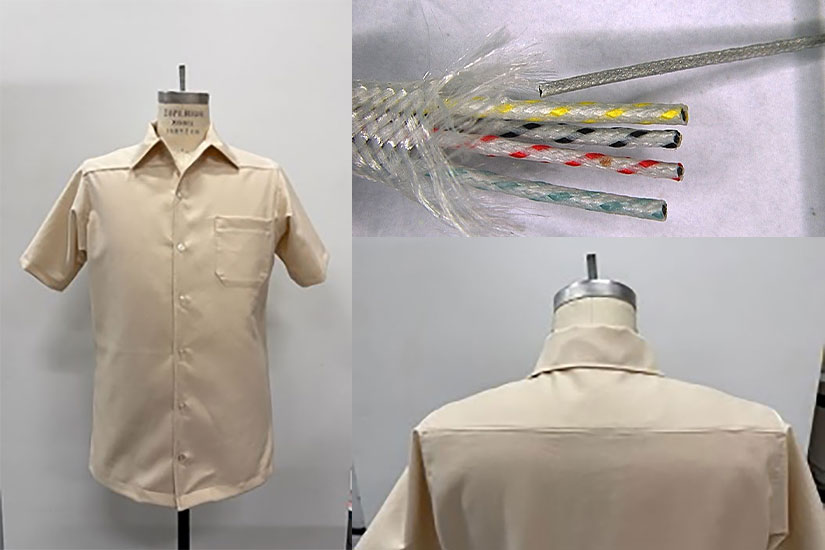
Our team for the SMART ePANTS project will incorporate and integrate audio recording sensors and all electrical components into a wearable textile fabric, which can then be cut and sewn into a garment. Clemson Textile’s two main focuses are fabric design to accommodate the electronics and the development of novel, metalized yarns to serve as conductors for the electronics. Future work includes incorporating electronics at the yarn level.
Recently Completed Projects
Bio-Protective Suits
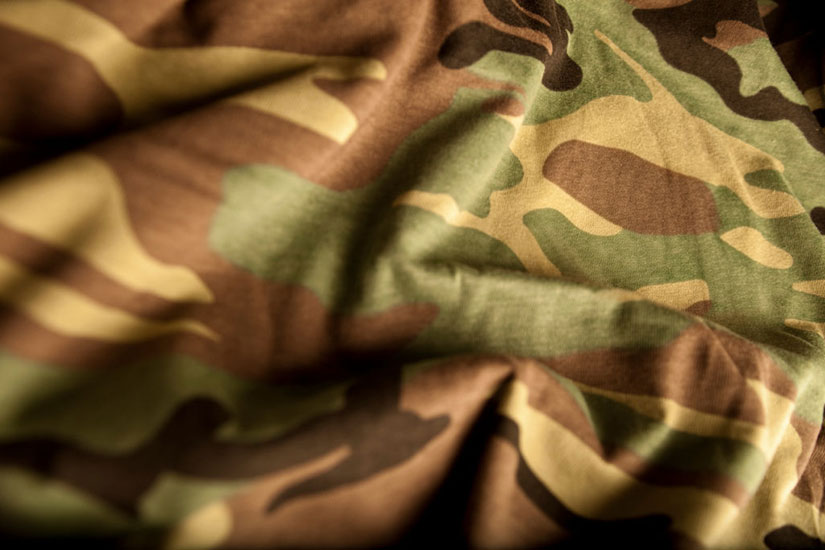
Personalized Protective Biosystem Program (Collaboration with Leidos) - DARPA. Clemson Textiles collaborated with Leidos to develop an innovative nanoparticle-integrated fabric laminate for chem-bio protective suits for the next generation of war fighters.
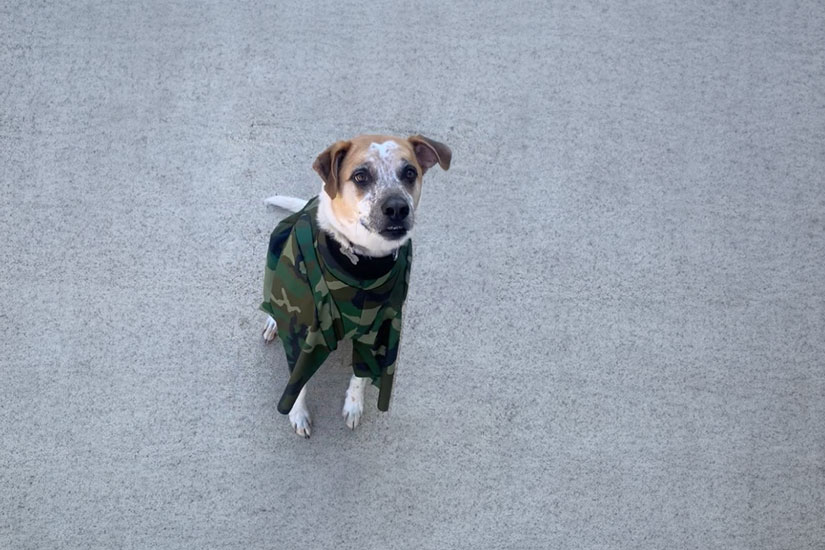
PPE for Military Dogs
SBIR Phase I (Collaboration with Mantel Technologies). Military working dogs can be exposed to dangerous conditions and may require chem-bio protective garments to limit exposure while not impeding motion. The goal was to design a garment that reduces the amount of contact the military working dog has with chem-bio agents on their skin/fur before decontamination.
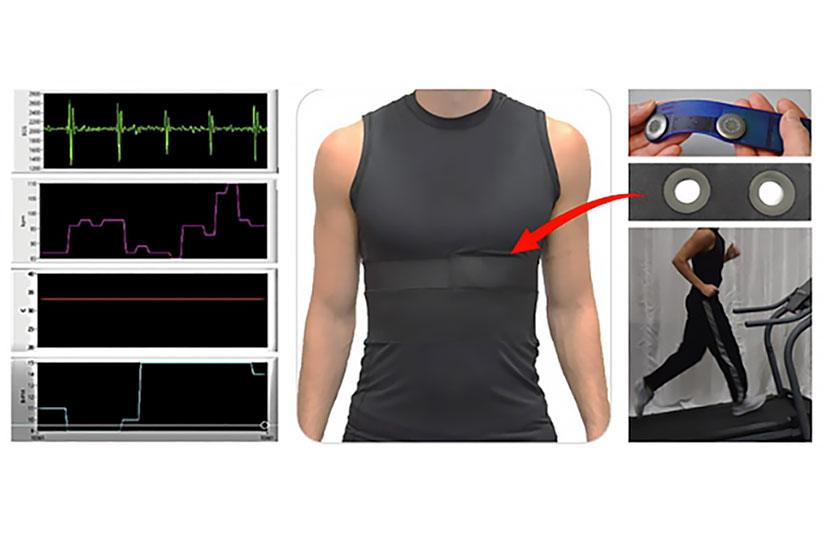
E-Health Garment*
SBIR Phase II (Collaboration with Cornerstone Research Group). The military has placed emphasis on methods for monitoring soldiers in the field, especially their vital signs, during hazardous situations. Clemson Textiles has designed the eHealth Garment, a next–to–skin layer that incorporates biosensors to monitor the wearer's vital signs and a structure to accommodate electronic sensors, enabling monitoring while remaining comfortable for the wearer. The final phase will include flame-resistant fabrics.
*This material is based upon work supported by the DoD SBIR Program under Contract No. W81XWH-22-C-0050 through a subcontract with CRG Defense. Any opinions, findings and conclusions or recommendations expressed in this material are those of the author(s) and do not necessarily reflect the views of the U.S. Army Medical Research and Development Command (USAMRDC) or CRG Defense.
