
Rain Gardens and Rainwater Harvesting Systems Across South Carolina
Clemson Extension and partner organizations have installed demonstration rain gardens throughout South Carolina to help improve flooding and water quality. Often these rain gardens are paired with rain harvesting systems to form a treatment train. These demonstration gardens not only help reduce runoff, improve water quality, control erosion, and increase wildlife habitat, but also serve as examples to the community of practical ways that rain gardens and rainwater harvesting systems can be incorporated into their own properties. Many of the demonstration gardens in the coastal region have been installed through Clemson Extension's Master Rain Gardener program.
Master Rain Gardener Program
The Master Rain Gardener program is a hybrid, multi-week training program designed to teach participants how to improve local water quality through the design, installation, and maintenance of residential-scale rain gardens and rainwater harvesting systems. The program combines self-paced online coursework with hands-on learning and covers topics including site assessment, soil analysis, rain garden design and sizing, plant selection, construction, maintenance, and rainwater harvesting system design and use. The program offers two tracks: the Certification Track, designed primarily for contractors, landscape designers, installers, and other professionals who install rain gardens and rainwater harvesting systems for pay, and the Letter of Completion Track, designed for homeowners, gardeners, Master Gardeners, Master Naturalists, and other residential audiences. Both tracks offer hands-on learning opportunities, with the Certification Track also featuring an in-person field day and a course exam.
Demonstration Gardens by Region
Each rain garden profile includes information about the site, its stormwater management features, notable plants or design elements, and photographs highlighting the garden.
Coastal
Corrine Jones
Community Garden
36 Marlow Drive, Charleston, SC 29403
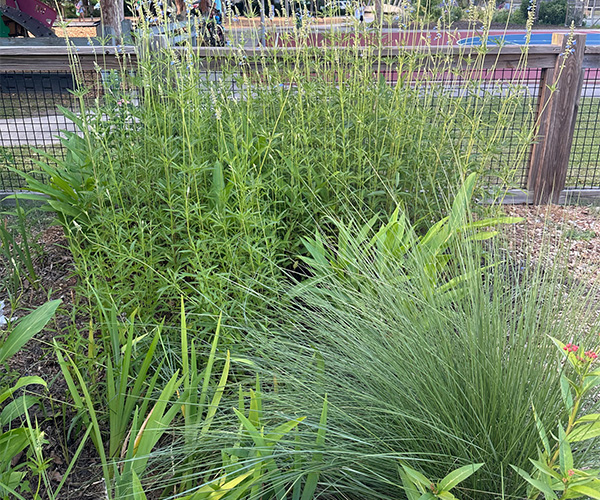
Installed as part of the Master Rain Gardener Certificate Track field day in 2019, this site features a pavilion installed through the Clemson Design Center’s communityBUILD program. The pavilion provides a gathering space for community members while also capturing stormwater runoff from the roof. The site includes two rainwater harvesting systems: a cistern with a pump and a rain barrel with a gravity-fed spigot. Both systems are designed to overflow into nearby rain gardens planted with native species, including blue sage, sweetgrass, native hibiscus, and more. The site is owned and managed by the Charleston Parks Conservancy.
Charleston Farms
Community Center
1633-A Sumner Ave, Charleston, SC 29403
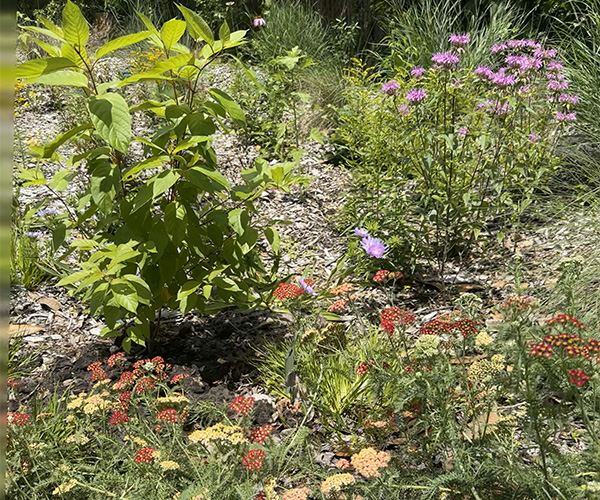
Installed as part of the Master Rain Gardener Certificate Track for the Sustainability Institute in 2025, this rain garden is designed to capture sheet flow runoff from the property and allows it to infiltrate into the ground. Runoff is filtered through the roots of a diverse palette of native plants, including yarrow, goldenrod, purple coneflower, and more. The site is owned and managed by the City of North Charleston’s Keep North Charleston Beautiful program.
Pawleys Island
Town Hall
323 Myrtle Ave, Pawleys Island, SC 29585
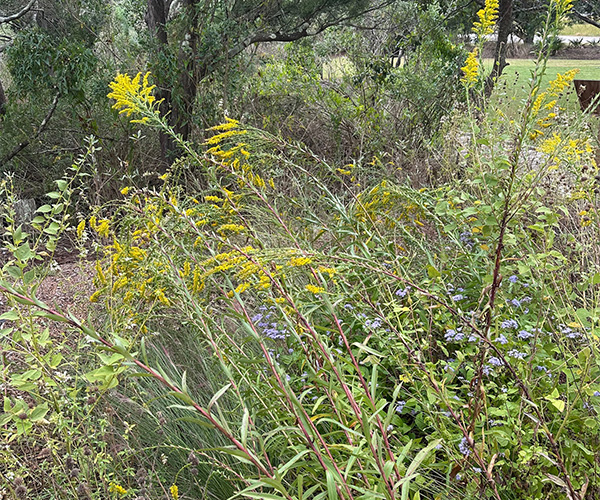
Installed as part of a two-part public workshop in 2025, this site features a cistern with a passive drawdown system designed to capture up to 600 gallons of runoff from the Town Hall building. The cistern slowly releases water into a nearby rain garden, helping to reduce the amount of stormwater reaching the adjacent salt marsh. The rain garden is planted with salt-tolerant native species, including spotted beebalm, sea oxeye daisy, and saltmeadow cordgrass.
Upstate
Pickens Extension Rain Gardens
222 West Main Street, Pickens, SC 29671
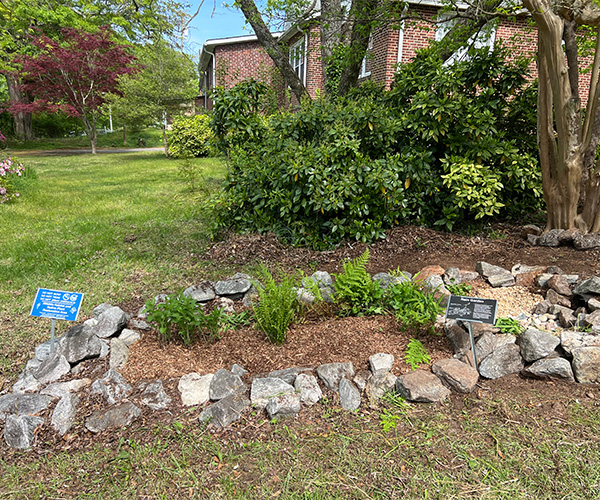
Shade Rain Garden
Built around 2010, this shade rain garden captures runoff from the upper parking lot of the Pickens Visitor Center. The original garden was constructed with a riprap rock berm to accommodate the site's slope and elevation. In April 2025, Clemson Extension hosted a Rain Garden Maintenance Workshop at the site to address erosion concerns and upgrade the garden into a tiered system with a forebay. New native plants were added, including dwarf iris and Christmas fern varieties well-suited to the site's shaded conditions.
Pickens Extension Rain Gardens
222 West Main Street, Pickens, SC 29671
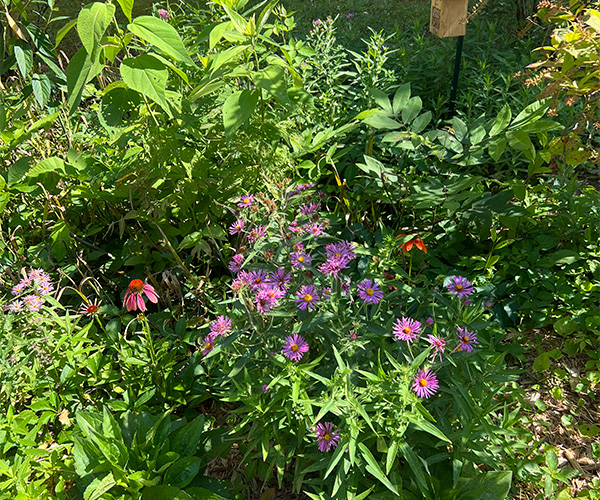
Sunny Rain Garden
Built around 2010, this rain garden is located at the back-left corner of the Pickens Visitor Center and captures runoff from a building downspout, which flows into a French drain. In April 2025, Clemson Extension hosted a Rain Garden Maintenance Workshop at the site to add native plants, including purple coneflower, pink muhly grass, native milkweed, and black-eyed Susan. A large berm along the side of the garden adjacent to the gravel parking lot helps stabilize the garden during heavy rainfall due to the site's steep slope. Wildlife enhancements around the garden include bee houses, bluebird boxes, and bird feeders.
Explore Low Impact Development Across South Carolina
Low Impact Development (LID) works with nature to manage stormwater close to its source by slowing, capturing, infiltrating, and treating runoff. Practices include rain gardens, rain barrels and cisterns, bioretention areas, vegetated swales, and permeable surfaces. The South Carolina Low Impact Development Atlas, managed by the S.C. Sea Grant Consortium, is an interactive statewide map that showcases public and private LID projects and demonstrates practical approaches to stormwater management across the state.
Learn More
For more information about the Master Rain Gardener course, demonstration gardens, or certified contractor list, contact Samantha Porzelt, Master Rain Gardener Program Coordinator at sporzel@clemson.edu
