Skip to content
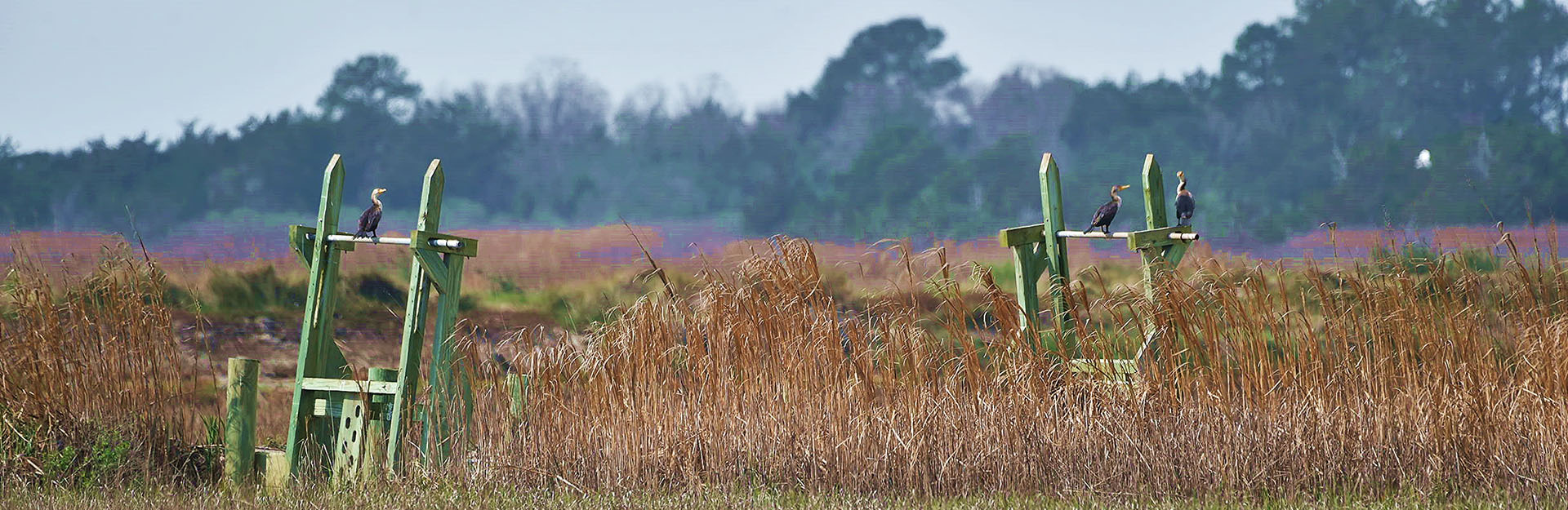
Cormorants on a rice trunk
James C. Kennedy Waterfowl and Wetlands Conservation Center

Our Team

Staff

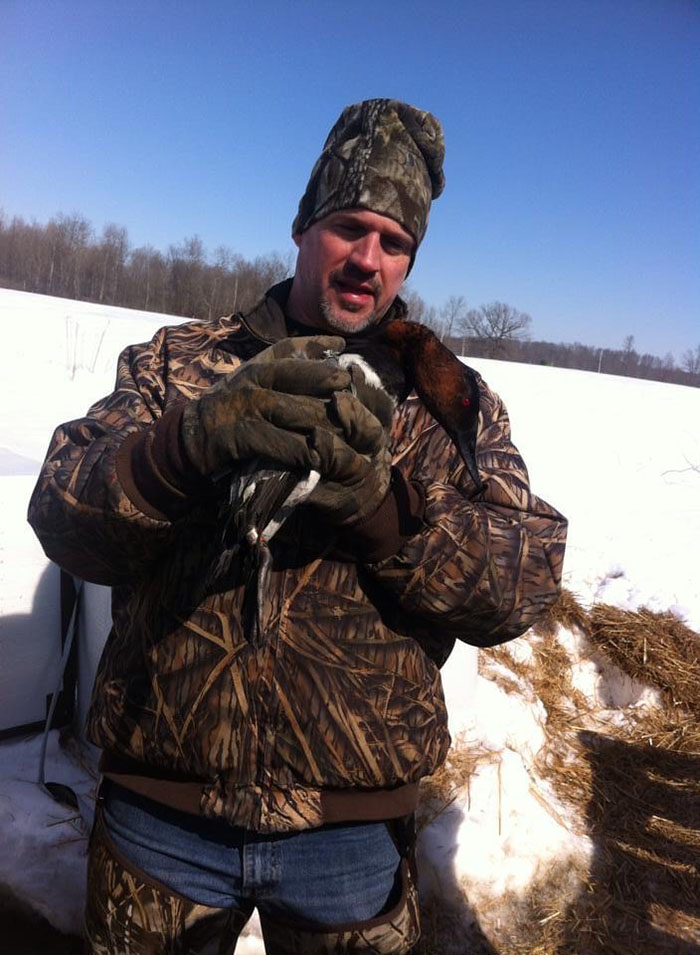
Dr. Jim anderson with canvasback

Dr. Jim Anderson, Director

James C. Kennedy Waterfowl & Wetlands Conservation Center

Dr. James T. (Jim) Anderson is the James C. Kennedy Endowed Professor of Waterfowl and Wetland Ecology, the Director of the James C. Kennedy Waterfowl and Wetland Center, and a faculty member in the Department of Forestry and Environmental Conservation at Clemson University. Jim arrived at Clemson in August 2021. Until August 2021, he was a Wildlife and Fisheries Resources Professor and the Davis-Michael Professor of Forestry and Natural Resources at West Virginia University (WVU). He started at WVU in January 1999 as an assistant professor, became an associate professor in 2004, and became a full professor in 2009. He earned a B.S. in wildlife from the University of Wisconsin-Stevens Point (1991), an M.S. in range and wildlife management through the Caesar Kleberg Wildlife Research Institute at Texas A&M University-Kingsville (1994), and a Ph.D. in wildlife science from Texas Tech University (1997).

Jim’s research centers on wetland and riparian wildlife ecology and wetland/ riparian management. He has published >150 scientific articles, mentored over 60 graduate students, and garnered >$29 million in grants and contracts. Jim has taught or co-taught various courses,including Waterfowl Ecology, Introduction to Wildlife and Fisheries Resources, The Tradition of Hunting, Renewable Resources Policy and Governance, Applied Wetlands Ecology and Management, and Restoration Ecology. He has received multiple department and college awards for outstanding researcher, teacher, and service provider. He has received the Distinguished Alumni Award from the College of Agricultural Sciences and Natural Resources at Texas Tech University and the Outstanding Faculty Award from the West Virginia University Forestry Alumni Association.

In his spare time, Jim likes to garden, hunt, and go on adventures with his wife, Heather, and their Labrador retriever, Gideon.

Email Jim

For more details please view Jim's profile.
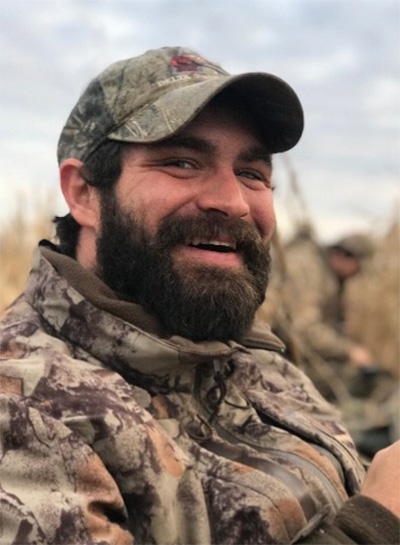
Andrew hopkins

Andrew Hopkins, Post-doctoral Fellow

James C. Kennedy Waterfowl & Wetlands Conservation Center

Andrew Hopkins is a postdoctoral fellow at the James C. Kennedy Waterfowl and Wetland Center working with Dr. James Anderson. He previously completed a postdoctoral position at Purdue University where he researched antimicrobial resistance in amoeba and canines as well as worked on a USDA project examining the role backyard poultry owner attitudes and perceptions influence biosafety and security. Before this he completed his PhD at Purdue University in 2023 where he researched the effects of agricultural fungicides on aquatic communities. He earned his M.S. from Western Michigan University in 2019 and his B.S. from Eckerd College in 2013.

At the Kennedy Center, Andrew will be assisting with various existing projects and those in development as well as mentoring students. Additionally, Andrew will be developing independent projects examining waterfowl community ecology in wetlands as well as projects in either disease ecology or the ecology of herpetofauna.

In his free time Andrew enjoys baking and reading as well as exploring new areas to find local amphibians and reptiles.

Email Andrew

For more details please view Andrew's profile.

crystal anderson

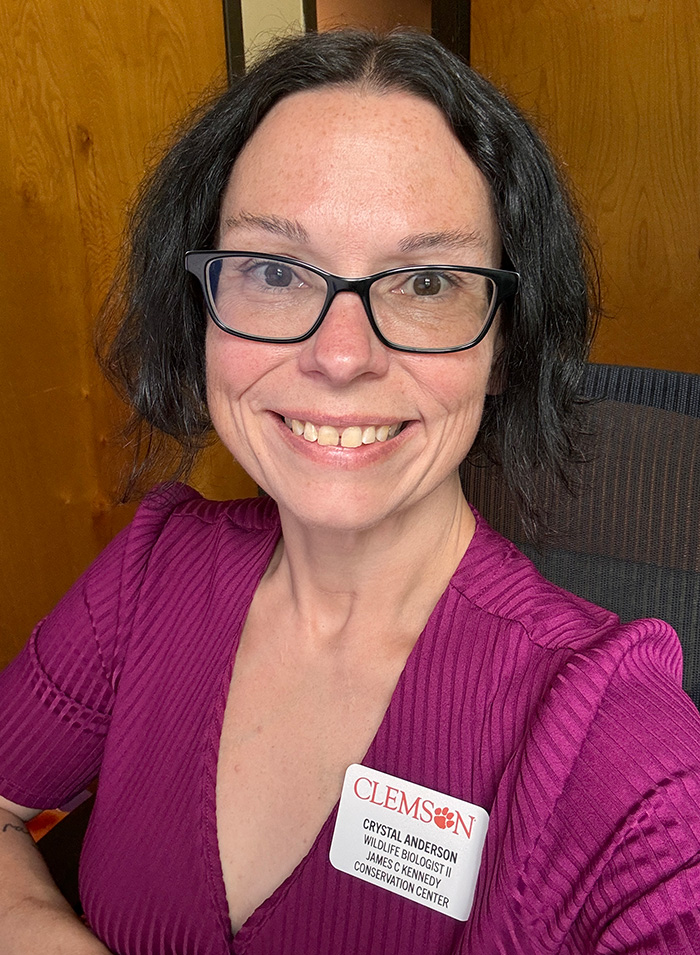
Crystal Anderson, Wildlife Biologist III & Ph.D. Student

James C. Kennedy Waterfowl & Wetlands Conservation Center

Crystal Anderson is a Wildlife Biologist at the James C. Kennedy Waterfowl and Wetland Center and a Ph.D. student under the mentorship of Dr. Jim Anderson in the Department of Forestry and Environmental Conservation at Clemson University. Crystal commenced her Ph.D. studies in August 2023 and began her role as a wildlife biologist in December of the same year. Prior to joining the Kennedy Center, she was a professor at Horry-Georgetown Technical College, where she taught courses in Forest Mensuration, Recreation Management, Soil Fertility, Forest Ecology, Forest Protection, and Vertebrate Biology. She earned her B.S. in Wildlife and Fisheries Biology from Clemson University in 2019 and her M.S. in Forest Resources from Clemson University in 2023.

In her role at the Kennedy Center, Crystal focuses on writing proposals to secure funding for graduate student research projects related to waterfowl, wetlands, and other wildlife species, while assisting fellow students with their graduate projects and fieldwork. As a Ph.D. student, Crystal's research engages with underserved communities adjacent to coastal wetlands to enhance education on pollinators, develop sustainable community gardens aimed at improving food security, and assess local wetland pollinator diversity and abundance to identify rare and threatened species. Additionally, her work includes performing salinity testing on endangered and threatened pollinator host plants and mapping potential range shifts in response to rising sea levels and associated saltwater intrusion.

Crystal is a published author, having co-written "Winter Tree Identification for the Southern Appalachians and Piedmont - a Photographic Guide" with Dr. Donald Hagan and Hailey Malone. She utilized her photography skills to capture detailed images for this identification guide, which is now used in teaching dendrology at schools and universities across the southeast.

In her spare time, Crystal advocates for Autism awareness, makes valiant attempts at gardening, and spends quality time with her husband and two teenage children in Myrtle Beach, South Carolina.

Email Crystal

For more details please view Crystals's profile.

Brandon ross

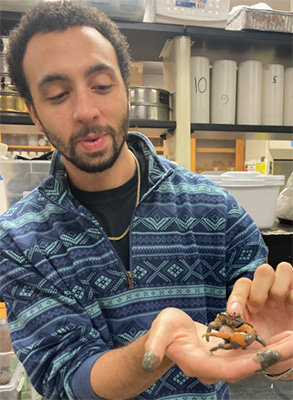
Brandon Ross, Biologist I

James C. Kennedy Waterfowl & Wetlands Conservation Center

Brandon Ross is a Wildlife Biologist at the James C. Kennedy Waterfowl and Wetlands Conservation Center. He grew up outside of Philadelphia and graduated from the University of Connecticut in 2021 with a degree in Natural Resources and Ecology/Evolutionary Biology. Brandon then left the Northeast, heading south to work on the Georgia Coast as a naturalist, assisting graduate students with their fieldwork and investigating reptile communities’ responses to prescribed fire. After spending several years in Georgia, he moved to New Jersey to work as a research assistant studying the spatial ecology of diamondback terrapins and monitoring saltmarsh restoration projects at The Wetlands Institute.

Brandon now works at the James C. Kennedy Waterfowl and Wetland Center as a biologist, working to establish pre-restoration baselines for a property near Brunswick, Georgia. This project aims to quantify the efficacy of restoration efforts and inform future management decisions regarding habitat restoration in coastal wetland systems.

In his free time, Brandon enjoys spending his time outdoors hiking, birding, snowboarding, and fly- fishing, while sharing his passion for the natural world with those around him.

Email Brandon

brit nahorney

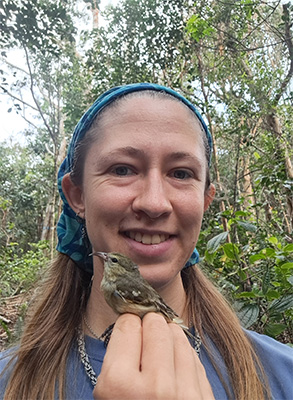
Brit Nahorney, Biologist I

James C. Kennedy Waterfowl & Wetlands Conservation Center

Brit Nahorney grew up in Oregon and has assisted with avian and small mammal research throughout the United States. She’s previously conducted fieldwork for the Hawaii VINE Project on Oahu, as a least bell’s vireo and MAPS station technician for USGS, and surveyed breeding marbled murrelet for Oregon State University. She has also trapped and tracked New England cottontail in New York, assisted with clapper rail research, and was a crew lead for the Saltmarsh Habitat and Avian Research Program in Maine which included searching for nelson’s sparrow and savannah sparrow nests, banding birds, and collecting avian blood samples.

Brit holds a bachelor’s degree in Environmental Biology and a master’s degree in Biology. During her graduate research, she studied the phenology of cerulean warbler nest stages and caterpillar abundance in Indiana along with the diet and gut microbiome of cerulean warbler. She is joining the James C. Kennedy Waterfowl & Wetlands Conservation Center after working as an environmental reviewer at New Hampshire Fish and Game where she provided conservation measures for developmental impacts to threatened and endangered species in the state, before the review program ended. She’s excited to explore South Carolina and to add as many southern bird species to her life list as possible.

In her free time, Brit enjoys hiking, photographing arthropods, cheering on her favorite hockey team, and watching birds

Email Brit

Margaret Jenson

Margaret Jenson, Waterfowl Biologist I

James C. Kennedy Waterfowl & Wetlands Conservation Center

Margaret grew up in the temperate and sub-boreal forests of New Hampshire, running up and down mountains and eagerly exploring every possible landscape. Since getting their bachelor’s in Conservation Biology at St. Lawrence University in northern New York in 2020, Margaret has been deepening their love for birds through fieldwork all over the world. They’ve monitored nesting Common Loons and Rusty Blackbirds in northern New Hampshire. They’ve maintained habitat for native waterbirds in Hawaiʻi’s wetlands, and studied fruit dispersal by nonnative birds in its upland forests. They spent a winter on Kuaihelani (Midway Atoll) banding albatross, surveying for Laysan Ducks and various shorebirds, and removing invasive plants. Off the coast of Maine, they supervised a team monitoring tern growth and productivity for two summers. They nest-searched Superb Fairy-wrens in Australia and Great Grey and Spotted Owls in California. Margaret has also worked at passerine banding stations in Ontario, Alaska, and Pennsylvania.

At the Kennedy Center, Margaret works as a waterfowl biologist investigating the behavior and genetics of game-farm Mallards in South Carolina, as well as how they affect wild Mallard populations. They’re eager to get to know the ducks, people, and landscapes of South Carolina, and to add a new species and location to their list of experiences.

When they’re not staring at or waiting for birds, Margaret can be found making art, telling stories, playing music, wandering at various speeds through the woods, or in some form of boat.

Email Margaret

Cameron hollander

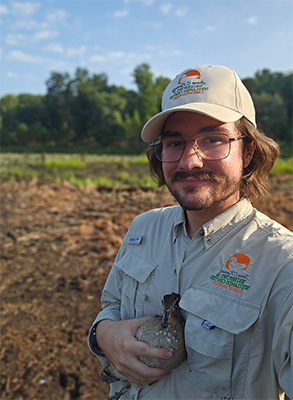
Cameron Hollander, Wildlife Technician

James C. Kennedy Waterfowl & Wetlands Conservation Center

Cameron Hollander was born in Boston, Massachusetts and raised in New Jersey before recently moving down to Charleston to pursue his passion for wildlife biology. Cam's love for nature started at a young age, influenced by the likes of Steve Irwin, his dream is to one day work with saltwater crocodiles and the various reptiles he was introduced to while watching the crocodile hunter. It was while receiving his bachelor's degree in Wildlife and Fisheries Science from The Pennsylvania State University that Cameron first started field work and found his foothold into the world of conservation research. While working as a field tech for the university between 2023-2024, he engaged in various research projects and picked up skills that would culminate in the desire to continue working in field biology. Some highlights include radio telemetry tracking of box and wood turtles, capture-mark-recapture surveys and swabbing of eastern red-spotted newts for chytrid fungus, and habitat quality analysis through the assessment of foliage and its impact on thermal ecology. Since this Cameron has spent time taking a more hands-on approach to wildlife conservation and education by interning at the Avian Conservation Center's medical clinic and education departments. It was during this experience that he was able to observe the direct implications of the rise in human-wildlife conflicts and how education plays a role in preventing unnecessary wildlife mortalities.

Cam is now working at the James C. Kennedy Waterfowl and Wetland Center as a field technician as it provides an opportunity to combine past experiences and to better inform public education through the collection and analysis of field data.

In his free time Cameron enjoys being out in nature, learning about music production, and watching his Boston sports teams. He is also currently looking forward to continuing his education through Clemson's Wildlife and Fisheries Resource Management masters program this upcoming spring.

Email Cameron

Current Students

susan accettullo

Susan Accettullo

M.S. Student, James C. Kennedy Waterfowl and Wetlands Conservation Center

Email Susan

View Susan's Profile

Dorothy Aldridge

Dorothy Aldridge

M.S. Student, James C. Kennedy Waterfowl and Wetlands Conservtion Center

Email Dorothy

View Dorothy's Profile

scott binger

Scott Binger

Ph.D. Student, James C. Kennedy Waterfowl and Wetlands Conservation Center

Email Scott

View Scott's Profile

rene brown

Rene Brown

M.S. Student, James C. Kennedy Waterfowl and Wetlands Conservation Center

Email Rene

View Rene's Profile

oluwatobi olaniyi

Oluwatobi Olaniyi

Ph.D. Student, James C. Kennedy Waterfowl and Wetlands Conservation Center

Email Oluwatobi

View Oluwatobi's Profile

christopher pettengill

Christopher Pettengill

Ph.D. Student, James C. Kennedy Waterfowl and Wetlands Conservation Center

Email Christopher

View Christopher's Profile

Jake shurba

Jake Shurba

Ph.D. Student, James C. Kennedy Waterfowl and Wetlands Conservtion Center

Email Jake

View Jakes's Profile

akshit suthar

Akshit Suthar

Ph.D. Student, Wildlife and Fisheries Biology, James C. Kennedy Waterfowl and Wetlands Conservation Center

Email Akshit

View Akshit's Profile

arua yaum de castro

Aruã Yaym de Castro Ferreira

M.S. Student, James C. Kennedy Waterfowl and Wetlands Conservation Center

Email Arua

View Arua's Profile

Former Graduate Student Partners

James C. Kennedy Waterfowl and Wetlands Conservation Center
James C. Kennedy Waterfowl and Wetlands Conservation Center | Baruch Institute, PO Box 596, Georgetown, SC 29442-0596