ClemsonLIFE™
Welcome To ClemsonLIFE™
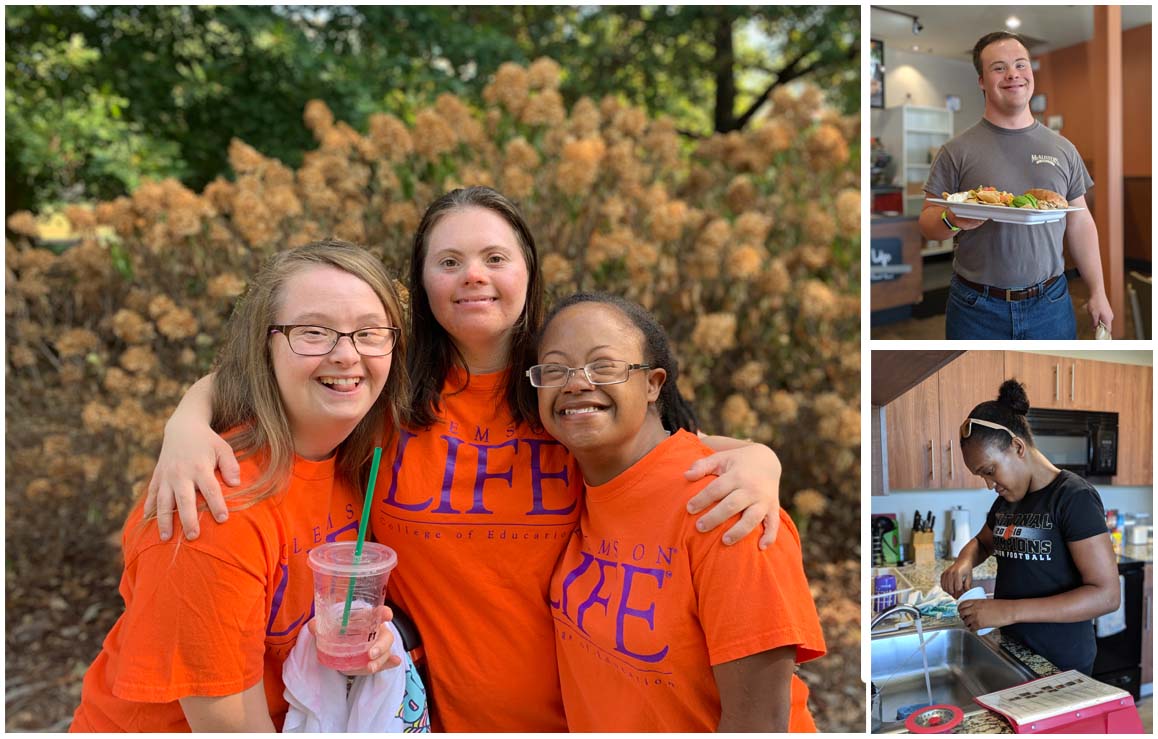
The ClemsonLIFE ™ program at Clemson University offers a collegiate experience that prepares young men and women with intellectual disabilities for competitive employment and independent living through a combination of academic coursework and career exploration. The program is designed for students who desire a post-secondary experience on a college campus. Our program incorporates functional academics, independent living, employment and social/leisure skills in a public university setting with the goal of producing self-sufficient young adults.
ClemsonLIFE Traditional Program
Please use the following link to apply for the ClemsonLIFE Traditional Application for the 2027-2028 school year.
-
About the Program
ClemsonLIFE is a four-year postsecondary program for young adults with intellectual disabilities that focuses on functional academics, independent living, employment, social and leisure development, and health and wellness skills within a public university setting. The program is designed to support students in developing the skills needed for greater independence and self-sufficiency. Students who successfully complete the program earn a certificate in postsecondary education.
We Believe
- Young adults go through a similar development process that requires certain activities, experience and support.
- Young adults must develop skills and an understanding about themselves and the world around them in order to fully participate in society and to become successful, contributing adults.
- Higher education is a vehicle for self-empowerment and access to social networks, employment, and independence.
- Group membership provides essential motivation and support for learning and participation in community life.
ClemsonLIFE Courses
- Functional Mathematics, Banking and Budgeting
- Independent Living Skills
- Social Skills
- Self Advocacy and Safety
- Health and Wellness
- Employment Skills
- Supervised Job Placement/Internship
Independent Living
- Students live in four bedroom apartments on campus
- Supervision is provided by an Independent Living Assistant (ILA) in close proximity, either in the apartment or across the hall
- Independent living skills are taught in class, at the apartments, and then reinforced by ILAs
- Students are taught how to utilize public transportation
- Time management, prioritizing, and scheduling
Counseling
- Counselors assist students with independent living skills, roommate relations, and social skills.
- Weekly group counseling sessions with students
- Individual counseling session available, upon student request
Employment
- Job placements (on and off campus) with on-site supervision
- Weekly jobsite performance evaluations
- Classroom instruction on employment skills
Employment Resources Provided
- Each student will be given an electronic copy of the following upon graduation: resume, reference list, and other resources (i.e. tips for an interview and common employment accommodations)
Socialization/Leisure
- Enrollment in Clemson University leisure skills course
- Involvement in various campus student organizations
- Community involvement
- Interaction with Clemson University students from all across campus
- Mentor Program
Health and Wellness
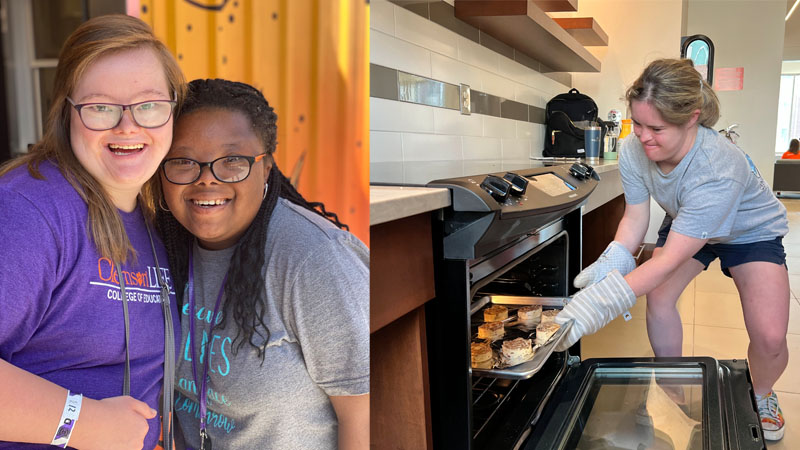
- Nutrition and cooking classes
- Personal fitness training
- Personal and universal hygiene practices
- Characteristics of healthy relationships
-
Applications and Admissions
- Documentation of an intellectual disability, with significant limitations in intellectual functioning and in adaptive behavior, as defined by the American Association on Intellectual and Developmental Disabilities (AAIDD). “Intellectual disability is a disability characterized by significant limitations both in intellectual functioning and in adaptive behavior as expressed in conceptual, social, and practical adaptive skills. This disability originates before the age of 18” (AAIDD).
- Primary disability must be cognitive, not behavioral or emotional
- Was eligible for IDEA services while in school; has/had an IEP.
- Has the ability to independently self-administer and manage medication, specialized dietary, and/or medical needs. Note: ClemsonLIFE personnel are not available to manage/administer medication and take no responsibility for specialized diets or medical needs.
- Reading ability is functional – able to respond to emails, texts, and read functional lists such as a grocery list (approx. 3rd grade).
- Has basic mathematics understanding; can use a calculator.
- Can utilize technology (cell phone, laptop, etc.) on a basic level.
- Age is between 18-26 years old upon admission to the program.
- Demonstrates independence, motivation, and emotional stability.
- Can function independently for a sustained period of time.
- Likes to be around people; sociable.
- Able to handle changes in routine; can be flexible in fluctuating circumstances.
- Not defiant toward authority; can take direction.
- Demonstrates the ability to accept personal responsibility for actions and maintains respect for self and others.
- Likes to learn.
- Has the potential to be successful in competitive employment situations. We highly recommend employment, or at least volunteer, experience before entering the program.
- Has the desire and motivation to participate in a college experience.
- Has family who will support his/her independence.
Application Process
- We recommend prospective students and families attend a program open house. This one-day program will allow students and families to determine if the ClemsonLIFE program will be a good fit.
- Complete the online application.
- Select payment portal tab and pay application fee.
- Eligible applicants may be invited to attend an on-campus interview.
- The application for 2027-2028 school year opens on June 1, 2026 and will close December 1, 2026. Completed applications are due on October 1, 2026, for early admission consideration and December 1, 2026, for regular admission consideration.
Admission Requirements
- Psychological Report within the last 3 years (tests include: IQ, Adaptive, Social/Emotional)
- Transcript
- Most recent IEP
- Behavior Records (if no records exist, please send a letter from school on official letterhead stating so)
- 2 Letters of Recommendation
- Medical Physical
-
Open House
Open House dates:
- September 26, 2026
- More details will be emailed the week of.
- Open House registration typically will reach capacity within a few weeks. If you are unable to register, please email clemsonlife@clemson.edu to be put on the waitlist.
-
Daily Schedule
Monday and Wednesday
- 8:30 a.m. – LIFE: Applied Math / Grocery Shopping
- 10:00 a.m. – LIFE: Advising
- 12:00 p.m. – Lunch
- 1:00 p.m. – Social Skills/Internship
- 5:30 p.m. – Dinner
Tuesday and Thursday
- 9:00 a.m. – LIFE: Apartment Class
- 11:00 a.m. – LIFE: Self Advocacy
- 12:00 p.m. – Lunch
- 1:30 p.m. – Employment/ Technology
- 4:00 p.m. – Workouts
- 5:30 p.m. – Dinner
Friday
- 8:30 a.m. – Community Involvement / Explore Clemson
- 12:00 p.m. – Lunch
- 1:00 p.m. – Leisure Skills/Internship
Friday Afternoon – Sunday Evening
- Activities, Social, Leisure, and Recreation Events/Outings Planned by Independent Living Assistants.
*This is a sample schedule that is subject to change.
Social Leisure/Recreational Opportunities
All students attend a Clemson University traditional one to four hours course one to two days per week. They attend specialized fitness classes at Fike Recreation Center each week. Mentors also meet with students on a weekly basis to support and encourage LIFE students. The 650+ volunteers will be available for a plethora of activities with our students.
- Tailgates and football games on Saturdays
- Soccer, basketball, baseball, volleyball and other sporting events
- Intramural Unified Sports
- Students are buddies to young children with disabilities at TOP Soccer and Challenger Baseball.
- Students have the opportunity to participate on the Tiger Sharks Swim Team and Equine Therapy.
- Campus-wide activities such as movies, concerts, shows, First Friday parade, homecoming events, etc.
- Students join and attend university clubs and student organizations functions.
-
Calendar
The ClemsonLIFE Program follows the University academic calendar, except for University exam weeks.
Date Event July 10th Tiger Town Tour (incoming students) Mid July 2026 Fall tuition posted on iRoar (Tentative** Due by August 12th) August 13th Hospitality Certificate Program (HCP) & Advanced Program (AP) Move-In Day; Tiger Tails (Parent Cocktail) August 14th HCP & AP Orientation August 16th Basic Program (BP) Move-In Day; Tiger Talk (Parent Cocktail) August 17th BP Orientation August 19th Fall Classes Begin September 7th Labor Day (University Closed) September 12th Home Football Game (vs. GA Southern) September 19th Home Football Game (vs. North Carolina) – Clemson University Family Weekend September 26th ClemsonLIFE Fall Open House September 27th ClemsonLIFE Formal *tentative date* October 3rd Home Football Game (vs. Miami) October 12–13th Fall Break (BP students will need to be picked up by 5 p.m., Oct. 9th and returned to campus after 6 p.m., Oct. 13th) October 17th Home Football Game (vs. Charleston Southern) – Military Appreciation Day October 23rd ClemsonLIFE Talent Show *tentative date* October 24th Home Football Game (vs. VA Tech) – ClemsonLIFE Family Weekend October 30th Spring Deposit Due in iRoar November 3rd Election Day (University Closed) November 14th Home Football Game (vs. GA Tech) November 25th–27th Thanksgiving Break (BP students will need to be picked up by 5 p.m., Nov. 24th and returned to campus after 6 p.m., Nov. 29th) November 28th Home Football Game (vs. South Carolina) – No P4L Tailgate December 4th Last Day of Class for fall semester (students will need to be picked up by 5 p.m.) Mid December 2026 Spring tuition posted on iRoar (Due December 31, 2026) January 5th Students return after 6 p.m. January 6th Spring Classes Begin January 18th MLK Holiday (University Closed) March 6th Spring Open House March 15th–19th Spring Break (BP students will need to be picked up by 5 p.m., March 12th and returned to campus after 6 p.m., March 21st) April 3rd 2027 Fall Deposit Due in iRoar April 23rd Last Day of Class for spring semester April 24th ClemsonLIFE Graduation/Move-Out Day May 5th–7th Clemson University Graduation Ceremonies *tentative dates* -
Frequently Asked Questions
What is the mission of the ClemsonLIFE program?
ClemsonLIFE (Learning is for Everyone) offers a collegiate experience that prepares young men and women with intellectual disabilities for competitive employment and independent living through a combination of academic coursework and career exploration.
How does the ClemsonLIFE Program differ from other post-secondary opportunities?
ClemsonLIFE core principles support the concept that enhancing academic, social, employment, and life skills will better prepare students with disabilities to lead full and productive lives. It is a comprehensive residential college experience designed to raise the expectations and skill levels of the students admitted to the program.
Who will be teaching the coursework?
Traditional college courses are taught by Clemson faculty, while functional academics are taught by staff with teacher certification in the area of special education.
What are admission criteria?
An applicant must be between the ages of 18 and 26 years old upon admission to the program and have an intellectual disability characterized by significant limitations both in intellectual functioning and in adaptive behavior as expressed in conceptual, social, and practical adaptive skills. Applicants must have a strong desire to become an independent adult and possess sufficient emotional stability and maturity to successfully participate in the program.
How many applicants are offered admission each year?
Twelve full time students will be admitted each year for fall semester.
Is this a residential or commuter program?
ClemsonLIFE is a residential program providing instruction and practical experience in independent living skills. All freshmen and sophomores enrolled in the Basic Program live in on-campus apartments under the supervision on an Independent Living Assistant (ILA). Juniors and Seniors in the Advanced Program live in apartments off-campus, and are closely monitored by Transition Specialists who assist them with independent living skills.
What is the length of the program?
ClemsonLIFE is a four-year postsecondary program for young adults with intellectual disabilities that focuses on functional academics, independent living, employment, social and leisure development, and health and wellness skills within a public university setting. The program is designed to support students in developing the skills needed for greater independence and self-sufficiency. Students who successfully complete the program earn a certificate in postsecondary education.
What kind of certificate do students get?
Students successfully completing the program will receive a certificate of post-secondary education (not an accredited college degree).
Will there be student mentors?
Each ClemsonLIFE student is provided an individual peer student mentor drawn from throughout the campus. Mentors assist ClemsonLIFE students both academically and socially, as well as helping them fully integrate into the college community.
Are there opportunities for scholarships or grants?
There are a variety of different funding opportunities including FAFSA, Pell grants, South Carolina Commission on Higher Education grants, Vocational Rehabilitation tuition stipends, ClemsonLIFE grant-in-aids, and other private scholarships.
How do I schedule a campus tour?
All interested applicants should attend one of our open houses that are held each semester. Sessions are typically offered in Fall and Spring semesters. To reserve a space at an open house session, please register online. To schedule a campus tour, please visit the University campus tours page and fill out the registration form.
-
Costs
ClemsonLIFE is dedicated to providing a structured, high-quality, well-supervised program focused on vocational and independent living for young adults with disabilities. The cost per-semester is listed below for the 2026/2027 school year
ClemsonLIFE Fees (Freshmen and Sophomores)
The below fees are invoiced directly from the ClemsonLIFE program:Program Fees
Covers costs associated with the ClemsonLIFE program (i.e. Operation Costs and Staff/Instructor Salaries) - $16,000Student Budget Fees
Covers apartment groceries, attendance at sporting or theater events, field trips, etc. - $2,400University Fees
The below fees are paid directly to Clemson University and are included on the University bill:Housing
Covers rent, utilities, and Internet. All students currently live in Douthit Hills apartments on campus. - $6,030Academic Fee
Covers tuition fees. All students are required to enroll in a one credit hour Clemson University leisure skills class.- $630/credit hour for SC Residents
- $1,782/credit hour for Non-Residents
Meal Plan (Required)
The ClemsonLIFE meal plan is designed specifically for the ClemsonLIFE students for dining hall access.- $1,877 per semester (100 meals + 400 paw points)
- Miscellaneous Fees - $476 per semester
- Health Fee - $182 per semester
*All fees reflect the costs for 2026/2027 and are subject to change.
ClemsonLIFE Fees (Juniors and Seniors)
The below fees are invoiced directly from the ClemsonLIFE program:Program Fees
Covers costs associated with the ClemsonLIFE program (i.e. Operation Costs and Staff/Instructor Salaries) - $11,000Student Budget Fees
Students work in the Clemson Community and with ClemsonLIFE staff to define a budget that reflects the student's monthly income – Varies per studentUniversity Fees
The below fees are paid directly to Clemson University and are included on the University bill:Academic Fee
Covers tuition fees. All students are required to enroll in a one credit hour Clemson University leisure skills class.- $630/credit hour for SC Residents
- $1,782/credit hour for Non-Residents
Meal Plan (Optional)
- $2,325 per semester (150 meals + 200 paw points)
- $1,473 per semester (75 meals + 300 paw points)
- $860 per semester (30 meals + 300 paw points)
- Miscellaneous Fees - $476 per semester
- Health Fee - $182 per semester
*All fees reflect the costs for 2026/2027 and are subject to change.
-
Financial Aid
Financial aid is available for students with intellectual disabilities attending post-secondary programs. The following are resources to explore:
Federal Student Aid: Students may be eligible for Federal Pell Grants receiving up to $7,395 per year. Here are resources on the steps to filling out the FAFSA form and things you need to know before filling out the FAFSA form.
South Carolina Commission on Higher Education- Transition Program
- South Carolina Commission on Higher Education- Transition Program Scholarship: $15,000. If you are a South Carolina resident we encourage you to complete your FAFSA so you will receive the CTP scholarship from the South Carolina Commission on Higher Education. This scholarship is NOT need based. The requirements to receive scholarship funds are 1) must be a US citizen or legal permanent resident, 2) a legal SC resident, and 3) be enrolled in a College Transition Program.
- South Carolina Commission on Higher Education- Transition Program Grant-in-Aid: up to $10,000. If you are a South Carolina resident we encourage you to complete your FAFSA so you may be eligible to receive the CTP grant-in-aid from the South Carolina Commission on Higher Education. The requirements to receive grant-in-aid funds are 1) must be a US citizen or legal permanent resident, 2) a legal SC resident, 3) be enrolled in a College Transition Program, 4) completed the Free Application for Federal Student Aid (FAFSA), and 5) be considered to have ‘need’ as determined by Title IV.
South Carolina Vocational Rehabilitation Department website: Some independent organizations and groups have offered scholarship money to select students.
Ruby's Rainbow: Our goal at Ruby's Rainbow is to grant scholarships to adults with Down Syndrome seeking post-secondary education, enrichment or vocational classes who feel that higher education is the right choice for them.
O’Neill Tabani Enrichment Fund: The mission of the O’Neill Tabani Enrichment Fund is to offer financial assistance to young adults with Down Syndrome – 18 and older – who are continuing to enrich their lives by taking classes or enrolling in post-secondary educational programs.
CSS Profile: The CSS form is not mandatory, but if you would like to be considered by ClemsonLIFE for Grant-in-aids you will have to fill out the form. Clemson University’s School Code is 5111. Cost for the CSS Profile is $25 for the initial application and one college or program report. Each additional college report is $16. More information can be found on the College Board website.
Online Guide to Scholarships and Resources for Students With Disabilities
-
Resources
Many students desire a college experience, including students with intellectual disabilities. It is for this reason that many colleges and universities now offer Comprehensive Postsecondary Transition Programs, like ClemsonLIFE. These programs offer inclusive social activities; participation in college courses; along with instruction on independent living skills, employment skills, and social skills with the goal of independent living and gainful employment to the greatest extent possible for each student.
Think College is a great resource for families of students with intellectual disabilities considering college. For a searchable database of Available Comprehensive Postsecondary Transition Programs, see ThinkCollege Database.
Online Resources
- Clemson University Student Disability Services
- Clemson University College of Education
- South Carolina Vocational Rehabilitation Department
- South Carolina Commission for the Blind
- ED.gov – Federal Pell Grant Program
- ED.gov – Federal Supplemental Educational Opportunity Grant (FSEOG) Program
- National Down Syndrome Society
-
ClemsonLIFE Research
Books/Chapters
- Ryan, J. B., Randall, K. & Walters, E. (in press). How to Create an Inclusive Post-Secondary Education Program: A Framework for Supporting Students with Intellectual Disabilities on College Campuses.
- Randall, K., Ryan, J. B., & *Carlson, A., (2024). Students’ perception of an American post-secondary education program’s value in preparing them for employment, independent living, and social activities. In Shevlin, M. & Rose, R. (Eds.),Challenging Assumptions: Voices from Marginalised Communities (International Perspectives on Inclusive Education). 203-216. Emerald Publishing. IBSN - 1837977208.
- Ryan, J. B. & Mooney, P. (2024). The Special Educator’s Guide to Behavior Management. Routledge. DOI:10.4324/9781003526469.
Journal Articles
- Randall, K. N., Drew, H.*, Gilman, E. S.*, & Dixon, E. (Accepted). Employment, Assistive Technology, and Individuals with Intellectual and Developmental Disabilities: A Qualitative Study. Journal of Applied Research in Intellectual Disabilities. https://www.doi.org/10.1111/jar.13306
- Randall, K. N., Hopkins, C. S., & Drew, H.* (2024). Menstrual Education Programs for Girls and Young Women with Intellectual and Developmental Disabilities: A Systematic Review. Journal of Applied Research in Intellectual Disabilities. 37(4), 1-13. https://www.doi.org/10.1111/jar.13264
- Hostetter, H.*, Naser, M. Z., Randall, K. N., & Murray-Tuite, P. (2024). Evacuation preparedness and intellectual disability: Insights from a university fire drill. Journal of Building Engineering, 108578. https://doi.org/10.1016/j.jobe.2024.108578
- Randall, K., & Ryan, J. B. (2024). What is self-determination and why it matters. Re-Thinking Behavior, 7(2), 28-35. Retrieved from: https://www.pageturnpro.com/Midwest-Symposium-for-Leadership-in-Behavior-Disorders/110520-ReThinking-Behavior-Winter-2024/flex.html#page/31
- Randall, K. N. & McKown, G.* (2024). Perceived impact of COVID-19 on adults with intellectual and developmental disability: A qualitative study. Journal of Intellectual Disabilities, 28(1) 118-136. https://doi.org/10.1177/17446295221146352
- Randall, K. N., Hirsch, S. E., & Allen, A. A. (2023). Examining the effectiveness of multimedia instruction to teach pedestrian signs to individuals with intellectual disabilities. Journal of Special Education Apprenticeship, 12(2), 79-96. https://scholarworks.lib.csusb.edu/josea/vol12/iss2/8/
- Randall, K. N., Bernard, J., & Durah, L. (2023). Impact of Employment Status on Quality of Life for Individuals with Intellectual or Developmental Disability. Journal of Applied Research in Intellectual Disabilities, 36(2), 270-280. https://doi.org/1111/jar.13053
- *Stierle, J., Ryan, J. B., Katsiyannis, A., & Mims, P. (2023). Using video prompting and modeling on mobile technology to teach daily living skills: A systematic review and meta-analysis. Advances in Neurodevelopmental Disorders, 7, 491-501. https://doi.org/10.1007/s41252-022-00273-7
- Ryan, J. B. (2023). Expert advice: ClemsonLIFE story. In S. Friedman (Ed.), The Essential Guide for Families with Down Syndrome. (pp. 160-165). Peavine Press.
- *Randall, K. N., Ryan, J. B., Hirsch, S., Allen, A. (2022). A Self-Monitoring Intervention to Improve the self-determination of individuals with intellectual and developmental disability in a post-secondary educational program. Focus on Autism and Other Developmental Disabilities. 38(2), 124-136. https://doi.org/10.1177/10883576221121637
- *Randall, K. N., Ryan, J. B., *Stierle, J. N. *Walters (2021). Meal planner application efficacy for increasing meal planning independence in individuals with intellectual disability. Education and Training in Autism and Developmental Disabilities. 56(2), 225- 239. https://www.proquest.com/openview/01c4c6b8f932139c791779a8d1613788/1?pq-origsite=gscholar&cbl=2032023
- *Walters, S., *Stierle, J., *Stockwell, D., *Carlson, A., & Ryan, J.B., (2021). Efficacy of video prompting using mobile technology to teach employment tasks to individuals with intellectual disability. Journal of Inclusive Postsecondary Education. 3(1), 1-21. https://doi.org/10.1080/21532974.2021.1995796
- *Randall, K. N., Ryan, J. B., *Stierle, J. N. *Walters, & S. Bridges, W. (2021). Evaluating and Enhancing Driving Skills for Individuals with Intellectual Disabilities through Simulator Training.Focus on Autism and Other Developmental Disabilities, 36(4), 191-200. https://doi.org/10.1177/1088357620985458
- *Randall, K. N., *Johnson, F., *Adams, S. E., *Kiss, C. W., & Ryan, J. B. (2020). Use of iPhone task analysis application to increase employment related chores for individuals with intellectual disabilities. Journal of Special Education Technology, 35(1), 26-36. https://doi.org/10.1177/0162643419836410
- Ryan, J. B., *Randall, K.N., *Walters, E., & *Morash-MacNeil, V. (2019). Employment and independent living outcomes of a mixed model post-secondary education program for young adults with intellectual disabilities. Journal of Vocational Rehabilitation, 50, 61-72. https://doi.org/10.3233/JVR-180988
- *Morash-MacNeil, V., *Johnson, F., & Ryan, J. B. (2018). Effectiveness of assistive technology for individuals with intellectual disability in the workplace: A meta-analysis. Journal of Special Education Technology, 33(1), 15-26. https://doi.org/10.1177/0162643417729166
- Collins, J. C., Ryan, J.B., Katsiyannis, A., Barrett, D. & Yell, M. (2014). Use of portable electronic assistive technology to improve independent job performance of young adults with an intellectual disability. Journal of Special Education Technology, 29(3),15-30. https://doi.org/10.1177/016264341402900302
- Hawkins, B.L., Stegall, J.B., Weber, M. & Ryan J.B. (2012). The Influence of a Yoga Exercise Program for Young Adults with Intellectual Disabilities. International Journal of Yoga, 5, 151-156. https://doi.org/10.4103%2F0973-6131.98244
- Hughes, E., Green, J. & Ryan, J.B. (2011). The use of assistive technology to improve time management skills of a young adult with an intellectual disability. Journal of Special Education Technology, 26(3), 13-20. https://doi.org/10.1177/016264341102600302
(* Indicates co-author was a student at time of preparation)
-
General Information
ClemsonLIFE | 101 Gantt Circle | Suite G-01 | Clemson University | Clemson, SC 29634 | 864-656-0501 | clemsonlife@clemson.edu
-
ClemsonLIFE Faculty and Staff
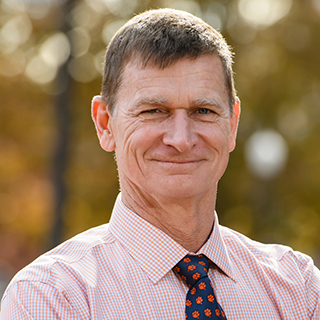
Dr. Joe Ryan
Executive Director
Sue Stanzione Distinguished Professorship for ClemsonLIFE
jbryan@clemson.edu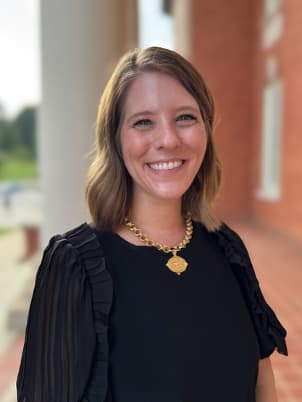
Taylor Chamlee
Program Manager
tchamle@clemson.edu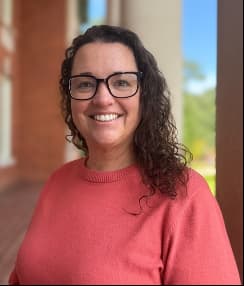
Dr. Tina Randall
Clinical Associate Professor
knranda@clemson.edu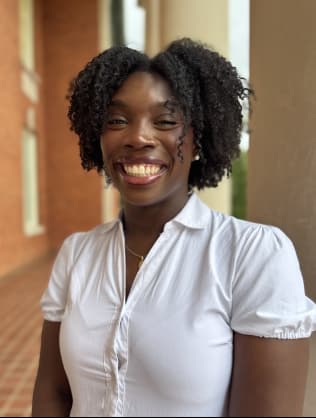
Liana Williams
Program Coordinator
liana2@clemson.edu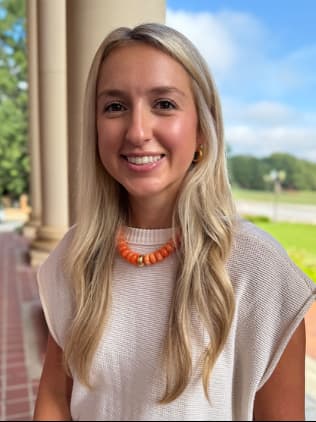
Mary Sydney George
Counselor
msgeorg@clemson.edu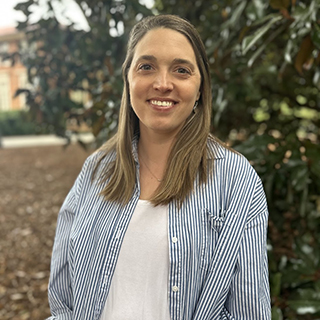
Ali Dubin
PRTM/HCP Instructor
alexsad@clemson.edu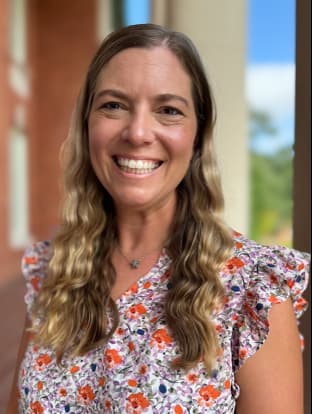
Katie Dobson
Employment Instructor
kcooley@clemson.edu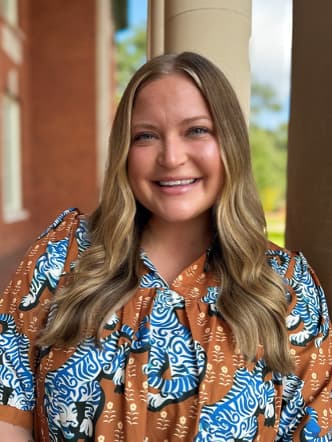
Mary Allyse Malone
Freshman Instructor
mmalon4@clemson.edu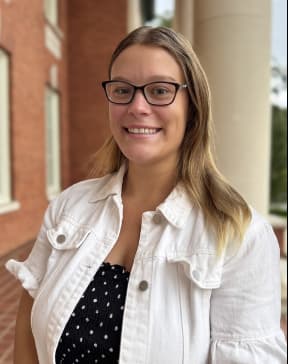
Moleigh Waldherr
Sophomore Instructor
mwaldhe@clemson.edu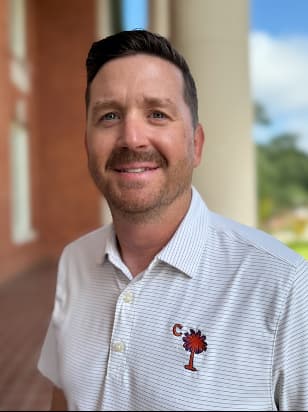
Billy Etter
Advanced Program Instructor
wetter@clemson.edu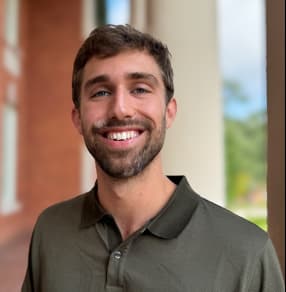
Grady Arant
Advanced Program Instructor
garant@clemson.edu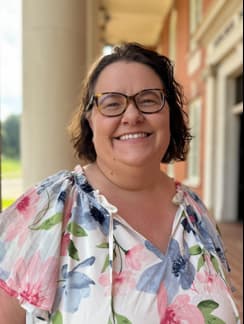
Sara Sturner
Hospitality Certificate Program Instructor
ssturne@clemson.edu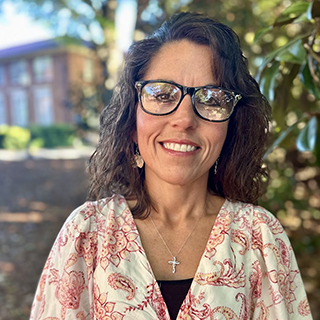
Lisa Wilson
Instructional Assistant
lnwilso@clemson.edu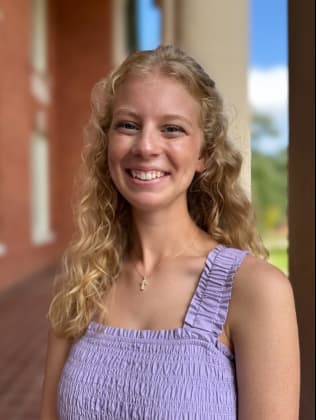
Addison Black
Graduate Assistant
agb9@clemson.edu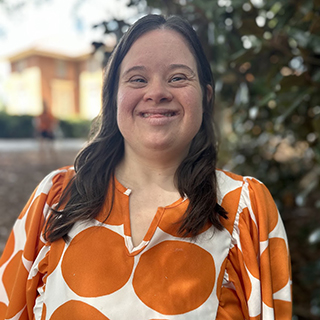
Kendall Montgomery
Administrative Team Assistant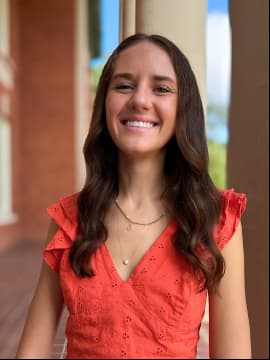
Izzy Paske
Lead Independent Living Assistant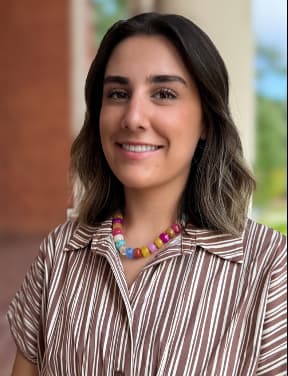
Aimee LeVan
Safety Monitor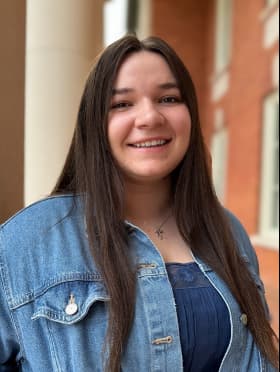
Savannah Lee
Safety Monitor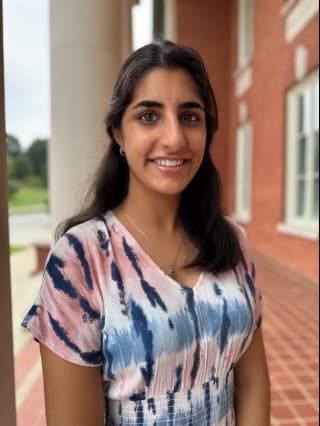
Saira Malhotra
Independent Living Assistant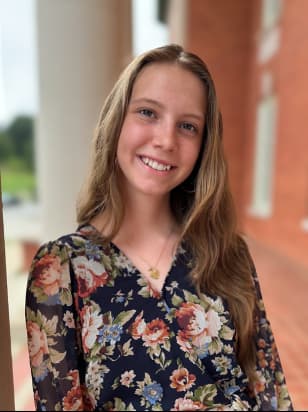
Lila Robertson
Independent Living Assistant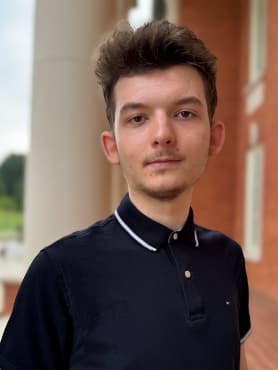
Joseph Rush
Independent Living Assistant -
Students
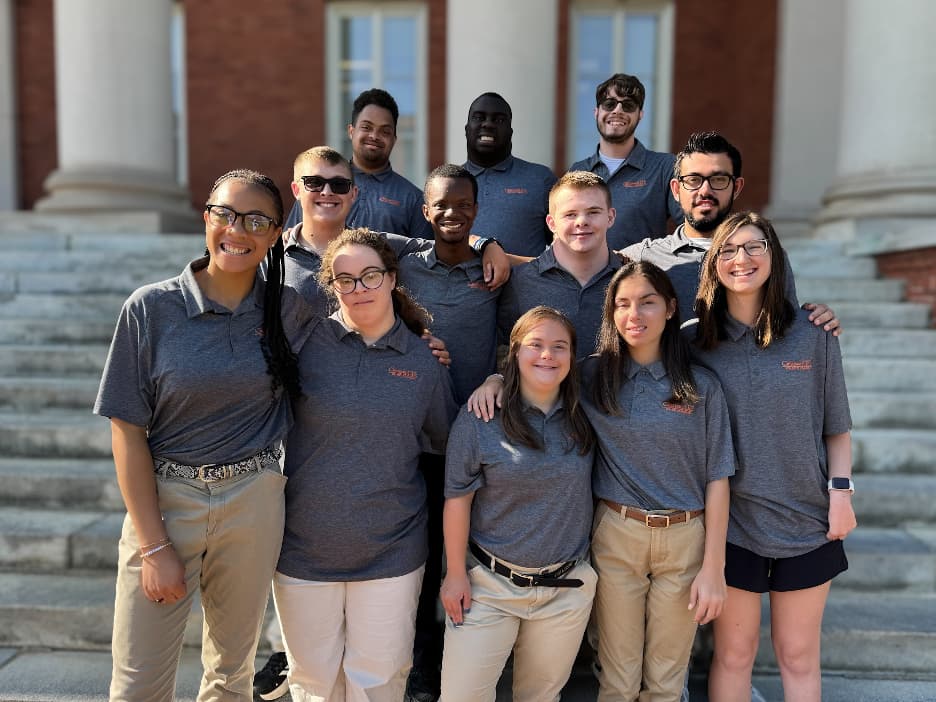
Basic Program (Freshman Class)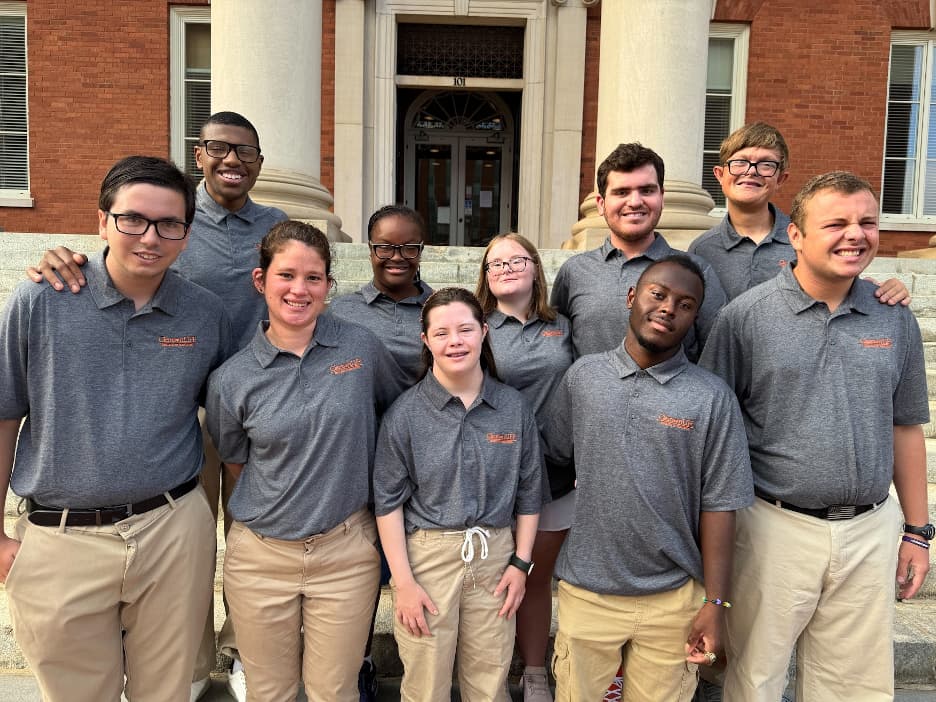
Basic Program (Sophomore Class)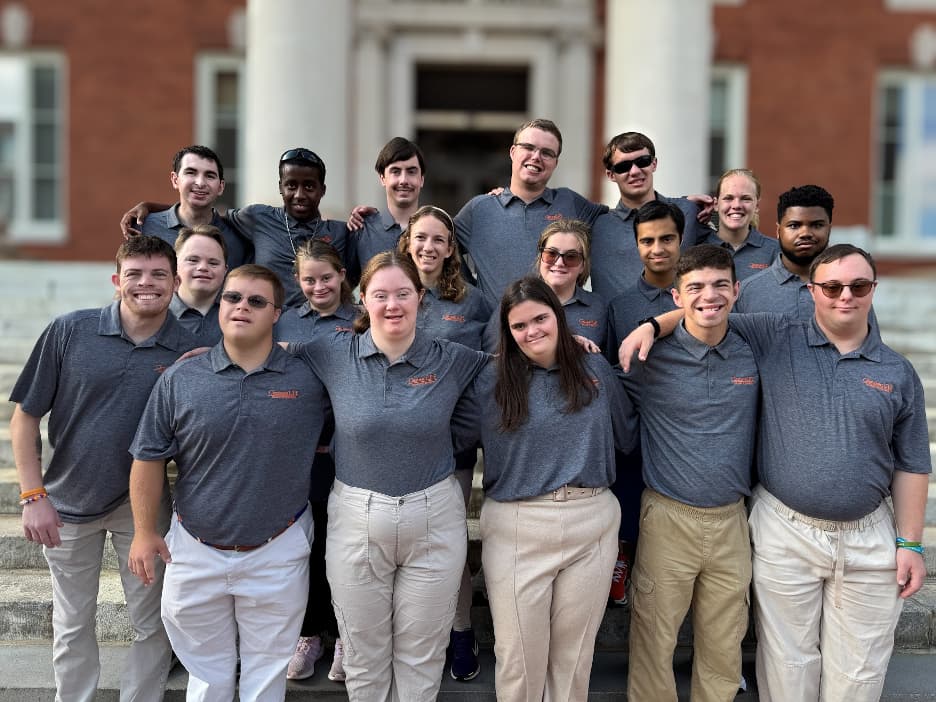
Advanced Program (Junior & Senior Class)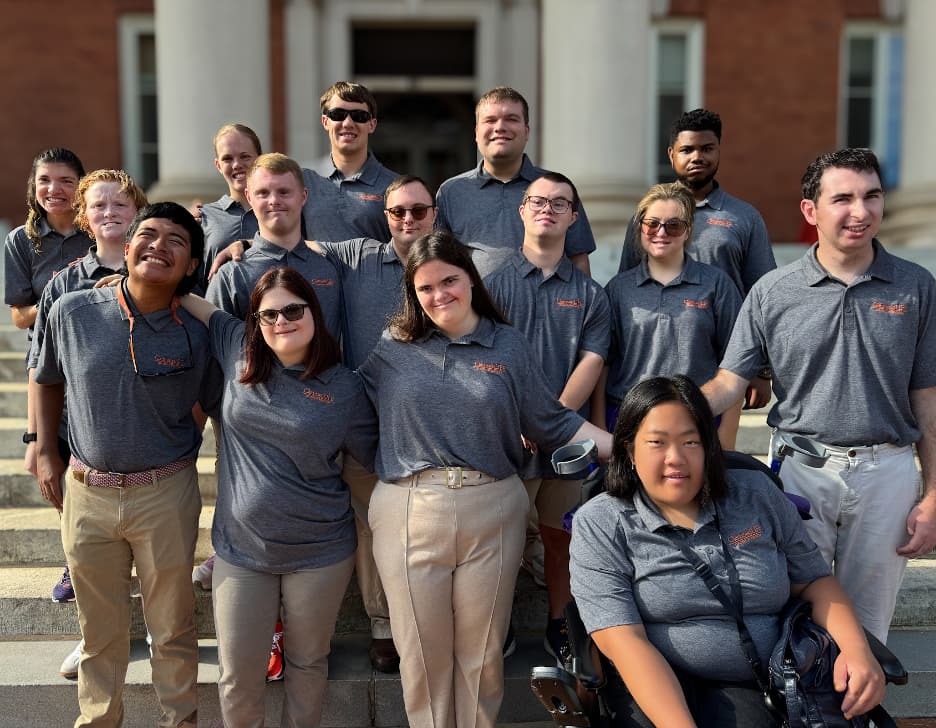
Hospitality Certificate Program
Thank you for helping our Tigers come to LIFE!