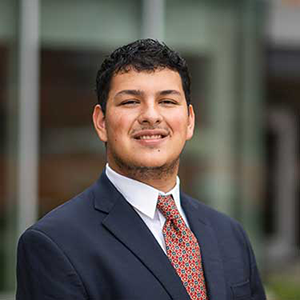

1st Place
Jimmy Hughes
Topic: What Gets Eaten (and What Gets Tossed): Exploring Food Waste, Eating Behaviors, and Nutritional Outcomes to Advance Sustainable School Lunches in K-6 Cafeterias
Major: Agribusiness
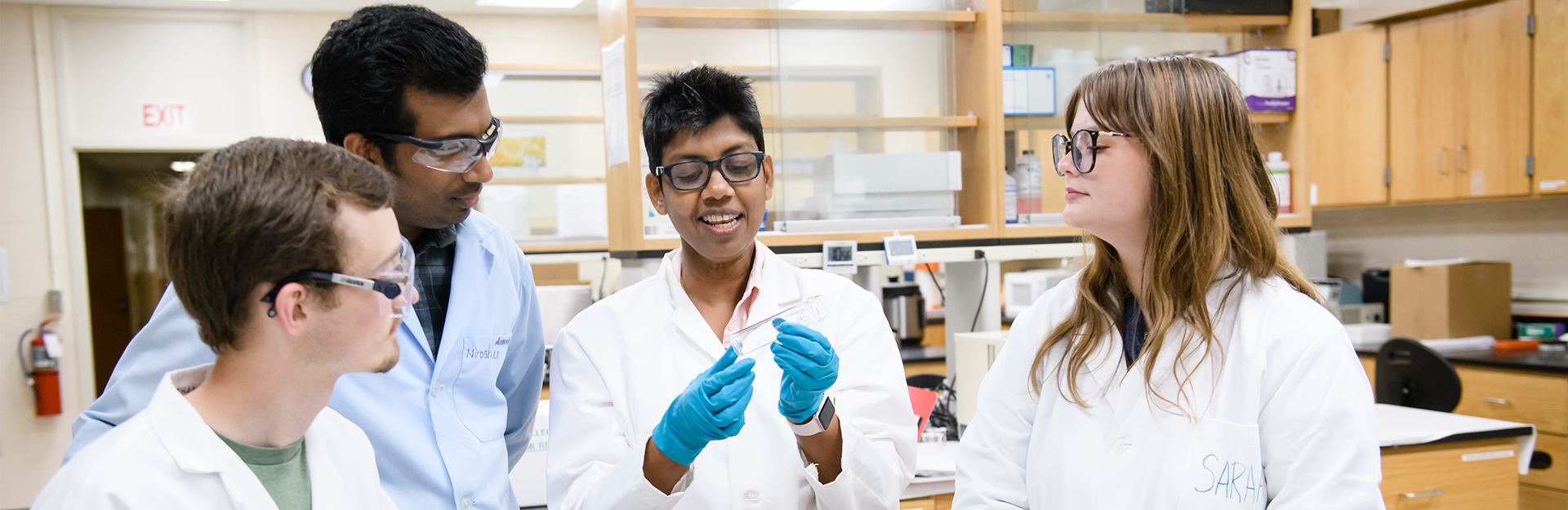
The CAFLS Undergraduate Research Initiative offers funding for individual undergraduate students enrolled in a CAFLS major to conduct a research project under the mentorship of a CAFLS faculty member.
Each funded project is awarded a minimum $500 for expenses. Undergraduate researchers present their project for judging each spring with an opportunity to win a monetary prize and recognition.
“At first, participating in undergraduate research as a freshman seemed very intimidating, but it turned out to be one of the best decisions I made early in my undergraduate experience. Not only did it allow me to develop essential research skills and knowledge, but I also established lasting connections with my mentors and peers that continue to support me throughout the rest of my undergraduate experience. This opportunity allowed me to understand agriculture at a deeper level and contribute to work that further enhances our understanding of the field. It has also encouraged me to explore additional research opportunities and strengthened my interest in pursuing graduate school.”
Blake AriasPlant & Environmental SciencesCAFLS Undergraduate Research Initiative Participant
Identify a faculty mentor with whom to conduct research. You should discuss a topic and plan for conducting the research, and the materials required for the application process with your faculty mentor.
The application requires your faculty mentor's name, project title (150-character limit), project description including objectives (2,500-character limit), and proposed budget for use of the $500 in research funds.
ApplyConduct research over the academic year under the guidance of the faculty mentor, utilizing the allocated funding for research expenses.
Prepare an abstract summarizing your project and findings for submission on Canvas in March. Your abstract will be used as part of your participation in the CAFLS Experiential Learning Showcase.
Prepare your poster and present your research at the CAFLS Experiential Learning Showcase. Judges will evaluate your poster and presentation.
Submit your final poster, reflection, and budget on Canvas.
Faculty are limited to two funded projects per academic year under this program. By participating, the student and mentor agree that the program deliverables can be shared publicly to promote CAFLS programs.
Faculty members are encouraged, to the extent possible, to educate and involve the student on as many research stages as possible (e.g. theory, question formulation, data collection, data analysis, communication of findings) so that students can develop a sense for the general research process.
Jimmy Hughes
Topic: What Gets Eaten (and What Gets Tossed): Exploring Food Waste, Eating Behaviors, and Nutritional Outcomes to Advance Sustainable School Lunches in K-6 Cafeterias
Major: Agribusiness
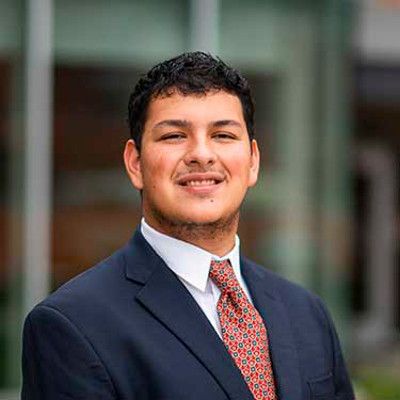
Blake Arias
Topic: Conservation Practice Adoption Trends Among Peanut Growers in the Southeast
Major: Horticulture

Charleston Lane
Topic: Momma's Little Microbes: Comparing the Rumen and Fecal Microbiomes of Cow Calf Pairs
Major: Animal & Veterinary Science
