What is Asbestos Management?
A common building material for many years, most older buildings, including Clemson University facilities, have some asbestos-containing building materials. Non-friable asbestos, which is asbestos bound into a solid matrix such as floor tile, mastic (the glue used for floor tiles and carpeting and wallboard) are found in several buildings on campus. As long as the integrity of these materials is maintained, they do not present a hazard to occupants.
The University implements a rigorous asbestos management program to ensure that any asbestos-containing material is properly managed, maintained, and eventually removed. As required by regulation, the University maintains an Asbestos Operations and Maintenance Plan that has strict controls when any activity is undertaken that has the potential to disturb these materials. Testing is required to determine the presence of these materials prior to any such activity. If asbestos is found, strict regulations govern its removal prior to any renovation or demolition that could potentially disturb these materials.
Any activity that might disturb asbestos-containing materials—such as cutting, drilling, nailing, or otherwise penetrating any building material—requires prior review to ensure no asbestos will be disturbed. These reviews are entirely free and may be initiated by contacting the Asbestos Program Manager.
Types of Asbestos Products
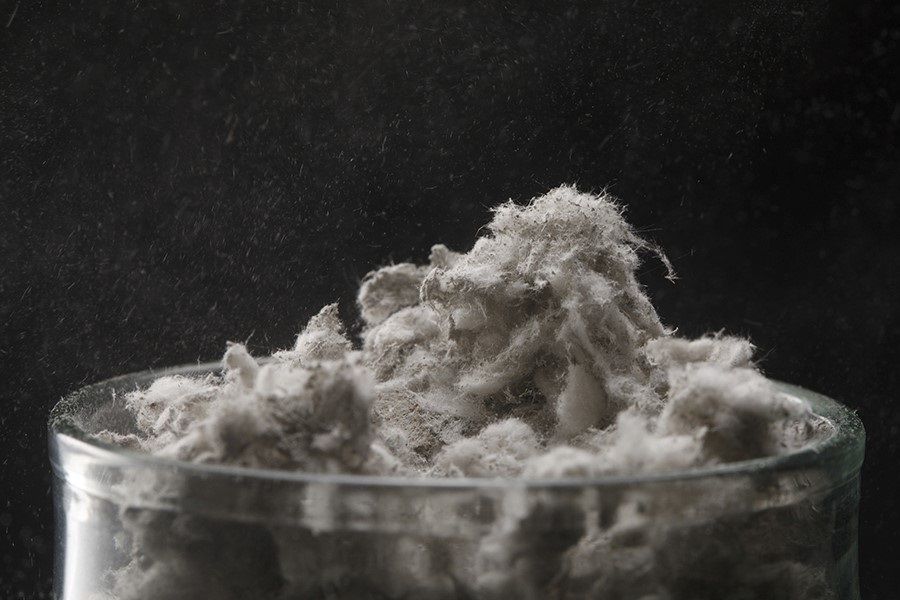
Asbestos may be found in many different products, such as:
- Sprayed on fireproofing and insulation in buildings
- Insulation for pipes and boilers
- Wall and ceiling insulation
- Ceiling tiles
- Floor tiles
- Putties, caulks, and cement
- Roofing shingles
- Siding shingles
- Wall and ceiling texture
- Joint compound
- Plasters
Depending on the product, the amount of asbestos may range from <1% to 100%.
When left intact and undisturbed, asbestos containing materials pose no health risk to occupants. Non-friable Asbestos Containing Materials - ceiling tiles, floor tiles, laboratory bench tops, shingles, fire doors, siding shingles, etc. - will not release asbestos fibers unless they are damaged in some way, such as cutting, sanding or scraping. Wrapped asbestos insulation presents no hazard unless the protective covering is damaged and the asbestos is actually exposed.
Handling and Disposing of Asbestos
Asbestos containing materials may only be handled or disposed of by trained professionals – do not handle them yourself.
For building materials with or suspected of asbestos containing materials that you need to alter or dispose of, contact the Asbestos Program Manager for assistance.
Please see our Construction Guidance Spreadsheet (XSLX) for more information.
Asbestos Testing Database
Please contact the Asbestos Program Manager for access details to the Asbestos Testing Database, which is a Clemson staff only database.
