What are construction site hazardous materials / waste?
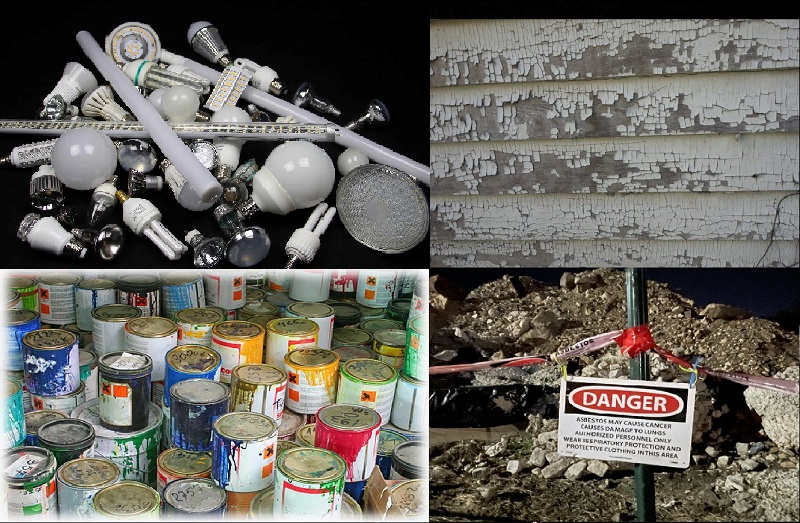
All construction sites, whether new construction, remodeling or demolition, have the potential to generate some form of regulated waste. These wastes may consist of construction debris contaminated with lead, paints, articles contaminated with mercury, electronic waste, lamps and polychlorinated biphenyls (PCBs), among other materials/wastes. All of these materials are regulated by local, state and/or federal regulations. Please contact OES Environmental Compliance Manager for more information.
Occupational and Environmental Safety is here to assist in the guidance with the proper management of hazardous materials/wastes at construction sites. Please refer to the Construction Guidance Spreadsheet (XLSX) and contact the appropriate person or department for the material/waste you have.
Hazardous Materials/Wastes from construction sites should be properly managed and disposed of, whether the work is performed by Clemson University Facilities or outside contractors.
Buildings that are to be demolished must be assessed (a process known as Environmental Hazard Assessment) to determine whether they contain or are themselves hazardous waste.
Older buildings are often painted with lead paint and paints containing mercury-based biocides, use leaded pipes, have asbestos insulation, use mercury-containing fluorescent lamps and PCB ballasts and contain many other hazardous materials.
Besides demolition debris, other wastes are generated during new building construction, including, but not limited to, treated wood, paint and solvent wastes, glues, roofing tars and cylinders.
Many buildings are carefully de-constructed for material reuse, and these types of projects can also generate similar Hazardous wastes. Deconstructed materials that are reused are not regulated as waste as long as the properties making them hazardous are not disturbed. For example, a door painted with lead-based paint could be reused as is, even if it would otherwise be regulated as dangerous waste when disposed of.
If you have any questions, comments or concerns, please do not hesitate to contact the Hazardous Materials Manager.