NWS Reporting and Prevention Tips
How to Report Suspected Cases
If you believe you’ve found an NWS infestation:
- Domestic livestock: Call Clemson University Livestock-Poultry Health at (803) 788-2260.
- Email: screportabledz@clemson.edu
- Deer and wildlife: Call the S.C. Department of Natural Resources, Wildlife and Freshwater Fisheries Division at (803) 734-3886.
Prevention Tips
-
How You Can Help
You can help keep South Carolina free of NWS:
- Check livestock and pets regularly for suspicious wounds.
- Clean and cover injuries and wounds promptly and use appropriate repellents.
- Stay informed about state and federal prevention efforts such as movement restrictions and permit and health certificate requirements, sterile-insect releases, border surveillance and emergency treatment protocols.
-
Animal Movement Regulations
Moving live animals plays a major role in the spread of invasive pests like NWS. Emergency state and federal restrictions are currently in place.
-
Federal Prevention Efforts: The Sterile Insect Technique (SIT)
The United States relies on the Sterile Insect Technique (SIT) to prevent NWS spread. In this program, millions screwworm flies are sterilized and released. When sterile males mate with wild females, no offspring result, breaking the cycle of infestation.
USDA and its partners maintain ongoing sterile-fly releases in affected areas. This program is recognized as one of the most effective and environmentally safe pest control strategies in modern agriculture.
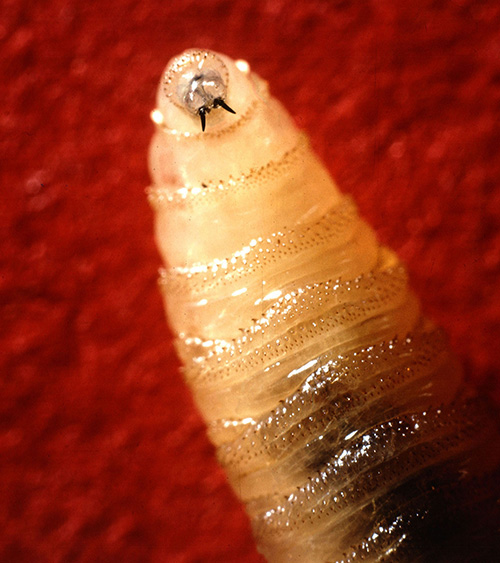
New World screwworm larvae use their sharp mouth hooks to tear into the host's tissue.
