Foundation Data Model (FDM)
The Foundation Data Model (FDM) will replace Clemson’s existing Chart of Accounts (CoA), and serve as the foundation for all transaction processing and reporting in Workday. Clemson’s FDM was designed with the help of more than 250 team members from across the University. Built on dimensions instead of complex numbers, the FDM was created with the end-user experience in mind to ensure ease of use and adoption throughout our community.
Over the years, many Clemson faculty and staff have likely memorized the 23-digit account string that controls their purchases and payments. To simplify the transition to the new FDM, the worktag glossary below details options for each component in the FDM along with instructions on when to use them.
Understanding the FDM
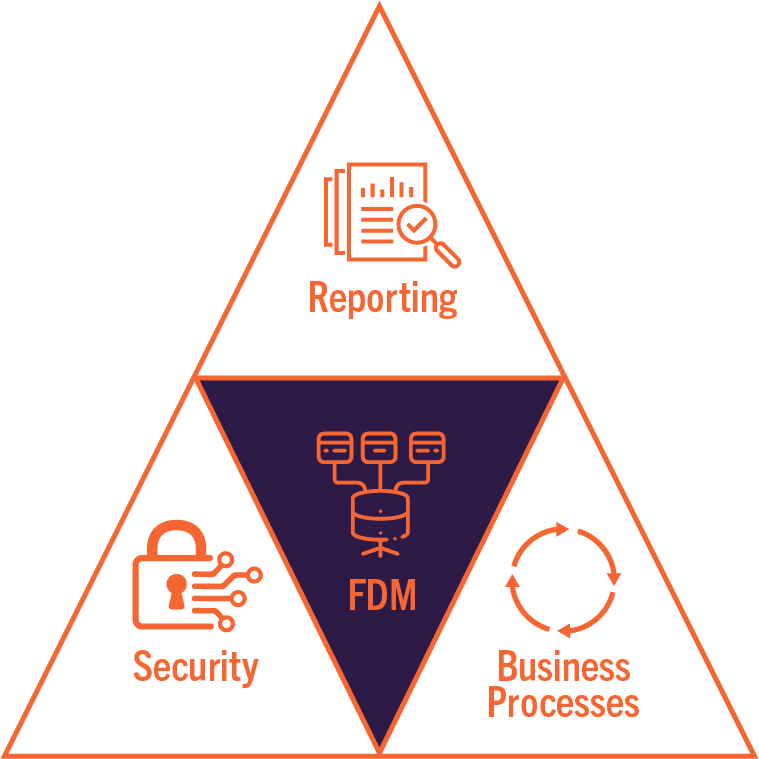
The FDM is made up of worktags – keywords assigned to each transaction to identify and categorize it for budgeting, reporting and accounting. This creates a classification that allows information to be easily found, filtered, analyzed and summarized. Many worktags auto-populate in Workday, reducing errors and time in daily tasks.
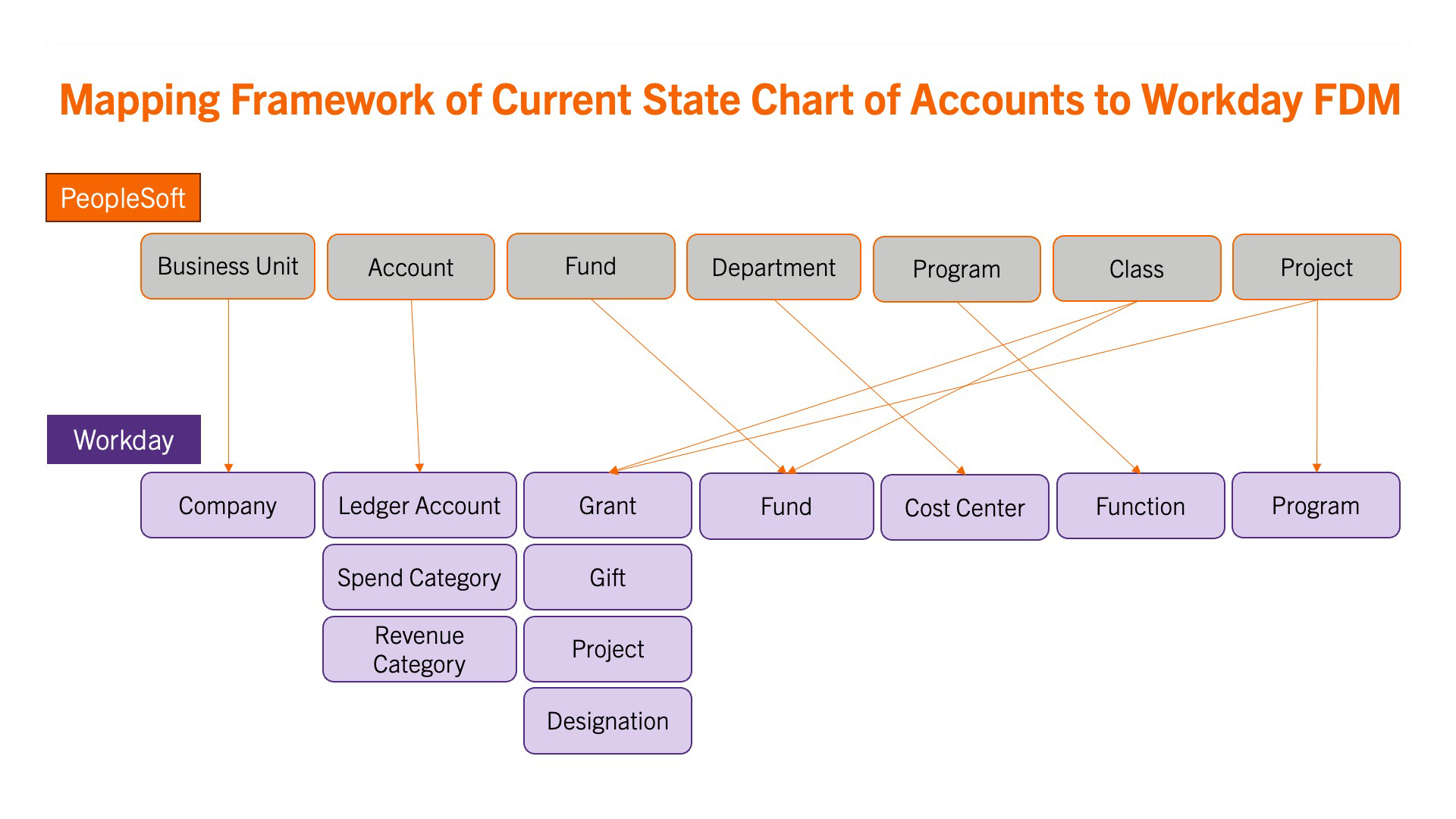
In the mapping framework:
Legacy Business Unit maps to Company
Legacy Account maps to Ledger, Spend Category and Revenue Category
Legacy Fund maps to Fund
Legacy Department maps to Cost Center
Legacy Program maps to Function
Legacy Class maps to Grant, Gift, Project, Designation and Fund
Legacy Project maps to Grant, Gift, Project, Designation and Program
Company – An overarching organization in Workday that represents a legal entity or agency, like Clemson University, the Clemson University Foundation and IPTAY, including our associations and foundations. All FDMs will begin with a Company.
Organizations – Organizations are a type of worktag that groups data. There are three primary types.
Cost Center – Cost centers are individual business segments or departments that generate expenses. Examples of cost centers include:
- CC0484 SCI | Chemistry
- C0573 ATH | Football Athletic Training
Supervisory Organization – These organizations group employees and managers, and typically represents “who” reports to “whom” and overall team structures.
Academic Unit – An organization type representing colleges, schools, departments and other academic entities. While similar to a supervisory organization, academic units serve different purposes.
Fund – These represent the high-level source and purpose of money (such as tuition and fees, state appropriations, auxiliaries and restricted). Fund worktags are required on all transactions.
Gift, Grant, Project – These worktags track donor-directed activities, sponsored awards and timebound initiatives like capital or IT projects. These often function as driver worktags that can auto-populate other related worktags, like Fund, Function, or Cost Center.
Function – An organization used to categorize mission or function. These are required on expense transactions to align with the National Association of College and University Business Officers functional classifications (such as Instruction, Research or Academic Support).
Designation – A Clemson-configured organization for tracking more granular use of funds not already captured by using a Gift, Grant or Project worktag (such as Facilities and Administration, individual spending authority on non-sponsored activity).
Accounting worktags (Ledger Account, Spend Category, Revenue Category) – These classifications that determine how transactions post and how Clemson reports detailed expenses and revenues. Spend Category and Revenue Category provide a lower level of detail.
