Skip to content

AI at Clemson

AI Research and Innovation

As a Carnegie R1 research institution, Clemson University is one of the nation’s most active research institutions. Our faculty and students innovate, ideate and execute research that is impacting lives across South Carolina and beyond. Thoughtful and intentional AI use expands that reach.

From identifying optimal materials for manufacturing batteries to advancing personalized medicine and to conserving water in farming, Clemson scientists are using artificial intelligence to make a difference.

AI in Action: Centers and Institutes

  • AIRISE

    The Clemson Artificial Intelligence Research Institute for Science and Engineering (AIRISE) serves as the umbrella for pioneering AI research, education, and STEM workforce development. With over 100 affiliate faculty from over 30 disciplines, AIRISE prepares students to meet the pressing demand for AI talent.

    Researchers under AIRISE have deployed AI to:

    • Protect Self-Driving Vehicles: Detecting cyberattacks against autonomous cars to ensure passenger safety.
    • Inspect Manufacturing Lines: Identifying defects in vehicles as they travel down the assembly line, saving time and resources.
    • Safeguard Social Media: Detecting cyberbullying and protecting reputations online.
    • Diagnose Disease: Identifying Alzheimer’s disease earlier than currently possible by analyzing medical imaging.
    Learn more about AIRISE
  • CU-CHAI

    The Clemson University Center for Human-AI Interaction, Collaboration and Teaming is dedicated to shaping the future of human-AI interaction. As a national leader in research and development, CU-CHAI explores groundbreaking ways to seamlessly integrate AI technologies alongside humans.

    Learn more about CU-CHAI
  • Watt AI Program

    The Watt AI Program connects students, faculty, staff and researchers with AI technologies to solve complex analytics problems and create meaningful educational and professional opportunities. The program, facilitated through the Watt AI Creative Inquiry, connects students to real-work research involving AI technology and provides an avenue to foster growth and continuous learning.

    Watt AI has tackled projects like:

    • Spotting Bacteria: Analyzing microwave senor readings to detect and classify if bacteria or yeast are present.
    • Reading Records: Using audio speech recognition AI and custom-built models, researchers evaluated childrens’ progress in reading.
    • Tracking Hospital Events: Through Natural Language Processing, teams extracted and analyzed content from hospital events.
    Learn more about the Watt AI Program
  • Clemson-MUSC AI Hub

    The Clemson-MUSC AI Hub is a joint effort by Clemson University and the Medical University of South Carolina to explore AI in biomedical science and healthcare research.

    The Hub’s mission is to create opportunities for industry collaboration, develop ethical AI solutions in healthcare, catalyze AI research for funding, and build strong partnerships that lead in biomedical AI research.

    AI can enhance healthcare and biomedical research in many areas:

    • Radiology: AI can help interpret imaging results, providing a new lens in which to detect subtle changes that can elude the human eye.
    • Imaging: When utilized in assessing post-surgery outcomes, AI can enhance precision in medical procedures.
    • Telehealth: With a rise in telehealth, wearable tech, integrated with AI, can provide early alerts and extra monitoring for conditions like asthma attacks.
    Learn more about the Clemson-MUSC AI Hub
  • Media Forensics Hub

    In an era of "fake news" and deepfakes, the Media Forensics Hub builds society’s capacity to understand context, origins and impacts of modern media. This interdisciplinary team use AI to detect manipulated media, building society's resilience to disinformation. This hub spans history, psychology, and computer science, proving that AI research at Clemson is truly interdisciplinary.

Where Clemson Uses AI to Make an Impact

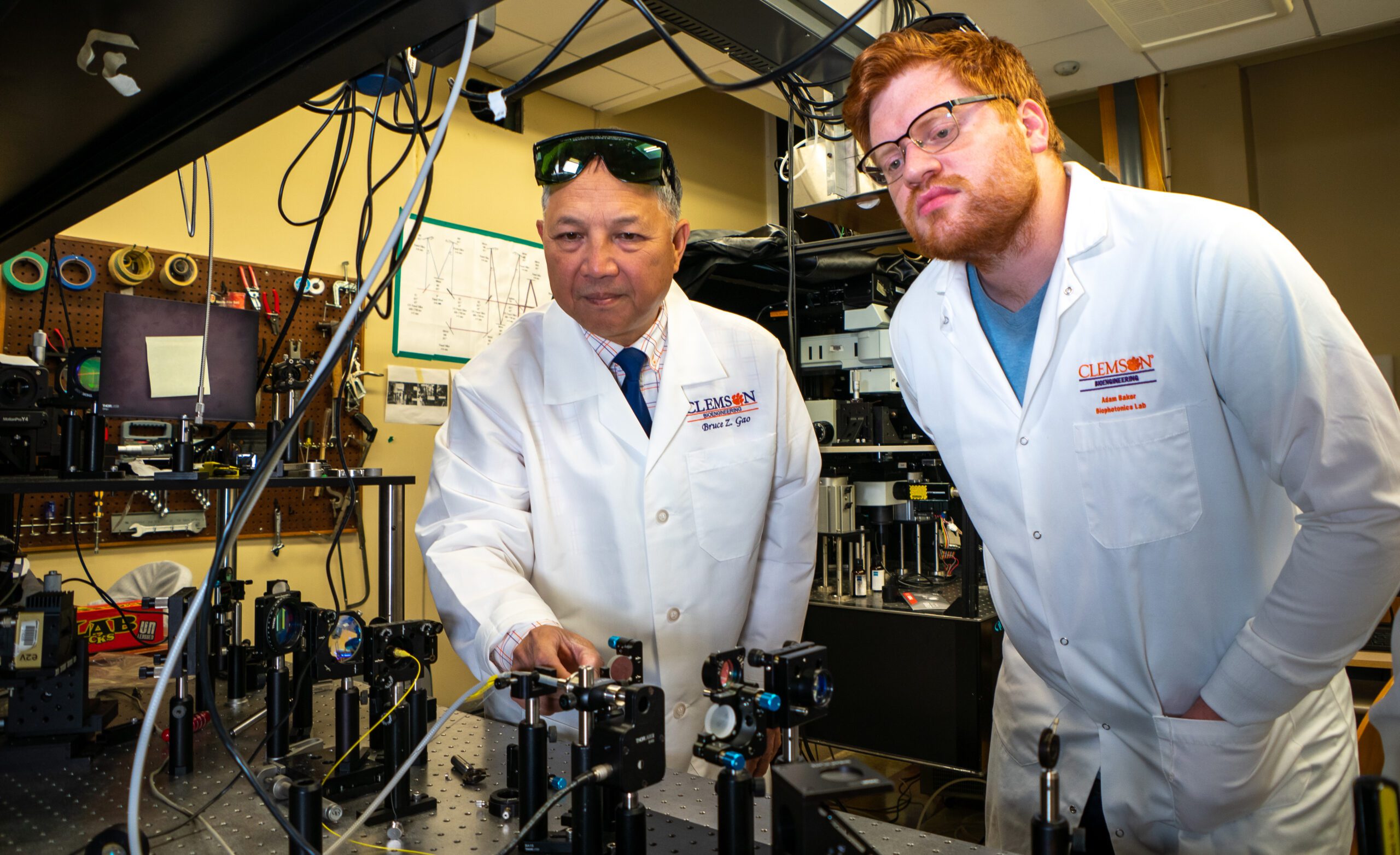
Two male researchers in white lab coats with the Clemson paw on them work at a large computer-like machine with various cords, buttons and controls.

Transforming Healthcare

Through close partnerships with technical colleges, undergraduate institutions and the private sector, Clemson is leading a statewide initiative to develop new medical devices powered by AI to improve healthcare diagnostics, treatment and rehabilitation. The project – Artificial Intelligence-Enabled Devices for the Advancement of Personalized and Transformative Health Care in South Carolina – or ADAPT-SC – is funded by a $20 million grant from the National Science Foundation.
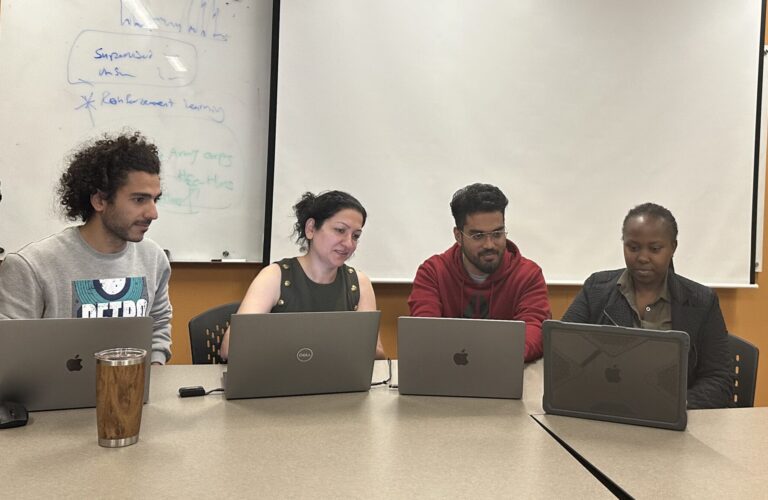
Mostafa Saberia, a civil engineering doctoral student; Vidya Samadi, assistant professor; Praneeth Dulam, a computer science master’s student and Lisa Umutoni, an agricultural sciences doctoral student, analyze data to use for developing a flood evacuation tool for South Carolina residents.

Leading Environmental Stewardship and Safety

Flooding can devastate communities, but Clemson researchers are using AI to get people to safety. A Clemson team developed a Flood Evacuation Tool that uses AI to help forecast foods, identify at-risk roads and verify safe evacuation routes. This human-AI teaming (HAT) partnership has created an intelligent model to support isolated, rural communities in South Carolina.

Advanced Manufacturing and Materials

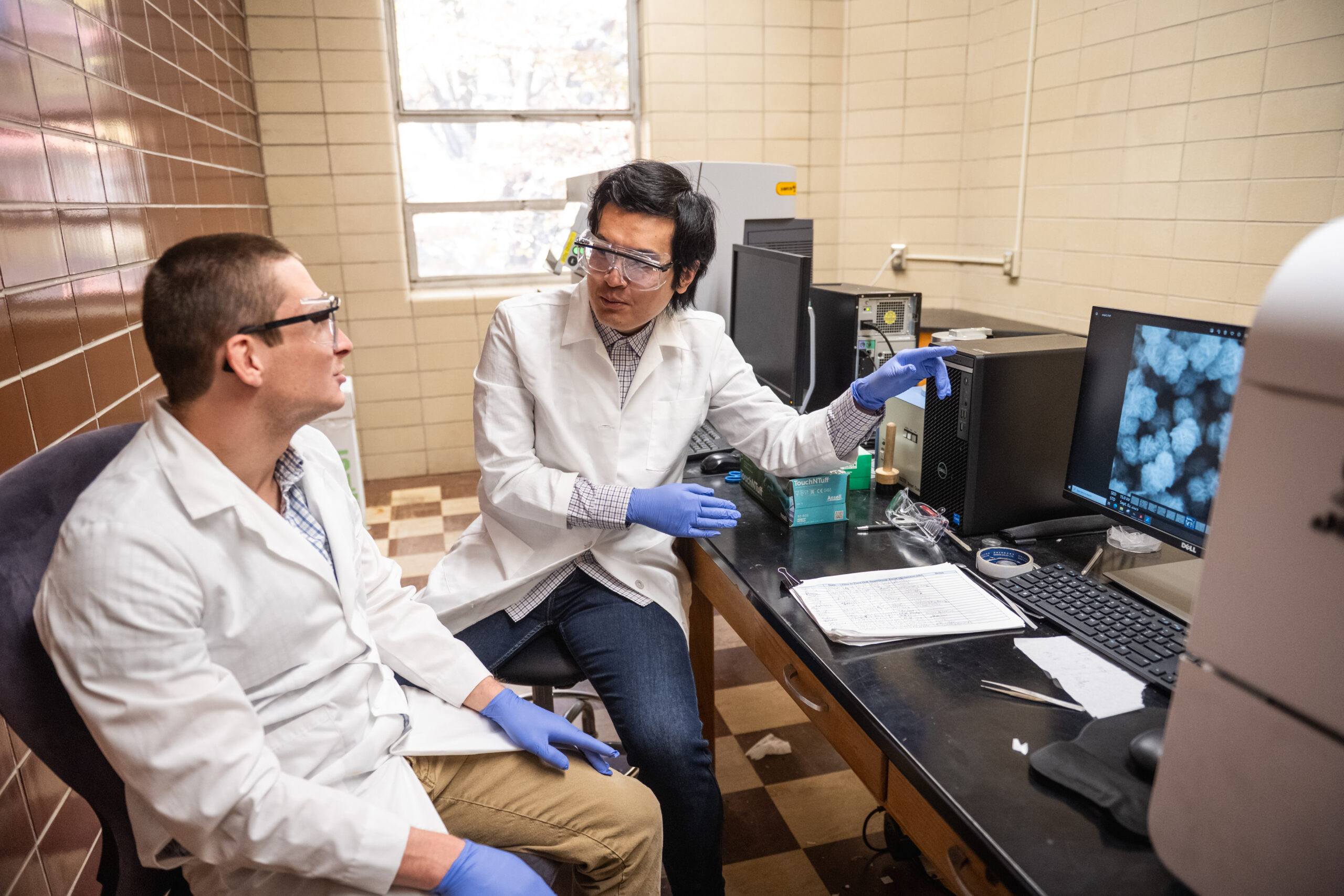
South Carolina is a manufacturing hub, and Clemson fuels that engine. With the help of AI and advanced imaging techniques, Clemson researchers are exploring new materials for batteries that could be safer, longer-lasting and more sustainable. The project, funded through the NSF’s EPSCoR Research Fellows program, explores new opportunities for advancing technology and manufacturing, while exposing graduate students to hands-on experience in state-of-the-art labs.
