Read with insight. Write with confidence.
English majors at Clemson hone their ability to think critically and write skillfully through the study of literature and texts of all genres and periods in both print and new media. You will deepen your understanding of the history of the language as you follow your own interests through a curriculum that can bring together Shakespeare’s plays with contemporary cinema, American slave narratives with digital methods of literary editing, the 19th-century realist novel with postcolonial poetry and more. Your courses will vary from discussion seminars devoted to close literary analysis and scholarly research to creative writing workshops in fiction, poetry and other genres to collaborative work on editing and publication projects.

Program Overview
-
Why Study English?
Earning a Bachelor of Arts degree, you will engage in the fundamental inquiries of humanities study: What is humanity? How do I live a good life? What is justice and the right? At the same time, you will develop practical skills in writing, communication and argument that are relevant to a wide range of 21st-century careers, including publishing, education, media, marketing, law and medicine.
The English major is flexible and offers students courses in three core subjects: literature, writing and publication studies, and literary theory and cultural studies. Courses for our majors typically take the form of small seminar-style discussions, nearly all of them limited to 21 students. Students work closely with our faculty, who also serve as our major's academic advisers. Outside the classroom, our students frequently supplement their studies by writing for campus literary magazines or by attending and helping to organize public lectures and readings, such as the annual Clemson Literary Festival. Intensive reading, writing and discussion cultivate students’ powers of thinking both critically and creatively. English majors acquire knowledge of culture and history as well as skills in lucid and persuasive communication that prepare them for bold engagement and endeavor in the world.
-
Beyond the Classroom
Pearce Center for Professional Communication
The Pearce Center promotes effective communication as an integral part of the learning process throughout Clemson University undergraduate and graduate education. The Center offers undergraduate client-based internships, professional development for graduate teaching assistants and faculty writing workshops. The Center has plans for a revitalized professional editing service and recently introduced a new Visual Information Design internship to help Clemson students with visual projects.
The Writing Lab, once called the "writing center," is an instructional service and lab "space" that provides writing support to undergraduate and graduate students, faculty, and staff. We offer both face-to-face and online consultations, as well as workshops and events for Clemson writers from across the disciplines.
At the Writing Lab, all members of the Clemson Family are welcome to work on their writing. They welcome undergraduate and graduate students at all levels, faculty and staff, and alumni to receive feedback and use their resources.
Established in 2008, the Clemson Literary Festival unites acclaimed visiting authors, students and faculty in a celebration of the written word.
South Carolina Review, South Carolina's literary magazine, is housed at Clemson University, where it has been since 1973. It has published notable works by authors such as Joyce Carol Oates, Kurt Vonnegut, Elizabeth Strout, and Clemson English alumnus Ron Rash. Edited by Department of English faculty in direct partnership with students, SCR provides students the opportunity to hone their literary taste.
Roaring for Clemson since 1907, The Tiger strives to serve the Clemson University community as the student newspaper of record. The Tiger’s team works day-in and day-out to produce authentic, relevant and impartial content while contributing positively to campus discourse. The Tiger gives students the opportunity to practice quality, independent journalism.
Meet the Chair
A member of the Clemson faculty since 2010 and chair of the English Department since 2021, Professor Will Stockton specializes in early modern literature, sexuality studies, and the history of Christianity. His most recent book is the edited collection "The Routledge Handbook on Shakespeare and Religion." He is currently completing a book titled "Why Read Shakespeare?"
Learn More
What Alumni and Students Say
“It’s been a winding road, and I think I’m a perfect example of how you can follow where your passion is, dig in, work hard, and it takes you to the next thing and opens the next door.”
Renee Kopkowski '91Chief Communications OfficerYale University

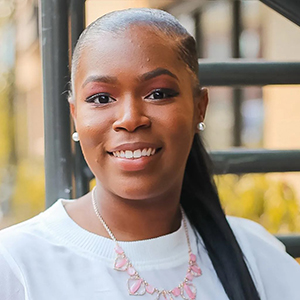
“The English department has been such a lovely, wonderful bubble at Clemson. Conversation is encouraged, but so is safe space. It’s this very close-knit bond, and such an unusual environment for a college classroom, but I think it has been one of the most meaningful.”
Serena JohnsonClass of 2026

“Remember that humanities study is really a foundation for any job. You are going to have the best foundation going forward.”
Heather Simmons Jones '97Principal for Southeast OperationsMRB Group Engineering, Architecture & Surveying, D.P.C.

“I think curiosity is a secret weapon. It’s definitely my secret weapon.”
Racquel Collier '18CEOCaliber Real Estate