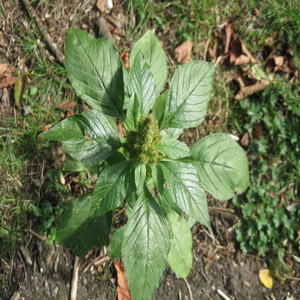
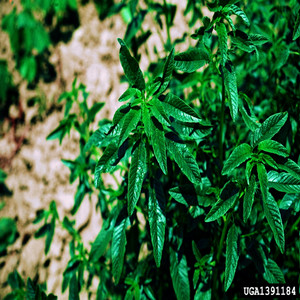
Broadleaf Amaranth
Amaranth family (Amaranthaceae)
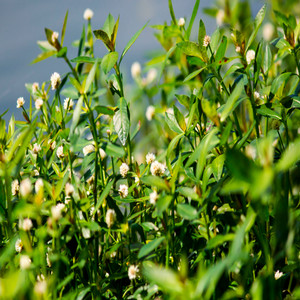
- Alligatorweed (Alternanthera philoxeroides)
Growing habits: Decumbent, aquatic or terrestrial, perennial
Root anatomy: Fibrous roots from a taproot, hollow stem
Leaf anatomy: Opposite leaf arrangement, linear-elliptic leaf shape
Reproduction: Vegetative reproduction mainly, flowers seldomly. When flowering, inflorescence is a solitary axillary or terminal head , up to 20 florets per head, white
References: Weeds of the South by Charles T. Bryson and Michael S. DeFelice - Palmer amaranth (Amaranthus palmeri)
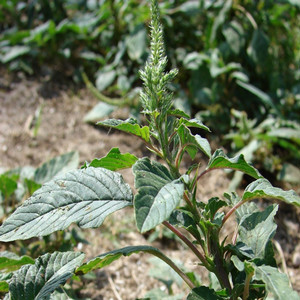
Growing habits: Tall, erect branched summer annual herb
Root anatomy: Fibrous roots from large taproot, sometimes red
Leaf anatomy: Leaves alternate, ovate, prominent venation on underside
Reproduction: Terminal spike inflorescence, basically no lateral spikes, dioecious
References: Weeds of the South by Charles T. Bryson and Michael S. DeFelice - Slender amaranth (Amaranthus viridis)
Growing habits: Erect to spreading many branched summer annual herb
Root anatomy: Fibrous roots from well-developed taproot, may or may not be red
Leaf anatomy: Alternate, simple, ovate to oblong/elliptic-ovate, margins entire or slightly undulate
Reproduction: terminal and axillary spikes forming panicle, bracts much shorter than flowers
References: Weeds of the South by Charles T. Bryson and Michael S. DeFelice - Smooth amaranth (Amaranthus hybridus)
Growing habits: Erect summer annual herb
Root anatomy: Fibrous roots from well-developed taproot; root system may be red in color
Leaf anatomy: Alternately arranged, simple, ovate, glabrous, long petioles
Reproduction: Panicle inflorescences
References: Weeds of the South by Charles T. Bryson and Michael S. DeFelice - Spiny amaranth (Amaranthus spinosus)
Growing habits: Erect, branched summer annual
Root anatomy: Fibrous roots from well-developed taproot, may or may not be red
Leaf anatomy: Alternately arranged, simple, glabrous, two stiff sharp spines per node
Reproduction: Terminal with numerous axillary clusters, flowers in terminal spikes male while basal flowers mostly female
References: Weeds of the South by Charles T. Bryson and Michael S. DeFelice - Kochia (Kochia scoparia)
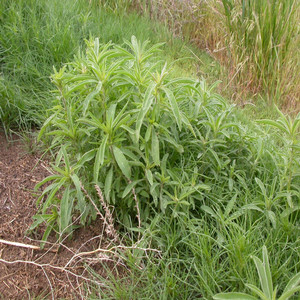
Growing habits: Erect, vigorous, early-germinating, drought-tolerant summer annual herb
Root anatomy: Fibrous roots from much-branched taproot
Leaf anatomy: Alternate, simple, lanceolate or narrowly linear, margins entire, sessile, yellowish green, may become red at maturity
Reproduction: Inflorescences in axils of upper leaves and terminal panicles, flowers small, perfect, greenish to red at maturity
References: Weeds of the South by Charles T. Bryson and Michael S. DeFelice - Common lambsquarters (Chenopodium album)
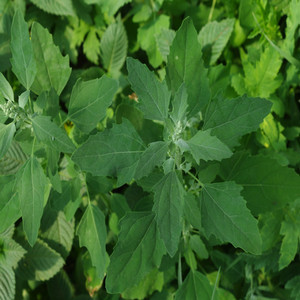
Growing habits: Erect annual herb
Root anatomy: Fibrous roots from short-branched taproot; red in color
Leaf anatomy: Alternate, deltoid, simple, margins dentate to entire, light green, grainy gray powder on leaf bottoms smooth, long petiole
Reproduction: Clusters in dense paniculate spikes
References: Weeds of the South by Charles T. Bryson and Michael S. DeFelice - Prostrate amaranth (Amaranthus blitoides)
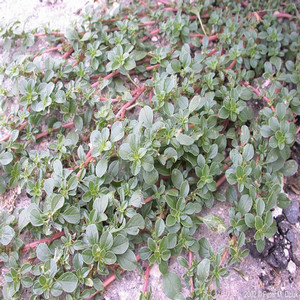
Growing habits: Prostrate summer annual
Root anatomy: Fibrous roots from taproot
Leaf anatomy: Alternate leaves, simple, ovate, shiny, broadest at tips
Reproduction: Dense axillary clusters, not terminal
References: Weeds of the South by Charles T. Bryson and Michael S. DeFelice - Redroot pigweed (Amaranthus retroflexus)
Growing habits: Erect, stout summer annual herb
Root anatomy: Fibrous roots from well-developed taproot which may or may not be red
Leaf anatomy: Leaves alternately arranged & simple
Reproduction: Terminal panicle of densely crowded stout spikes
References: Weeds of the South by Charles T. Bryson and Michael S. DeFelice - Tall waterhemp (Amaranthus tuberculatus)
Growing habits: Erect summer annual herb
Root anatomy: Fibrous roots from well-developed taproot
Leaf anatomy: Alternate, simple, narrowly ovate to lanceolate, glabrous, long-petioled
Reproduction: Dioecious plants, terminal spikes, simple to highly branched
References: Weeds of the South by Charles T. Bryson and Michael S. DeFelice