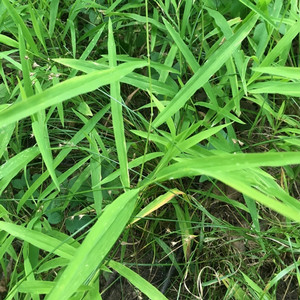
Perennial Grasses
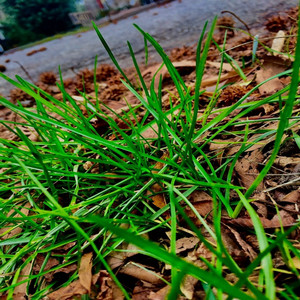
- Kentucky bluegrass (Poa pratensis)
Growing habits: Erect, cool-season perennial
Root anatomy: Fibrous roots from creeping rhizomes
Leaf anatomy: Linear leaves, flat or sometimes folded at base, leaves glabrous or rough near base, margins rough, membranous ligule, boat-shaped leaf tip
Reproduction: Panicle inflorescence, compressed spikelets
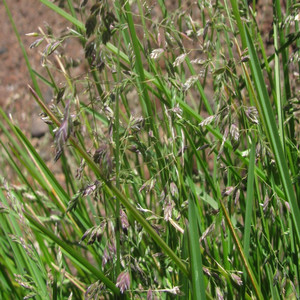
References: Weeds of the South by Charles T. Bryson and Michael S. DeFelice - Rough bluegrass (Poa trivialis)
Growing habits: Erect, bending or reclining stem perennial
Root anatomy: Fibrous roots and stolons
Leaf anatomy: Leaf blades flat, rough with boat-shaped tip, rough margins, sheaths rough/keeled/compressed, yellow-green in color
Reproduction: Inflorescence open pyramidal panicle, spikelets flattened w/2 to 3 flowers
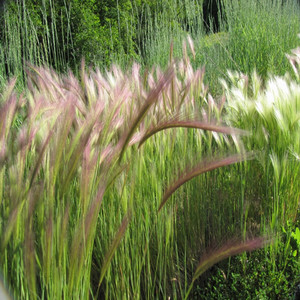
References: Weeds of the South by Charles T. Bryson and Michael S. DeFelice - Foxtail barley (Hordeum jubatum)
Growing habits: Coarse, tufted annual or short-lived perennial, many ascending stems often decumbent at base
Root anatomy: Fibrous roots
Leaf anatomy: Can be pubescent on either side, sheaths glabrous or pubescent, membranous ligule
Reproduction: Seedhead with three long-awned spikelets, central spikelet fertile
References: Weeds of the South by Charles T. Bryson and Michael S. DeFelice - Creeping bentgrass (Agrostis stolonifera)
Growing habits: Erect or decumbent cool-season perennial, spreads quickly, often forms mats
Root anatomy: Fibrous root network, spreads from rhizomes and stolons as well as lowermost stem nodes
Leaf anatomy: Linear leaves, glabrous to scabrous, membranous ligule, sheath smooth
Reproduction: Dense panicle inflorescence, open initially but closes when mature, often reddish-purple in color
References: Weeds of the South by Charles T. Bryson and Michael S. DeFelice - Common carpetgrass (Axonopus fissifolius)
Growing habits: Warm-season perennial grass
Root anatomy: Fibrous roots, spreads from stolons
Leaf anatomy: Leaf blade can be flat or folded, fine haris line leaf margin, rounded or slightly pointed, red-purple near maturity, membranous ligule
Reproduction: Inflorescences usually 3 slender racemes
References: USDA Natural Resources Conservation Service Plants Database - Broadleaf cattail (Typha latifolia)
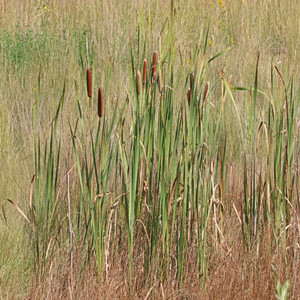
Growing habits: Tall perennial with large creeping rhizomes, often found growing in waterlogged areas
Root anatomy: Fibrous root network with large creeping rhizomes
Leaf anatomy: Thick linear leaves, flattened, leaves taller than inflorescence stalks, firm with some give, sheath open at throat but closed around stem base
Reproduction: Spadix-like inflorescence, dense, brown-gray color, staminate flowers on upper portion of spike, pistillate flowers on lower portion of spike
References: Weeds of the South by Charles T. Bryson and Michael S. DeFelice - Cogongrass (Imperata cylindrica)
Growing habits: Erect, dense spreading perennial, leaves tufted at base
Root anatomy: Fibrous roots with scaly rhizomes
Leaf anatomy: Glabrous except for tuft of trichomes on upper surface at base, basal portion of some blades narrowed to resemble a petiole, off center midvein, sheaths can vary in pubescence from glabrous to hairy, fringed membranous ligule
Reproduction: Terminal silky panicle inflorescence, plumelike, 2-flowered spikelets, silky trichomes at base
References: Weeds of the South by Charles T. Bryson and Michael S. DeFelice - Tall fescue (Lolium arundinaceum)
Growing habits: Erect, tufted perennial
Root anatomy: Fibrous roots
Leaf anatomy: Flat, smooth to scabrous with prominent ciliated auricles; ligule a collarlike membrane
Reproduction: Panicle inflorescence, contracted and narrow
References: Weeds of the South by Charles T. Bryson and Michael S. DeFelice - Knotroot foxtail (Setaria parviflora)
Growing habits: Erect or spreading perennial
Root anatomy: Fibrous roots from short, knotty rhizomes
Leaf anatomy: Leaves somewhat pubescent at mouth only, sheaths usually keeled and glabrous, membranous fringed ligule
Reproduction: Inflorescences densely flowered panicles, cylindrical, yellow or purple, up to 12 bristles per spikelet
References: Weeds of the South by Charles T. Bryson and Michael S. DeFelice - Eastern gammagrass (Tripsacum dactyloides)
Growing habits: Perennial grass
Root anatomy: Fibrous roots from short, thick, knotty rhizomes
Leaf anatomy: Leaves and sheaths glabrous, hairy trichome ligule
Reproduction: Inflorescences with staminate and pistillate spikelets in same inflorescence
References: Weeds of the South by Charles T. Bryson and Michael S. DeFelice - Johnsongrass (Sorghum halepense)
Growing habits: Coarse perennial
Root anatomy: Fibrous roots from thick, scaly underground rhizomes
Leaf anatomy: Leaves glabrous, sheaths open & glabrous, trichomes sometimes at margin, prominent membranous ligule
Reproduction: Open, many-branched panicle inflorescence, two-flowered spikelets with one being fertile
References: Weeds of the South by Charles T. Bryson and Michael S. DeFelice - Tufted lovegrass (Eragrostis pectinacea)
Growing habits: Tall summer annual
Root anatomy: Fibrous roots
Leaf anatomy: Leaves alternate, sometimes rolled along edge, glabrous, can be slightly rough on upper side, smooth sheath w/ white hairs at tip, hairly ligule
Reproduction: Inflorescence loose panicle, egg-shaped to pyramidal, multi-branched, main branches spreading to ascending - Nimblewill (Muhlenbergia schreberi)
Growing habits: Spreading perennial
Root anatomy: Fibrous roots, spread from stolons
Leaf anatomy: Leaves wide, pubescent at mouth, sheaths shorter than internode, blades resembling bermudagrass
Reproduction: Inflorescences terminal and axillary contracted panicles
References: Weeds of the South by Charles T. Bryson and Michael S. DeFelice - Wild onion (Allium canadense)
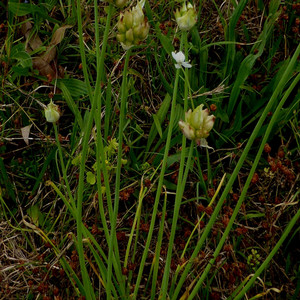
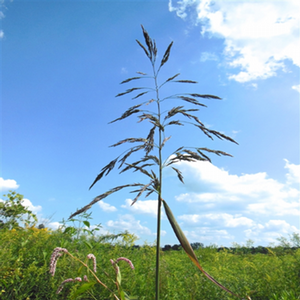
- Orchardgrass (Dactylis glomerata)
Growing habits: Tufted, erect cool-season perennial
Root anatomy: Fibrous roots, sometimes from short rhizomes
Leaf anatomy: Blade margins rough, midrib rough and prominent
Reproduction: Panicle inflorescence, stiffly erect to spreading w/few branches, only one side of branch has spikelets
References: Weeds of the South by Charles T. Bryson and Michael S. DeFelice - Quackgrass (Elymus repens)
Growing habits: Erect, warm-season perennial
Root anatomy: Fibrous roots from rhizomes
Leaf anatomy: Upper surface pubescent to glabrous, lower surface glabrous, sheaths glabrous, membranous ligule
Reproduction: Spike inflorescences, many several-flowered spikelets
References: Weeds of the South by Charles T. Bryson and Michael S. DeFelice - Redtop (Agrostis gigantea)
Growing habits: Cool-season perennial
Root anatomy: Fibrous roots, rhizomatous
Leaf anatomy: Leaf blades flat/folded/curled, prominent ligule
Reproduction: Open panicle inflorescence with ascending branches, spikelets smal, reddish in color
References: USDA Natural Resources Conservation Service Plants Database - Common reed (Phragmites australis)
Growing habits: Tall, stout, warm-season perennial
Root anatomy: Fibrous roots spreading from rhizomes and stolons
Leaf anatomy: Leaves linear, rolled inside bud but flattened at maturity
Reproduction: Inflorescence a dense, branched panicle flanked by tuft of silky trichomes
References: Weeds of the South by Charles T. Bryson and Michael S. DeFelice - Openflower rosette grass (Dichanthelium laxiflorum)
Growing habits: Clump-forming perennial grass
Root anatomy: Fibrous roots
Leaf anatomy: Upper and lower leaf surface of variable pubescence (none to lots), leaf margins near base of uniform pubescence, short hairy ligule, pubescent sheath
Reproduction: Open panicle inflorescence, spreading & ascending branches
References: Virginia Tech College of Agriculture and Life Sciences Weed Identification - Perennial ryegrass (Lolium perenne)
Growing habits: Erect cool-season short-lived perennial, grows in clumps
Root anatomy: Fibrous roots from stolons
Leaf anatomy: Leaves linear, glabrous, sometimes scabrous on upper leaf surface, membranous ligule, comspicuous auricles
Reproduction: Compressed spike inflorescences with 2-ranked spikelets
References: Weeds of the South by Charles T. Bryson and Michael S. DeFelice - Saltgrass (Distichlis spicata)
Growing habits: Erect to ascending warm-season mat-forming perennial
Root anatomy: Fibrous roots from creeping, scaly rhizomes and stolons
Leaf anatomy: Leaves linear, scaly near base, ascending, membranous ligule & fringed with trichomes
Reproduction: Short contracted panicle inflorescence, dioecious plants
References: Weeds of the South by Charles T. Bryson and Michael S. DeFelice - Coastal sandbur (Cenchrus spinifex)
Growing habits: Tufted annual or short-lived perennial
Root anatomy: Fibrous roots which spread from stolons
Leaf anatomy: Leaf surfaces rough, glabrous, sheaths compressed, leaves occasionally pubescent on lower nodes and/or on sheath margins
Reproduction: Raceme inflorescence, burs with up to 40 spines, burs not crowded
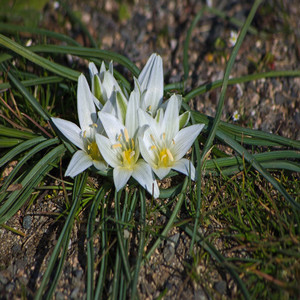
References: Weeds of the South by Charles T. Bryson and Michael S. DeFelice - Star of bethlehem (Ornithogalum umbellatum)
Growing habits: Cool-season succulent perennial herb from bulbs
Root anatomy: Fibrous roots
Leaf anatomy: Narrow, smooth, channeled with conspicuous pale green to whitish stripes near midrib on upper surface
Reproduction: Scape topped by white flowers with broad green midstripe on lower surface
References: Weeds of the South by Charles T. Bryson and Michael S. DeFelice - Common velvetgrass (Holcus lanatus)
Growing habits: Erect or prostrate, tufted or clump-forming warm-season perennial
Root anatomy: Fibrous roots
Leaf anatomy: Light green to gray-green, soft trichomes, dense & velvety, membranous ligule with small trichome fringe
Reproduction: Dense, erect panicle inflorescence, ascending branches, soft pubescence, compressed spikelets, grayish with purple tinge
References: Weeds of the South by Charles T. Bryson and Michael S. DeFelice - Whitegrass (Leersia virginica)
Growing habits: Erect to sprawling, occasionally branching perennial grass
Root anatomy: Fibrous roots, rhizomatous
Leaf anatomy: Alternate leaves, light green, glabrous, spreading, can be bent in the middle, little to no pubescence, membranous ligule
Reproduction: Panicle inflorescence at culm apex, spikelets along upper half of lateral branches - Sweet woodreed (Cinna arundinacea)
Growing habits: Perennial, small tufts
Root anatomy: Rhizomatous, fibrous roots
Leaf anatomy: Leaves alternate, no pubescence, drooping leaf tips, sheathless blades, membranous ligule
Reproduction: Panicle inflorescence along stem apexSweet woodreed