Broadleaf E-L
Evening-primrose family (Onagraceae)
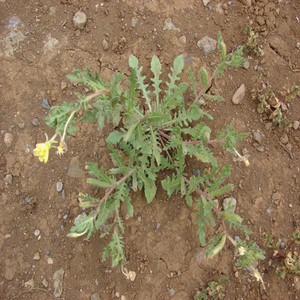
- Cutleaf evening-primrose (Oenothera laciniata)
Growing habits: Erect, prostrate, or weakly ascending winter annual or biennial herb
Root anatomy: Fibrous roots from taproot
Leaf anatomy: Leaves alternate, oblong to lanceolate, margins coarselly toothed to irregularly lobed or deeply incised
Reproduction: Inflorescence single, sessile in leaf axis, corolla yellow to reddish; capsule fruit
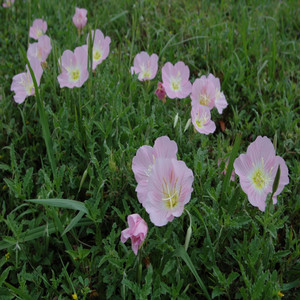
References: Weeds of the South by Charles T. Bryson and Michael S. DeFelice - Showy evening-primrose (Oenothera speciosa)
Growing habits: Ascending to erect branched perennial
Root anatomy: Roots fibrous, adventitious from lateral roots and taproot
Leaf anatomy: Leaves alternately arranged, elliptic to oblanceolate, margins nearly entire to irregularly lobed or toothed
Reproduction: Flowers solitary in upper axils, buds nodding, white or pink, self-incompatible, petals inversely heart-shaped; capsule fruit
References: Weeds of the South by Charles T. Bryson and Michael S. DeFelice
Geranium family (Geraniaceae)
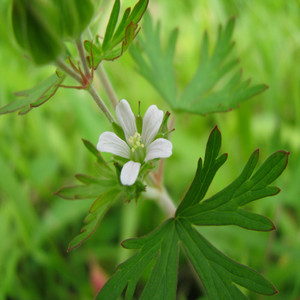
- Carolina geranium (Geranium carolinianum)
Growing habits: Erect, widely branching winter annual or biennial herb
Root anatomy: Fibrous roots from a shallow taproot
Leaf anatomy: Leaves have an alternate arrangement near base but opposite arrangement above; leaves wide, deeply cut into 5-9 fingerlike lobes or toothed segments
Reproduction: Inflorescences terminal on stems & branches, flowers pink/pale purple/white
References: Weeds of the South by Charles T. Bryson and Michael S. DeFelice - Cutleaf geranium (Geranium dissectum)
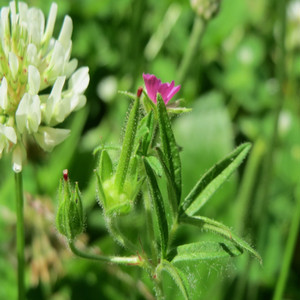
Growing habits: Erect or spreading widely branching winter annual/biennial herb
Root anatomy: Fibrous roots from shallow taproot
Leaf anatomy: Basal rosette, alternate near base, opposite further up; deeply palmate, divided into 5-7 sections which are further divided into linear segments
Reproduction: Paired inflorescences, 5 petal flowers, purplish-pink to pink in color
References: Weeds of the South by Charles T. Bryson and Michael S. DeFelice
Leafflower family (Phyllanthaceae)
- Chamberbitter (Phyllanthus urinaria)
Growing habits: Erect, spreading or procumbent annual herb, single or sparsely branching stem
Root anatomy: Fibrous roots from a long taproot
Leaf anatomy: Alternate leaf arrangement, appear pinnately compound but are simple oblong/lanceolate leaves coming off of side branches
Reproduction: Monoecious plants, male flowers in groups on distal nodes, female flowers on proximal nodes; produce green-yellow capsule fruits on underside of branches
References: Weeds of the South by Charles T. Bryson and Michael S. DeFelice
Legume family (Fabaceae)
- Bur clover (Medicago polymorpha)
Growing habits: Sprawling winter or summer annual
Root anatomy: Branched taproot with leguminous nodules, often branches from nodes
Leaf anatomy: Trifoliate, serrate margins towards the top
Reproduction: Bright yellow pea-like flowers, prickly fruit
References: Feedipedia - Crimson clover (Trifolium incarnatum)
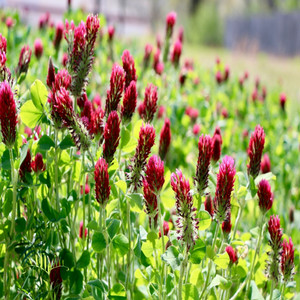
Growing habits: Ascending or erect (winter) annual herb
Root anatomy: Fibrous roots from taproot
Leaf anatomy: Alternately arranged, palmately trifoliate, leaflets usually one to two times as long as broad, broadly ovate, toothed near apex
Reproduction: Flowers very numerous on head, spikelike, upper petal much longer than wing or keel, scarlet to red in color
References: Weeds of the South by Charles T. Bryson and Michael S. DeFelice - Large hop clover (Trifolium campestre)
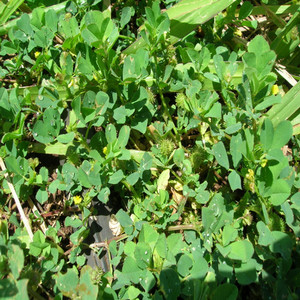
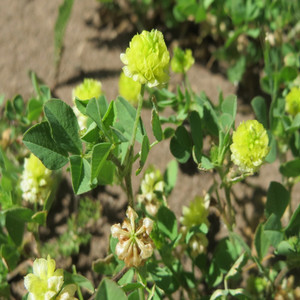
Growing habits: Branching bushy annual
Root anatomy: Fleshy taproot with fibrous roots producing leguminous nodules
Leaf anatomy: Alternately arranged, trifoliate, leaflets ovate to obovate, glabrous, middle leaflet has longer petiole
Reproduction: Flowerheads solitary, yellow, 15-40 flowers
References: Illinois Wildflowers - Red clover (Trifolium pratense)
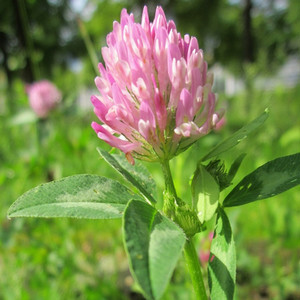
Growing habits: Erect or ascending cool-season short lived perennial or biennial herb
Root anatomy: Fibrous roots from taproot and stolons; nitrogen-fixing nodules
Leaf anatomy: Trifoliate, leaflets elliptic to ovate, margins entire with a prominent white V, leaves usually pubescent on both sides but sometimes only on lower surface
Reproduction: nearly globose clusters, pink to purple in color
References: Weeds of the South by Charles T. Bryson and Michael S. DeFelice - White clover (Trifolium repens)
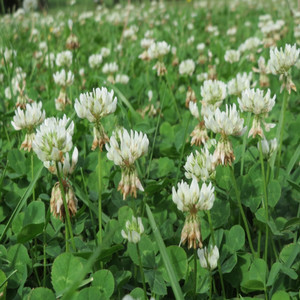
Growing habits: Erect or ascending stoloniferous perennial
Root anatomy: Fibrous roots from taproots and stolons
Leaf anatomy: Palmately trifoliate or rarely quadrifoliate (4-leaf clover) from stolons, leaflets obovate to obcordate with small-toothed margins, white-membranous, lanceolate, glabrous
Reproduction: Nearly globose, white with up to 85 flowers, purple sinuses between each calyx lobe
References: Weeds of the South by Charles T. Bryson and Michael S. DeFelice - Yellow sweet clover (Melilotus officinalis)
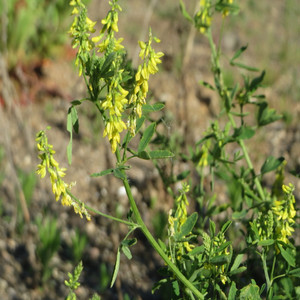
Growing habits: Erect annual/biennial herb
Root anatomy: Fibrous roots from taproot
Leaf anatomy: Alternate, compound, pinnately trifoliate, leaflets oblanceolate to obovate, margins somewhat serrated
Reproduction: White or yellow flowers in slender, elongated raceme; pod globose, dark brown, covered with coarse nerves
References: Weeds of the South by Charles T. Bryson and Michael S. DeFelice - Cowpea (Vigna unguiculata)
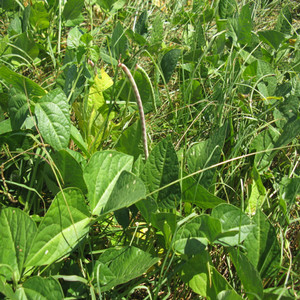
Growing habits: Trailing, climbing, or vining annual herb
Root anatomy: Fibrous roots from taproot
Leaf anatomy: Alternate, compound, trifoliate leaves, leaves ovate, glabrous or almost glabrous
Reproduction: Inflorescences papilonaceious raceme, most petals purple but may be white or violet
References: Weeds of the South by Charles T. Bryson and Michael S. DeFelice - Showy crotalaria (Crotalaria spectabilis)
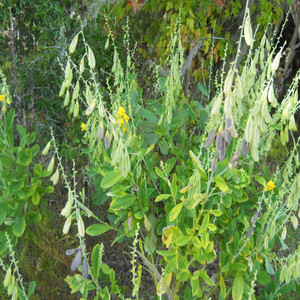
Growing habits: Erect summer annual herb
Root anatomy: Fibrous roots from taproot
Leaf anatomy: Leaves alternately arranged, simple, broadest at apex, wedge-shaped at base, ovate to lance-shaped
Reproduction: Inflorescences born on several racemes clustered near top of plant, large, showy, spirally arranged, petals yellow
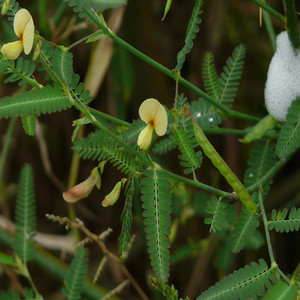
References: Weeds of the South by Charles T. Bryson and Michael S. DeFelice - Indian jointvetch (Aeschynomene indica)
Growing habits: Erect, often bushy branched annual herb
Root anatomy: Fibrous roots from taproots
Leaf anatomy: Alternately arranged, evenly pinnately compound, glabrous, oblong, smooth or minutely toothed; leaflets fold when touched
Reproduction: On axillary racemes, toothed bracts present, petals yellowish to reddish purple, legume fruits
References: Weeds of the South by Charles T. Bryson and Michael S. DeFeliceIndian jointvetch
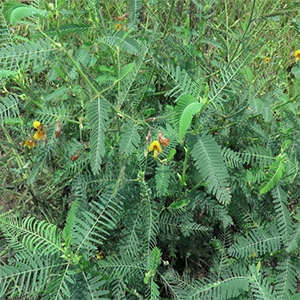
- Rough jointvetch (Aeschynomene rudis)
Growing habits: Erect, robust perennial herb
Root anatomy: Fibrous roots from taproot
Leaf anatomy: Alternately arranged, evenly pinnate leaves, leaflets numerous, oblong, margins entire, glabrous
Reproduction: Slightly foliate short raceme inflorescence, 1 to 3 flowers, finely toothed bracts, corolla copper-red to yellow in color, bilabiate, margin toothed
References: Weeds of the South by Charles T. Bryson and Michael S. DeFeliceRough jointvetch
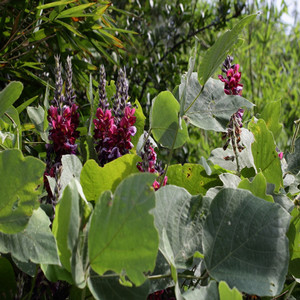
- Kudzu (Pueraria montana)
Growing habits: Trailing or climbing perennial vine
Root anatomy: Fibrous roots extending from taproot in addition to large, mealy tuberous rhizomes
Leaf anatomy: Pinnately trifoliate leaves, leafs broadly ovate, margins entire with up to 3 lobes
Reproduction: Inflorescences axillary racemes, largest petal violet purple to red-purple w/yellow spot at base; legume fruit
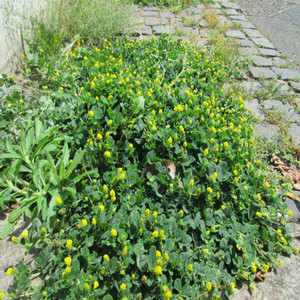
References: Weeds of the South by Charles T. Bryson and Michael S. DeFelice - Black medic (Medicago lupulina)
Growing habits: Prostrate to ascending winter or summer annual
Root anatomy: Coarse branching taproot with legume nodules
Leaf anatomy: Trifoliate, pair of stipules at petiole base, leaflets obovate to oval-ovate, pubescent to nearly glabrous, somewhat dented along margin
Reproduction: Solitary flowerheads with clusters of 15-50 yellow flowers
References: illinoiswildflowers.info - Partridgepea (Chamaecrista fasciculata)
Growing habits: Erect annual herb
Root anatomy: Fibrous roots from taproot
Leaf anatomy: Leaves pinnately compound, alternately arranged, leaflets linear-oblong
Reproduction: Large yellow solitary flowers, 5 petals, 10 stamens
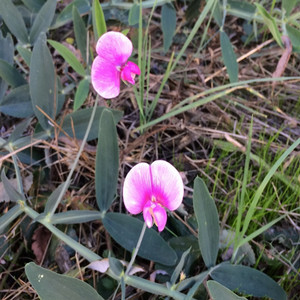
References: Weeds of the South by Charles T. Bryson and Michael S. DeFelice - Everlasting peavine (Lathyrus latifolius)
Growing habits: Ascending, climbing, or twining perennial herb, notably winged stem
Root anatomy: Fibrous roots from weak taproot
Leaf anatomy: Compound leaves, branched tenrils at base of leaves w/2 leaflets in a single pair per leaf, leaflets oblong-lanceolate to elliptic, acute tips
Reproduction: Inflorescences borne in loose raceme atop long, curved axillary peduncle, petals usually purple but sometimes red, pink, or white; legume fruit
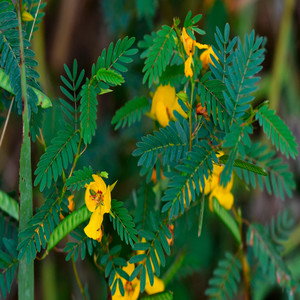
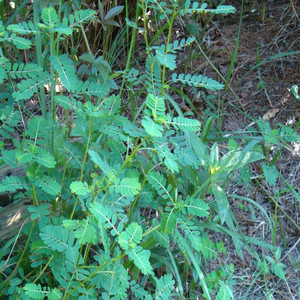
References: Weeds of the South by Charles T. Bryson and Michael S. DeFelice - Sicklepod (Senna obtusifolia)
Growing habits: Erect annual herb
Root anatomy: Fibrous roots from taproot
Leaf anatomy: Leaves alternately arranged, pinnately compound, 4-6 leaflets per leaf, terminal pair of leaflets the longest
Reproduction: Usually 1 or 2 flowers borne in leaf axils, petals yellow, flowers showy
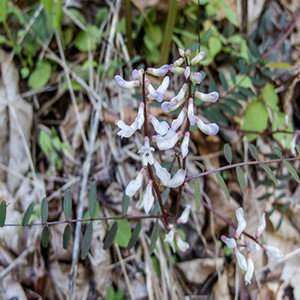
References: Weeds of the South by Charles T. Bryson and Michael S. DeFelice - Carolina vetch (Vicia caroliniana)
Growing habits: Decumbent to ascending, often climbing annual herb
Root anatomy: Fibrous roots from shallow taproot
Leaf anatomy: Leaves alternately arranged, compound, leaflets narrow, 6-12 per leaf, all but lowermost leaves have branched tendrils
Reproduction: Pealike inflorescences, petals whit to rose-purple in color; produce roundish legume fruits when pollenated, very dark brown to black at maturity
References: Weeds of the South by Charles T. Bryson and Michael S. DeFeliceCarolina vetch
- Narrowleaf vetch (Vicia sativa)
Growing habits: Decumbent to ascending climbing annual herb
Root anatomy: Fibrous from shallow taproot
Leaf anatomy: Alternate, compound, 6-12 leaflets
Reproduction: Pealike flowers, 2 in subsessile clusters in upper axils, rose-purple petals; legume fruit, dark brown to black at maturity
References: Weeds of the South by Charles T. Bryson and Michael S. DeFelice