Broadleaf B-D
Bedstraw family (Rubiaceae)
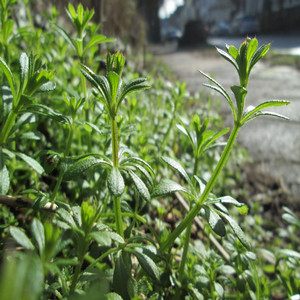
- Catchweed Bedstraw (Galium aparine)
Growing habits: Prostrate, mat-forming reclining summer or winter annual
Root anatomy: Shallow and matted, fibrous roots from taproot
Leaf anatomy: Leaves whorled around stem in rings of 6-8
Reproduction: Clusters of 1-5, small, white petals
References: Weeds of the South by Charles T. Bryson and Michael S. DeFelice - Virginia Buttonweed (Diodia virginiana)
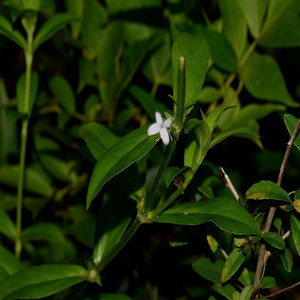
Growing habits: Erect, spreading, ascending or prostrate perennial herb
Root anatomy: Fibrous from fleshy, highly branched taproot
Leaf anatomy: Opposite arrangement, simple, slightly thickened, connected by fringed stipules
Reproduction: Solitary or occasionally in groups of 2, corollas white, tube filiform
References: Weeds of the South by Charles T. Bryson and Michael S. DeFelice - Florida Pusley (Richardia scabra)
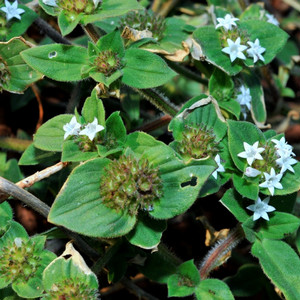
Growing habits: Weakly erect or ascending annual herb, pubescent stem
Root anatomy: Fibrous roots from taproot, roots shallow
Leaf anatomy: Leaves opposite, pubescent, blades flat and entire, oblong or elliptic to lanceolate/ovate
Reproduction: Flowers tubular, white, in terminal clusters
References: Weeds of the South by Charles T. Bryson and Michael S. DeFelice
Brackenfern family (Dennstaedtiaceae)
- Bracken Fern (Pteridium aquilinum)
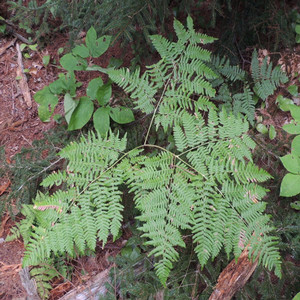
Growing habits: Erect terrestrial fern
Root anatomy: Long, creeping scaly rhizomatous roots, septate trichomes
Leaf anatomy: Fronds emerging from subterranean rhizomes, widely spaced, erect or slightly curved, widely triangular to ovate, tripinnatifid or tripinnate, red towards base and yellow towards top, spore-producing sori along underside margin
Reproduction: Numerous microscopic spores from sori
References: Weeds of the South by Charles T. Bryson and Michael S. DeFelice
Carnation family (Caryophyllaceae)
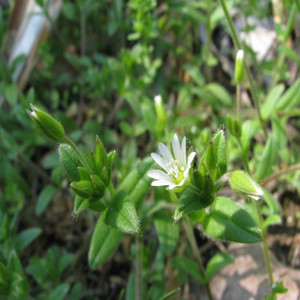
- Common Chickweed (Stellaria media)
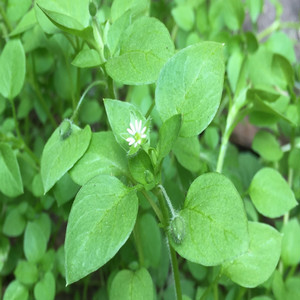
Growing habits: Erect, prostrate, or ascending weakly tufted to matted annual or winter herb
Root anatomy: Shallow, frail fibrous roots from weak taproot & from nodes
Leaf anatomy: Opposite arrangement, oval or elliptic
Reproduction: Inflorescences solitary or in small clusters at ends of stems or leaf axils, petals white and shorter than sepals
References: Weeds of the South by Charles T. Bryson and Michael S. DeFeliceCommon Chickweed
- Mouseear Chickweed (Cerastium fontanum)
Growing habits: Erect to spreading tufted mat-forming perennial herb
Root anatomy: Shallow, frail, nearly transparent fibrous roots from slender taproot
Leaf anatomy: Oppositely arranged, dull green, oval to elliptic, weakly nerved, upper surface and bottom veins pubescent
Reproduction: Clusters of 3 at ends of stems, white petals; capsule fruit
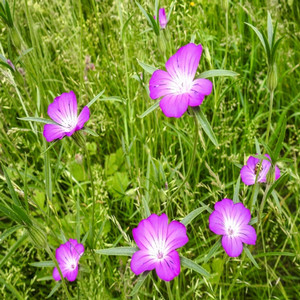
References: Weeds of the South by Charles T. Bryson and Michael S. DeFelice - Corncockle (Agrostemma githago)
Growing habits: Erect, cool-season annual or biennial herb
Root anatomy: Fibrous roots from taproots
Leaf anatomy: Oppositely arranged, simple, entire, linear to lanceolate, acute tips, pubescent with soft trichomes
Reproduction: Solitary at ends of branches, 5 petals, pink to purple color
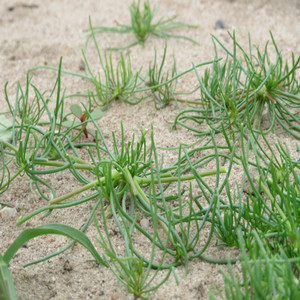
References: Weeds of the South by Charles T. Bryson and Michael S. DeFelice - Corn Spurry (Spergula arvensis)
Growing habits: Ascending or spreading erect annual herb
Root anatomy: Fibrous roots from finely branched taproot
Leaf anatomy: Threadlike leaves, opposite but apparently whorled around stem
Reproduction: Flower corolla regular, white, 5 petals in terminal clusters
References: Weeds of the South by Charles T. Bryson and Michael S. DeFelice
Carpetweed family (Molluginaceae)
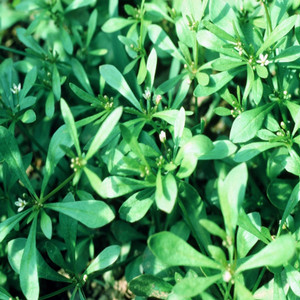
- Carpetweed (Mollugo verticillata)
Growing habits: Prostrate summer annual herb
Root anatomy: Fibrous, little-branched roots from taproot
Leaf anatomy: Whorled around stem, spatulate to linear-oblanceolate in shape
Reproduction: Inflorescences in clusters of 2-5 on slender stalks, pale green to white in color
References: Weeds of the South by Charles T. Bryson and Michael S. DeFelice
Crowfoot family (Ranunculaceae)
- Corn Buttercup (Ranunculus arvensis)
Growing habits: Erect to spreading winter annual herb
Root anatomy: Fibrous roots from taproot
Leaf anatomy: Rosette arrangement at base, alternate along stem, usually 3-lobed w/linear lobes, margins sublobed or broadly toothed
Reproduction: Solitary, usually 5 petals, yellow, mostly obovate, aggregate of achene fruits
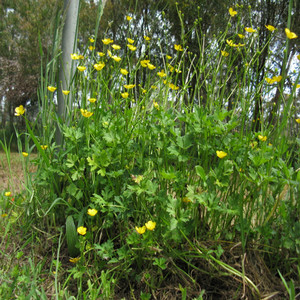
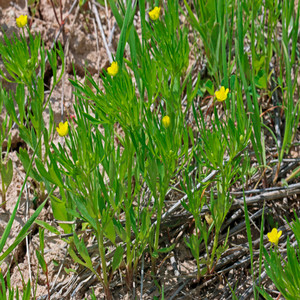
References: Weeds of the South by Charles T. Bryson and Michael S. DeFelice - Cursed Buttercup (Ranunculus sceleratus)
Growing habits: Annual or short-lived perennial
Root anatomy: Coarse fibrous roots
Leaf anatomy: Alternately arranged, basal leaves oval-cordate to reniform, palmately lobed w/3-5 lobes, margins roundly serrate to somewhat lobed, upper leaves palmately lobed w/3 lobes, lobes narrow; all leaves fleshy and glabrous
Reproduction: Flowers yellow, 5 petals & sepals, dense cluster of green pistils in flower center
References: Illinois WildflowersCursed Buttercup
Dayflower family (Commelinaceae)
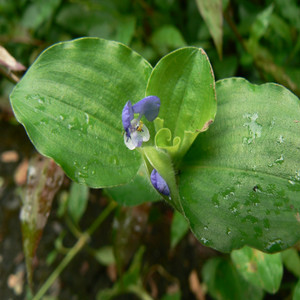
- Benghal Dayflower (Commelina benghalensis)
Growing habits: Erect annual or perennial herb
Root anatomy: Fibrous, shallow rhizomes
Leaf anatomy: Ovate to ovate-elliptic, parallel venation, entire margins
Reproduction: Upper two flower petals blue to lilac, lower petals lighter in color and less prominent; subterranean spates like small white tubers, don’t open so self-pollination occurs
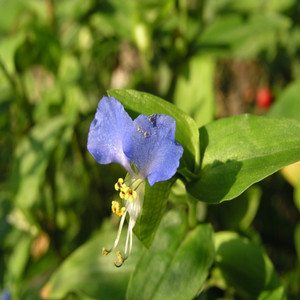
References: Weeds of the South by Charles T. Bryson and Michael S. DeFelice - Common Dayflower (Commelina communis)
Growing habits: Prostrate summer annual
Root anatomy: Fibrous roots
Leaf anatomy: Leaves lanceolate to ovate-lanceolate w/comspicuous basal sheaths
Reproduction: Perfect trimerous irregular inflorescence, flowers with 2 erect blue petals and 1 inconspicuous whitish petal
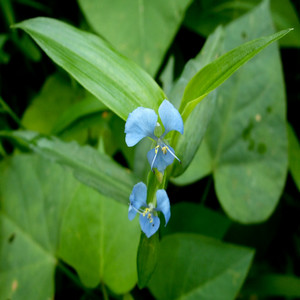
References: Weeds of the South by Charles T. Bryson and Michael S. DeFelice - Spreading Dayflower (Commelina diffusa)
Growing habits: Decumbent, diffusely branched annual herb
Root anatomy: Fibrous roots
Leaf anatomy: Lanceolate leaves, tips acuminate or acute, margins usually ciliate
Reproduction: Usually solitary spathe, acuminate, margins not fused, petals blue, 5 anthers
References: Weeds of the South by Charles T. Bryson and Michael S. DeFelice