Broadleaf Aster
Aster family (Asteraceae)
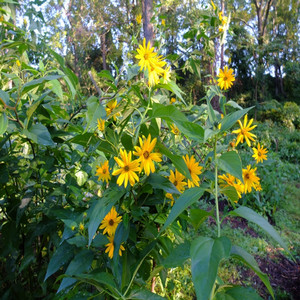
- Jerusalem artichoke (Helianthus tuberosus)
Growing habits: Tall, erect perennial herb
Root anatomy: Fibrous roots from taproot; also produces fleshy tuber-bearing rhizomes
Leaf anatomy:Lower leaves oppositely arranged, become alternate further up stem, broadly lanceolate to ovate in shape, margins serrate
Reproduction: Many heads in a corymb, disk florets yellow, bracts usually dark
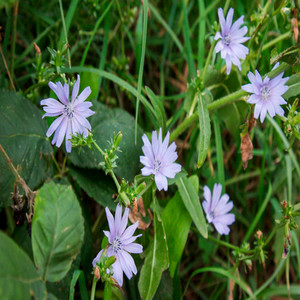
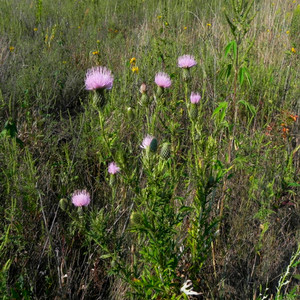
References: Weeds of the South by Charles T. Bryson and Michael S. DeFelice - Slender aster (Eurybia compacta)
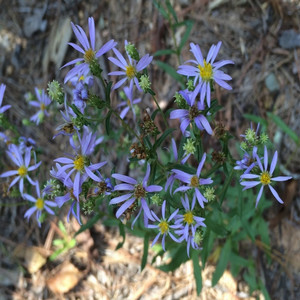
Growing habits: Erect, spreading, or decumbent annual herb
Root anatomy: Fibrous roots from a short taproot
Leaf anatomy: Leaves alternately arranged, linear to narrowly elliptic, margins entire or sharply toothed, somewhat fleshy
Reproduction: Flowers lavender to blue or pinkish-white, disk forets yellow
References: Weeds of the South by Charles T. Bryson and Michael S. DeFeliceSlender aster
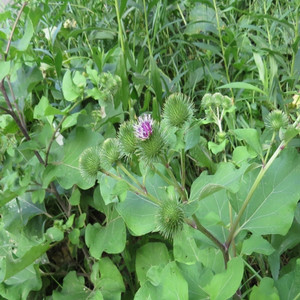
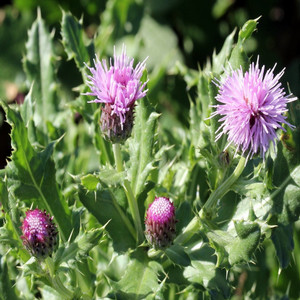
- Common burdock (Arctium minus)
Growing habits: Erect biennial herb with numerous basal leaves
Root anatomy: Fibrous roots from large fleshy taproot
Leaf anatomy: Alternately arranged, broadly ovate, serrated margins (sometimes dentate), sparsely pubescent on bottom
Reproduction: Bracts with hooked tips, purple to lavender flower
References: Weeds of the South by Charles T. Bryson and Michael S. DeFelice - Chicory (Cichorium intybus)
Growing habits: Erect, branched perennial from deep taproot, milky sap from stem
Root anatomy: Long, fleshy, simply branched taproot
Leaf anatomy: Rosette of leaves at base, alternately arranged leaves along stem, slightly lobed or entire, much longer than wide, can have slightly lobed margins
Reproduction: Flower heads single or in raceme at the ends of branches & in leaf axils, bright blue but sometimes white petals, petal ends round & slightly squared
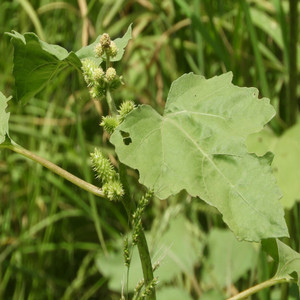
References: Weeds of the South by Charles T. Bryson and Michael S. DeFelice - Cocklebur (Xanthium strumarium)
Growing habits: Erect, coarse, summer annual herb
Root anatomy: Fibrous roots from a freely branched taproot
Leaf anatomy: Leaves alternate, simple, triangular-ovate, margins irregularly lobed w/3-5 partitions
Reproduction: Inflorescences are heads terminal on short axillary branches, male heads rounded at ends of branches, female heads below male florets; produce achene fruits when pollenated, brown/black in color at maturity, covered in hooked barbs
References: Weeds of the South by Charles T. Bryson and Michael S. DeFelice - Spiny cocklebur (Xanthium spinosum)
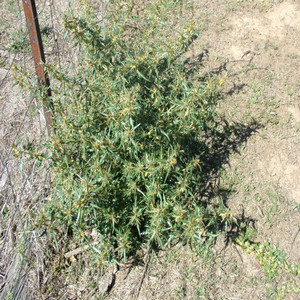
Growing habits: Erect annual herb
Root anatomy: Fibrous roots from taproot
Leaf anatomy: Alternate, lance-shaped, irregularly toothed or lobed, downy
Reproduction: Inflorescences borne in separate male and female heads, both inconspicuous, male heads in axils of upper leaves while female heads in lower leaves; achene fruits covered in spines and hooks
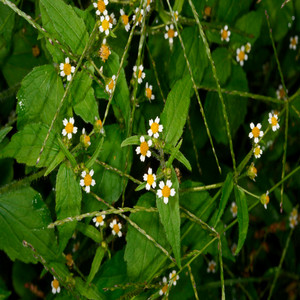
References: Weeds of the South by Charles T. Bryson and Michael S. DeFelice - Plains coreopsis (Coreopsis tinctoria)
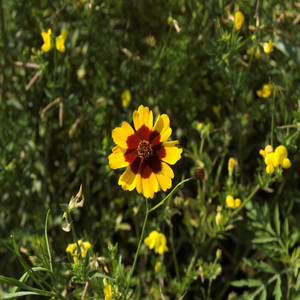
Growing habits: Erect, freely branched annual herb
Root anatomy: Fibrous roots from taproot
Leaf anatomy: Oppositely arranged, lower leaves pinnately to bipinnately divided, upper leaves undivided, narrowly linear shape
Reproduction: Diffuse corymb of many heads, ray florets yellow or orange, deep red-brown coloration near floret base
References: Weeds of the South by Charles T. Bryson and Michael S. DeFelice - Common dandelion (Taraxacum officinale)
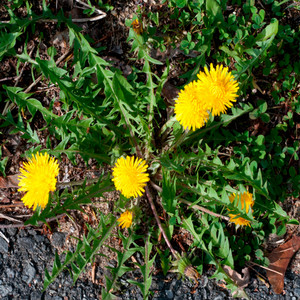
Growing habits: Erect winter annual or perennial herb; entire plants contains milky sap
Root anatomy: Fibrous roots from long, fleshy taproot
Leaf anatomy: Leaves arranged in basal rosette, deeply notched with retroversely pointed lobes, red petiole and midrib
Reproduction: Large puffball inflorescence at end of erect scape from rosette, ray florets orange-yellow by narrow yellow bracts; brown-yellow achene fruit w/pappus parachute
References: Weeds of the South by Charles T. Bryson and Michael S. DeFelice - False dandelion (Pyrrhopappus carolinianus)
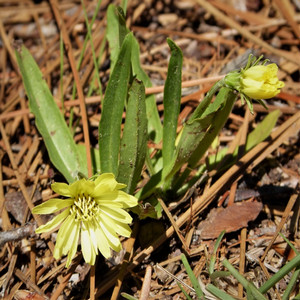
Growing habits: Erect, branched winter annual or biennial herb
Root anatomy: Fibrous roots from thickened taproot
Leaf anatomy: Leaves alternate, oblanceolate to lanceolate, acute to acumminate tips, margins entire to deeply dissected
Reproduction: Inflorescences pedunculate, head involucre round, inner bracts in 1 series, bilobed or winged, outer bracts shorter in several places, yellow
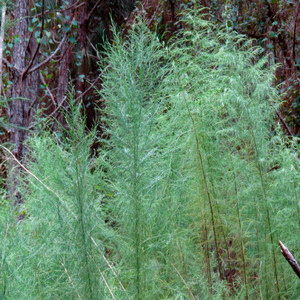
References: Weeds of the South by Charles T. Bryson and Michael S. DeFelice - Dogfennel (Eupatorium capillifolium)
Growing habits: Erect robust annual or short-lived perennial herb
Root anatomy: Fibrous roots from taproot, coarse rhizomes
Leaf anatomy: Alternately arranged, once or twice pinnately dissected into filiform or linear divisions on lower part of stem, simpler higher up on stem; no pubescence on leaves
Reproduction: Much-branching diffuse panicle inflorescence, numerous heads with 3-6 florets per, bracts with acute tips
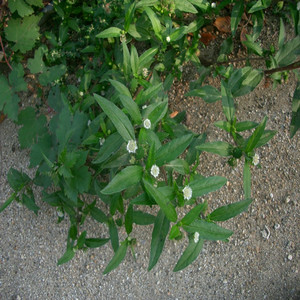
References: Weeds of the South by Charles T. Bryson and Michael S. DeFelice - Eclipta (Eclipta prostrata)
Growing habits: Erect, spreading, or prostrate summer annual herb
Root anatomy: Fibrous roots from shallow taproot
Leaf anatomy: Leaves oppositely arranged, simple, elliptic to lanceolate, petiole lacking and slightly thickened, midvein evident, margins serrate
Reproduction: Inflorescence 2 solitary heads, terminal head matures before elongated axillary head, perfect, rounded, many female ray florets, white petals; achene fruits
References: Weeds of the South by Charles T. Bryson and Michael S. DeFelice - Common fleabane (Erigeron philadelphicus)
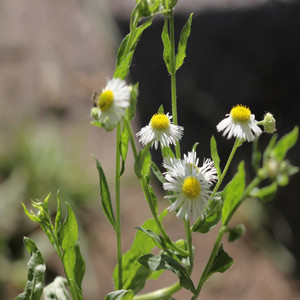
Growing habits: Erect biennial or short-lived perennial herb
Root anatomy: Fibrous roots from taproot
Leaf anatomy: Lower leaves in rosette and narrowly obovate/crenate/dentate; upper leaves smaller, alternate, oblong, round-based, decreasing in size apically
Reproduction: Ray flowers pink to rosy or whitish, disc corollas; light-brown achene fruit w/pappus
References: Weeds of the South by Charles T. Bryson and Michael S. DeFeliceCommon fleabane
- Hairy fleabane (Erigeron bonariensis)
Growing habits: Erect warm-season annual or biennial herb
Root anatomy: Fibrous roots from shallow taproot
Leaf anatomy: Alternately arranged, simple, narrow, ascending, lower leaves lobed/toothed
Reproduction: Numerous flowers at ends of stems, 10-20 disk florets; achene fruit
References: Weeds of the South by Charles T. Bryson and Michael S. DeFelice - Hairy galinsoga (Galinsoga quadriradiata)
Growing habits: Erect, freely branching summer annual herb
Root anatomy: Fibrous roots from taproot
Leaf anatomy: Oppositely arranged, simple, oval to elliptic-ovate, tapering to a sharp tip, toothed margin, upper surface very pubescent, trichomes on veins on underside
Reproduction: Head inflorescences, 5 white ray florets with 3-toothed apex, disk florets yellow
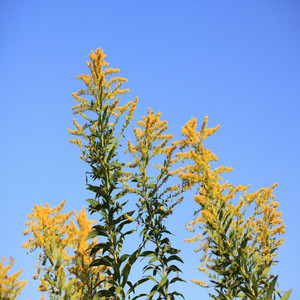
References: Weeds of the South by Charles T. Bryson and Michael S. DeFelice - Tall goldenrod (Solidago altissima)
Growing habits: Erect perennial herb
Root anatomy: Fibrous roots from taproot & rhizomes
Leaf anatomy: Leaves alternate, narrow, serrate margins, numerous
Reproduction: Inflorescences terminal panicle-like from strongly recurved branches, yellow ray florets
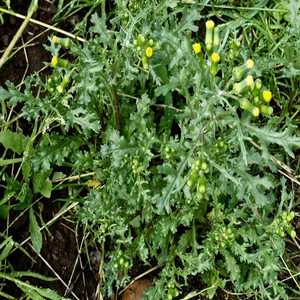
References: Weeds of the South by Charles T. Bryson and Michael S. DeFelice - Groundsel (Senecio vulgaris)
Growing habits: Erect cool-season annual herb
Root anatomy: Fibrous roots from taproot
Leaf anatomy: Basal rosette, alternate upward, soft, fleshy, obovate to oblanceolate, margins dentate to irregularly pinnately lobed; can be pubescent
Reproduction: Loose clusters of 8-20 heads, no ray florets, disk florets golden yellow
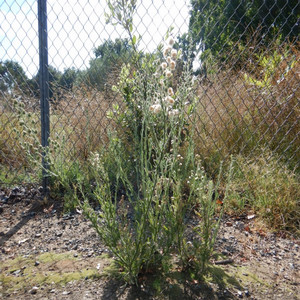
References: Weeds of the South by Charles T. Bryson and Michael S. DeFelice - Horseweed (Conyza canadensis)
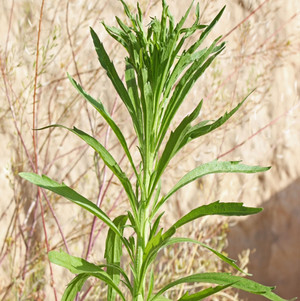
Growing habits: Tall, erect coarse annual herb up to 2m tall
Root anatomy: Fibrous roots from taproot
Leaf anatomy: Starts as rosette at plant base, alternately arranged up the stem, simple, linear to oblanceolate, crowded up stem, toothed/entire margins
Reproduction: Numerous small heads arranged along elongated panicle, ray florets white/lavender in color, disk florets yellow; achene fruits
References: Weeds of the South by Charles T. Bryson and Michael S. DeFeliceHorseweed
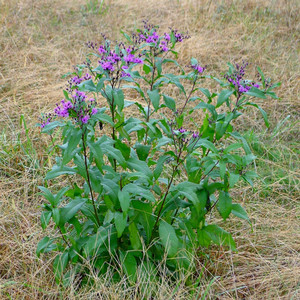
- Tall ironweed (Vernonia gigantea)
Growing habits: Erect, warm-season perennial herb
Root anatomy: Fibrous roots from fibrous taproot and rhizomes
Leaf anatomy: Alternately arranged, lanceolate to oblong-lanceolate, tapered at both ends, margins finely serrated, midrib white, soft trichomes near midrib, glabrous on leaf top
Reproduction: Around 12-30 florets on spreading head inflorescence, involucre short-cylindrical to bell-shaped, disk florets red-violet color, 5-lobed, ovate to oblong purple-tinged bracts
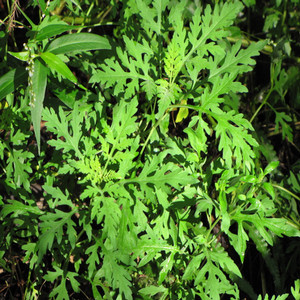
References: Weeds of the South by Charles T. Bryson and Michael S. DeFelice - Common ragweed (Ambrosia artemisiifolia)
Growing habits: Erect to branching summer annual herb
Root anatomy: Fibrous roots from shallow taproot
Leaf anatomy: Oppositely arranged near base, alternate apically, simple or pinnately to bipinnately lobed
Reproduction: Male and female florets separated, male heads drooping at ends of branches, female heads in axils of upper leaves and bases of leaves; woody achene fruit
References: Weeds of the South by Charles T. Bryson and Michael S. DeFelice - Giant ragweed (Ambrosia trifida)
Growing habits: Erect, tall summer annual herb, freely branched, rougly pubescent, angled, striate
Root anatomy: Fibrous roots from taproot
Leaf anatomy: Leaves oppositely arranged, simple, oblanceolate when plant is young but ovate/elliptic once plant is mature, palmately divided into 3-5 ovate-lanceolate serrated lobes
Reproduction: Male flowers abundant in slender racemes in upper terminals, female flowers in leaf axils of upper leaves and petals, light green in color; woody achene fruit
References: Weeds of the South by Charles T. Bryson and Michael S. DeFelice - Lanceleaf ragweed (Ambrosia bidentata)
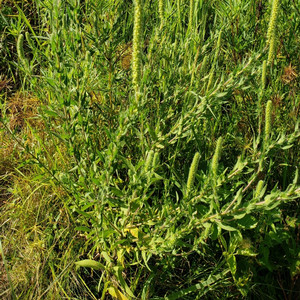
Growing habits: Erect, much-branched, warm-season annual
Root anatomy: Fibrous roots from taproot
Leaf anatomy: Sometimes opposite but usually alternately arranged, simple, lanceolate, unlobed or with two triangular lobes at leaf base, pubescent with sparse trichomes
Reproduction: Inflorescences with male heads in spikes at ends of branches and female heads in axillary clusters; achene fruit
References: Weeds of the South by Charles T. Bryson and Michael S. DeFeliceLanceleaf ragweed
- Annual sowthistle (Sonchus oleraceus)
Growing habits: Erect terrestrial annual herb
Root anatomy: Fibrous roots from short taproot
Leaf anatomy: Leaves alternately arranged, pinnately lobed, earlike lobe near leaf base, leaves often have toothed margins
Reproduction: Numerous flower heads surrounded by yellow bracts at apex of stem, produce achene fruits w/pappi when fertilized
References: Weeds of the South by Charles T. Bryson and Michael S. DeFelice - Perennial sowthistle (Sonchus arvensis)
Growing habits: Erect perennial herb
Root anatomy: Fibrous roots from long, deep taproot; also forms spreading horizontal rhizomes which produce more fibrous roots
Leaf anatomy: Leaves alternately arranged, glabrous, breen, pinnatifid with 2-5 lobes, spiny edges along margins
Reproduction: Corymblike terminal clusters, yellow to gold in color; achene pappus fruit
References: Weeds of the South by Charles T. Bryson and Michael S. DeFelice - Spiny sowthistle (Sonchus asper)
Growing habits: Erect, cool-season annual herb
Root anatomy: Fibrous from short taproot
Leaf anatomy: Alternate, lanceolate to oblanceolate, lower leaves deeply lobed, more irregularly toothed & prickly near apex
Reproduction: Numerous small heads, ray florets bright yellow
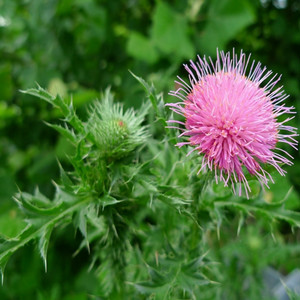
References: Weeds of the South by Charles T. Bryson and Michael S. DeFelice - Bull thistle (Cirisium vulgare)
Growing habits: Erect biennial herb
Root anatomy: Secondary roots from robust taproot
Leaf anatomy: First leaves rosette, alternately arranged leaves further up; elliptic to oblanceolate, dissected, pinnatifid
Reproduction: Rose to purple flowers, disk florets surrounded by spiny tipped practs; achene fruits
References: Weeds of the South by Charles T. Bryson and Michael S. DeFelice - Canada thistle (Cirsium arvense)
Growing habits: Erect perennial
Root anatomy: Fibrous roots from taproot
Leaf anatomy: Alternate, simple, sessile, oblong to lanceolate, somewhat lobed, margins crinkled, spines along leaf margins
Reproduction: Dioecious plants; heads numerous, compact in terminal clusters with lavender/rose-purple/white disk florets, bracts numerous & spineless
References: Weeds of the South by Charles T. Bryson and Michael S. DeFelice - Field thistle (Cirisium discolor)
Growing habits: Erect, robust biennial or perennial
Root anatomy: Extensive fibrous roots from taproot
Leaf anatomy: Alternately arranged, pinnately dissected, elliptic, linear lobes
Reproduction: Flower heads few to many per plant, lavender to purple corolla; achene fruit
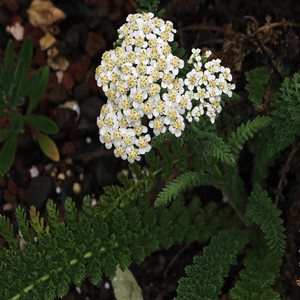
References: Weeds of the South by Charles T. Bryson and Michael S. DeFelice - Common yarrow (Achillea millefolium)
Growing habits: Erect, aromatic, sparsely branched perennial herb
Root anatomy: Fibrous roots from taproot and weakly spreading rhizomes
Leaf anatomy: Leaves alternately arranged, cauline, villous to wooly villous, pinnately dissected
Reproduction: Numerous compact terminal corymb inflorescences per plant, rays of flowers pistillate, white to pink in color
References: Weeds of the South by Charles T. Bryson and Michael S. DeFelice