Past Research Symposiums
Morning Breakout Sessions (10:45am-12:00pm)
-
Tigers in the Headlines: Elevating Clemson Research Through the Media
Room 108 Auditorium
Panelists:
- Alex Brooks, director of communications
- Heidi Coryell Williams, executive director of storytelling
- Danny Weathers, professor, Marketing
- Carlos Garcia, professor, Chemistry
Moderator:
- Shelia Cotten, associate vice president of research development
Abstract: What if everyone could appreciate and understand the work you do? Whether you are a part of designing buildings or differentiating human cultures, prepare to take high-level insights and outreach and turn it into something more akin to “party talk,” easily understandable by a range of audiences. The Marketing and Communications division, in conjunction with the Division of Research, will present a panel discussion highlighting the importance of communicating research with external audiences. Panelists will discuss ways to amplify scholarship and connect general readership audiences with Clemson-led research. Faculty will discuss the process and the benefit that these tools can bring to individual faculty members and the institution. A potential next step of this panel would be a media training workshop in the future.
-
Developing Opportunities to Enhance Student Learning
Room 106
Panelists:
- Sallie Hambright-Belue, associate professor, School of Architecture
- Matthew Lawrence Nicolette, assistant professor, School of Architecture
- Brooke Bennett, assistant professor, Psychology
- Anna Baker, assistant professor, Psychology
Moderator:
- Irene Pericot-Valverde, assistant professor, Psychology
Abstract: This panel discussion will focus on ways to enhance student learning and classroom experiences by engaging students in research, service-learning experiences, and experiential learning opportunities. The panel will also discuss how this work can be used to further faculty research, which can be an incentive for faculty to introduce these opportunities into their teaching responsibilities. As the University strives to offer the #1 Student Experience, this panel will be valuable to others who want to develop their courses to be more engaging for students.
-
Bridging Colleges: Unlocking the Future of Health Research Through Interdisciplinary Collaboration
Room 208
Panelists:
- Cullen Jackson, clinical professor, Industrial Engineering
- Lesley Ross, director, Institute for Engaged Aging
- Jim Morris, professor, Genetics and Biochemistry
- Alexis Stamatikos, assistant professor, Food, Nutrition and Packaging
Moderator:
- Kerry Smith, director, Eukaryotic Pathogens Innovation Center
Abstract: This panel discussion explores the transformative potential of interdisciplinary collaborations in health research between multiple colleges at Clemson. As healthcare challenges become increasingly complex, traditional single-discipline approaches often fall short of delivering comprehensive solutions. This panel brings together experts from diverse research areas - public health, engineering, social sciences and behavioral health - to share insights on the benefits and challenges of interdisciplinary research initiatives. Topics will include successful collaborations that highlight innovative problem-solving, the integration of varied methodologies and the cultivation of cross-disciplinary communication. Participants will leave with a greater understanding of how interdisciplinary approaches can enhance health research outcomes, ultimately contributing to more effective interventions and policies that address the multifaceted nature of health issues in today's society.
-
Supporting Faculty and Students on their Research Translation Journeys
Room 218
Panelists:
- Rahul Raghuaman, PhD student, Industrial Engineering
- Olivia McAnirlin, co-director of the Virtual Reality & Nature Lab
- David Vaughn, director, Clemson Engineers for Developing Communities
- Chris Gesswein, executive director, Clemson University Research Foundation
- John DesJardin, professor, Bioengineering
- Eric Weissman, executive director, NextGEN
- Tia Dumas, associate vice president for strategic alliances
Moderators:
- Kuang-Ching (KC) Wang, executive director, STRIDE
- Craig Kinley, program coordinator, STRIDE
Abstract: The panel will feature speakers sharing their roles and experiences with respect to conducting and supporting research translation. The panelists will include faculty in different stages of research translation, tech transfer specialists from CURF and other internal and external support organizations in the innovation and entrepreneurship ecosystem, including Clemson STRIDE, NextGEN and SCRA. The panel will foster an open discussion with the audience about the challenges, rewards and the support one would encounter on research translation journeys.
-
Community-Engaged Research Across Education, Architecture & Construction, and Sociology
Room 308
Panelists:
- Chien-fei Chen, professor, Sociology
- Amer Hamad Issa Abukhalaf, assistant professor, Nieri Department of Construction and Real Estate Development
- Kristen Cuthrell, chair, Education and Human Development
- Darris Means, dean's fellow for rural education
Moderator:
- Phillip Grant, assistant professor, Educational and Organizational Leadership Development
Abstract: In this facilitated panel, faculty will provide exemplars of community-engaged research, i.e., partnerships in which researchers and practitioners collaborate to identify and implement opportunities for transformation that are informed by evidence generated through collaborative inquiry. College of Education faculty will dive into rural education research-practice partnerships. College of Behavioral, Social and Health Sciences faculty will explore the work of a recent NSF regional rural and urban sustainability network in the Southeast. College of Architecture, Art and Construction faculty will share community-driven approaches to disaster resilience. The discussion will center around these guiding questions:
- How have you leveraged community engaged research to support and sustain underserved communities?
- What institutional and environmental barriers to that work have you encountered, and how have you overcome those barriers?
- In what ways and to what extent has collaborating with university partners in varied disciplines contributed to your work?
- In what ways and to what extent has collaborating with non-university partners (e.g., K-12 educators, families, business leaders, community leaders) contributed to your work?
-
Empowering Researchers: AI-Driven Information Literacy and Predatory Publishing Detection
Room 310
Panelists:
- Anne Grant, University Libraries
- Fanchen Meng, director of analytics systems and apps, Watt Family Innovation Center
- Ruoyu Yang, research associate-machine learning, Watt Family Innovation Center
Moderator:
- Karen Burton, University Libraries
Abstract: This panel discussion will delve into the intersection of artificial intelligence, information literacy and the fight against predatory publishing. Panelists will explore how Clemson Libraries, in collaboration with interdisciplinary teams, has leveraged AI and machine learning tools to enhance research processes and explore innovative methods for detecting predatory journals. This session will highlight successful strategies for cross-disciplinary partnerships, ethical AI use in research and creative solutions to complex challenges in the digital information environment. Join us to discover how AI and information literacy can safeguard the integrity of academic publishing and foster responsible scholarship.
-
How May We Serve You? Clemson University's Core Facilities - An Overview and Discussion of Available Services
Room 316
Panelists:
- Matt Breed, attending veterinarian/director of animal resources (Godley-Snell Research Center, Aquatic Animal Research Laboratory)
- Ken Webb, professor, S.C. Bioengineering Center for Regeneration and Formation of Tissues
- Chris Parkinson, director, Clemson University Bioinformatics and Genomics Facility
- Nishanth Tharayil, director, Multi-User Analytical and Metabolomics Lab
- Kelliann Koehler, research specialist, Electron Microscopy Facility
Moderator:
- Terri Bruce, director, Clemson Light Imaging Facility
Abstract: This session will include brief talks/descriptions of available multi-user cores (university and department level) and how to access them, including a discussion of contacts and how to use scheduling systems, such as iLabs. The talks will be followed by a panel discussion with core directors from across campus.
Afternoon Breakout Sessions (1:00pm-2:15pm)
-
Mentoring as a universal enabler for innovation
Room 108 Auditorium
Panelists:
- Marieke Van Puymbroeck Chancellor, associate dean, Graduate School
- Lori Dickes, professor, Political Sciences
- Sheila Cotten, associate vice president for research development
- Tia Dumas, associate vice president for strategic alliances
Moderator:
- Stephen Creager, associate dean, College of Science
Abstract: Mentoring is a universal activity that impacts students and faculty alike in many areas of their lives including the pursuit of research. Mentoring includes elements of onboarding for new students / employees and of evaluation (e.g. student grading and faculty annual evaluations) but it is also distinct from these, providing access to experience and guidance that can greatly enhance educational and professional work. The pursuit of impactful research may be greatly aided by impactful mentoring. This moderated panel discussion will address similarities and differences in mentoring for graduate students, faculty, and university leaders. Stephen Creager, Associate Dean in Science, will moderate the panel which will include the following persons as panelists: Tia Dumas, Associate Vice President for Strategic Alliances and Leader of the Clemson Chair Academy; Lori Dickes, Director of the Office of Faculty ADVANCEment; Marieke Van Puymbroeck, Associate Dean of the Graduate School; and Shelia Cotten, Associate Vice President for Research Development. Panel discussion will address ways in which leaders can promote / encourage impactful mentoring, specific things that leaders seek to accomplish and to avoid in mentoring programs, and similarities / differences in approaches to mentoring for different groups.
-
Achieving Professional, Effective Graphics Efficiently with Available Clemson Resources
Room 106
Panelists:
- Stacie Poore Powell, data services librarian, University Libraries
- Yaswanth Mulakala, data visualization specialist, University Libraries
Moderator:
- Brad Walters, program manager, Office of Research Development
Abstract: The Office of Research Development (ORD) and the Data Visualization Lab (DVL) have partnered to present a workshop on Clemson’s technical graphic and data visualization resources. This workshop will offer an in-depth exploration of Clemson’s extensive yet underutilized infographic resources, equipping researchers with the tools to enhance the professionalism and effectiveness of their grant proposal visuals. Attendees will leave with a deeper understanding of Clemson’s visualization resources and strategies for integrating data visualization and technical graphics into their grant proposals, ultimately enhancing clarity, professionalism, and competitiveness in funding applications.
-
Demystifying NIH Funding
Room 208
Panelists:
- Lesley Ross, director, Institute of Engaged Aging
- Sarah Floyd, assistant professor, Public Health Sciences
- Xia Jing, associate professor, Public Health Sciences
Moderator:
- Morgan Simpson, research development specialist, Office of Research Development
Abstract: This panel discussion will provide guidance and advice to faculty interested in submitting proposals to the NIH who might not have much experience with applying for/receiving NIH funding. Discussion topics will include the different types of NIH funding mechanisms, the preparation, submission and revision of NIH proposals, and perspectives on the NIH review panel process. The panel session will also introduce faculty to the NIH Accelerator program, which is designed to provide guidance and mentorship to investigators seeking NIH funding.
-
High Performance Computing in Bioinformatics
Room 218
Panelists:
- Rooksana Noorai, assistant director, Genomics and Bioinformatics
- Vijay Shankar, biostatistician, Center for Human Genetics
- Alex Feltus, professor, Genetics and Biochemistry
- David Feliciano, associate professor, Biological Sciences
- Shahid Mukhtar, professor, Genetics and Biochemistry,
- Christopher Parkinson, professor, Biological Sciences
Moderator:
- Zachary Gerstner, HPC research computing facilitator
Abstract: This panel will discuss the current state and evolution of bioinformatics in HPC at Clemson and beyond. The panel will discuss Palmetto/Secretariate's impact on their work, how their use of HPC has evolved over time, and how HPC & AI are contributing to the future of bioinformatics research.
-
Translating Industry Partnerships into Scalable Knowledge: Building Training, Database, & Toolkits
Room 308
Panelists:
- Anjali Joseph, director, Center for Health Facilities Design & Testing
- Dina Battisto, professor, School of Architecture
- Vivek Sharma, assistant professor, Nieri Department of Construction and Real Estate Development
Moderator:
- Lyndsey Deaton, assistant professor, School of Architecture
Abstract: In this panel discussion, we will explore how pilot or example projects with industry partners can evolve into scalable, impactful tools, training programs and databases that benefit the broader sector. The session will emphasize the importance of academia in designing, maintaining and updating these resources due to our impartiality and commitment to ensuring consistency across the industry. Panelists will share insights on the process of translating successful pilot projects into standardized, widely applicable resources. Attendees will gain strategies for fostering long-term collaborations between academia and industry, ensuring that tools and training are both effective and sustainable for future use. In this session, I will present three distinct projects that demonstrate how academia can develop toolkits, databases and training programs that translate industry partnerships into scalable, standardized resources.
- Leveraging the Value of Social Media Data for Scientific Inquiry
-
Leveraging Research Metrics for Strategic Growth: Insights from Three Vendors
Room 316
Panelists:
- Deron Morgan, representative for InCites
- Patty Smith, representative for Dimensions
- Scott Bard, representative for SciVal
Moderator:
- Elias Tzoc, associate dean, University Libraries
Abstract: As Clemson University continues to document its growing research success and aims to double its research expenditures by 2035, understanding and leveraging research analytics and metrics are more crucial than ever. This panel brings together representatives from three leading research platforms -- InCites, Dimensions and SciVal -- to provide an overview of their key features and unique capabilities. These technologies are essential for documenting and showcasing research impact and metrics, particularly at R1 and AAU institutions. This session will offer valuable insights into enhancing research strategies and outcomes. Join us to learn how these powerful resources can help Clemson achieve its ambitious research goals.
2024 Research Symposium
-
8:15 a.m. Welcome from Symposium Co-Chairs (Auditorium)
The annual Research Symposium is organized by the Research Advisory Board, which includes a faculty member from each college and the Libraries. This year’s Symposium co-chairs (noted below) will provide a Symposium welcome in the Watt Auditorium.
Symposium Co-Chairs:
- Anjali Joseph, College of Architecture, Art and Construction
- Rajan Sekhon, College of Science
- Christopher Vidas, University Libraries
-
8:30 a.m. Research Update and Clemson Elevate Strategic Plan (Auditorium)
Provost Bob Jones and Tanju Karanfil, Senior Vice President for Research, Scholarship and Creative Endeavors, will discuss Clemson’s research growth and goals under the Clemson Elevate strategic plan, as well as answer questions from attendees.
-
9:30 a.m. Keynote Panel: “Ways AI is Changing Research, Teaching, and Practice” (Auditorium)
Select panelists from upcoming breakout sessions will kick off the discussion with brief presentations followed by attendee discussion on the various ways AI is impacting their work.
Panelists:
- David Blakesley, Campbell Chair, Technical Communication
- Julian Brinkley, Assistant Professor, School of Computing
- Sarah Jerasa, Assistant Professor, Education and Human Development
- Windsor Sherrill, Associate Vice President for Health Research
Moderator: Nathan McNeese, McQueen Quattlebaum Endowed Associate Professor of Human-Centered Computing
-
10:45 a.m. Panel Breakout Session 1
Auditorium
Using Artificial Intelligence to Enable Human Performance Research
Panelists:
- Jason Avedesian, Assistant Coach, Athletics, and Adjunct Professor, Bioengineering
- Sarah Bauer Floyd, Assistant Professor, Public Health Sciences
- Reed Gurchiek, Assistant Professor, Bioengineering
- Shuchun Sun, PhD Candidate, Bioengeering
- Tong Ye, Associate Professor, Bioengineering
Moderators:
- Windsor Westbrook Sherrill, Professor and AVP for Health Research
- Hai Yao, Professor and AVP for Biomedical Research
Room 106
Inclusive Excellence: Transformative Research in Accessible Design and Innovation
Panelists:
- Julian Brinkley, Assistant Professor, School of Computing
- Jody Cripps, Assistant Professor, Languages
- Gerry Derksen, Assistant Professor, Department of Graphic Communications
- Emma Dixon, Assistant Professor, School of Computing
- Kristina Randall, Clinical Assistant Professor, Education & Human Development
- Robin Tyndall, Director, Research Compliance, and Chair, Accessibility Commission
Room 208
Challenges of Data Collection in the Age of AI
Panelists:
- Shubham Agrawal, Assistant Professor, Department of Psychology
- Kelly Caine, Professor, School of Computing
- Long Cheng, Assistant Professor, School of Computing
- Shelia R. Cotten, Associate Vice President for Research Development, and Provost’s Distinguished Professor, Department of Sociology, Anthropology, and Criminal Justice, Department of Communication
- Bart Knijnenburg, Associate Professor, School of Computing
- Amy M. Schuster, Research Assistant Professor, Department of Psychology
- Emily A. Sidnam-Mauch, Research Scientist, School of Computing
- Paige Watson, Assistant Professor, Department of Psychological Sciences, Auburn University
Room 218
How Artificial Intelligence can Enhance Creativity and Streamline Prepress Operations in the Digital Landscape
Panelists:
- Carl Blue, Associate Professor, Graphic Communications
- Amanda Bridges, Clinical Assistant Professor, Graphic Communications
Room 308
Implementing Video and Visual Tools for Improved Oral Communication
Panelists:
- Rachelle L. Beckner, Lecturer, Department of Civil Engineering
- Ellen Breazel, Principal Lecturer, School of Mathematical and Statistical Sciences
- Lillie Langlois, Lecturer, Department of Forestry and Environmental Conservation
- Mary Nestor, Senior Lecturer, Department of English
Room 310
Research Methodologies Applied in AI & Algorithmic Platform Scholarship
Panelists:
- Golnaz Arastoopour Irgens, Assistant Professor, Education & Human Development
- Brandon Boatwright, Assistant Professor, Department of Communication
- C.C. Bates, Professor, Education & Human Development
- Cynthia Deaton, Associate Professor, Teaching & Learning
- Heather Dunham, Assistant Professor, Education & Human Development
- Sarah Jerasa, Assistant Professor, Education & Human Development
- Enamel Kabir, Research Associate, Department of Communication
- Lindsey Rowe, Assistant Professor, Education & Human Development
-
12:45 p.m. Panel Breakout Session 2
Auditorium
The Role of Artificial Intelligence and Digital Tools in Health Research
Panelists:
- Archis Ghate, Fluor Endowed Chair, Industrial Engineering
- Sudeep Hegde, Assistant Professor, Industrial Engineering
- Aaron J. Masino, Associate Professor, School of Computing
- Kuang-Ching Wang, Endowed Chair, Electrical & Computer Engineering
Moderator: Thomas Britt, Professor, Health Sciences Center Research Director
Room 106
Interdisciplinary and Inter-Institutional Approaches to AI Research and Pedagogy
Panelists:
- David Blakesley, Professor of Rhetorics, Communication, and Information Design; Campbell Chair in Technical Communication; Interim Director RCID
- Gabriel Hankins, Associate Professor, English
- Douglas Seefeldt, Associate Professor, History
Room 208
Transformative Role of Battery Ecosystem in AI-Dominated Digital World
Panelists:
- Shubham Agrawal, Assistant Professor, Psychology
- Shuangshuang Jin, Associate Professor, School of Computing
- Laine Mears, Smartstate Professor of Automotive Manufacturing and Department Head, Automotive Engineering
- Rajendra Singh, D. Houser Banks Professor, Electrical and Computer Engineering
- Jiangfeng Zhang, Associate Professor, Automotive Engineering
Room 218
Collaborative Research: Create a Successful Research Team with College of Business Partners
Panelists:
- Michelle Suki Bost Fox, Senior Lecturer, Graphic Communications
- Larry Fredendall, Professor, Management
- Benjamin Grant, Assistant Professor, Management
- Pravin Nath, Assistant Professor, Marketing
- Jennifer Siemens, Associate Dean, College of Business
- Erica Black Walker, Associate Professor, Graphic Communications
- Patrick Warren, Associate Professor, Economics
Room 310
Hallucinatory Practice: Machine Learning and the Boundaries of Creative Production
Panelists:
- Alex Schechter, Assistant Professor, Department of Art
- Drew Sisk, Assistant Professor, Department of Art
- Rebecca Forstater, Assistant Professor of Studio Art, Wofford College
-
2:15 p.m. Grad 3-Minute Thesis Presentations (Auditorium)
Three Minute Thesis (3MT®) is a research communication competition developed by The University of Queensland that challenges graduate students to present a compelling oration on their thesis and its significance in just three minutes in language appropriate to a non-specialist audience.
During this session, two Clemson 3MT competitors will present 3-minute theses:
- Vishal J. Thomas, a doctoral student in the Department of Bioengineering, won the regional competition held during the Conference of Southern Graduate School’s annual meeting and will represent Clemson and the CSGS Southern Region at the Council of Graduate Schools’ North American annual meeting.
- Megan Pitz, a doctoral student in the Department of Bioengineering, placed 2nd in the competition and won a people's choice award.
-
2:30 p.m. Research Awards Ceremony with President Clements (Auditorium)
President Jim Clements and Senior Vice President Tanju Karanfil will announce the Researcher of the Year awards and the University Research, Scholarship and Artistic Achievement Awards.
For Researcher of the Year, each college nominated a senior faculty member and a junior faculty member who received their terminal degree within the past 10 years. Researcher of the Year is awarded in both the senior faculty and junior faculty categories.
URSAAA recognizes Clemson University faculty who have achieved rare career milestones, such as receiving the highest level of national or international recognition in their field; authoring a paper that has received more than 1,000 citations; or expending more than $1 million on research in a fiscal year.
-
3:15 p.m. Networking and Poster Session (Atrium)
Hors d’oeuvres will be available until 4:15 p.m. and the following research posters will be set up in the Atrium :
Mostafa Ahmed
Leveraging Biotechnology for the Development of a Nano-vaccine Against Foodborne Pathogens in ChickensSarah Allen
Male Children had Less Enamel Caries Compared to Female ChildrenChristian Blackburn
Analysis of Image-Processing Software Choice for Game-Camera ResearchLong Cheng
A Learning Platform for Enhancing AI-Centered Social Cybersecurity EducationLong Cheng
An Integrated Platform for Online Abuse ResearchAndy Duan
Monocular Panoramic Image Based 3D Scene ModelingAlex Feltus
Case Studies Leveraging Generative AI for Computational Biology Education and Research.Sydney Ahern, Wynn Bartee, Charlotte Bodwell, Sayan Gupta, Alex Horton, Pravin Nath, Trey Ridgill and Annette Tower
A Study of the Effectiveness of Super Bowl AdvertisingJosie Nasekos, Alba J. Collart, Elizabeth Canales and Anastasia Thayer
U.S. Consumer Preferences for using Blockchain Technology to Track Climate-Smart and Organic Production PracticesAnuja Sarda and Alexis Sales
Painting the Path: Leveraging Mural for Stakeholder-Driven Comprehensive Program EvaluationShreeya Sharma and Khaled Abdelaziz
Employing 16S rRNA Gene Sequencing for Profiling the Gut Microbiota of Probiotic-Treated ChickensKatelyn Shumate
Birthing Methods Impact the Oral MicrobiomeJaCoya Thompson
Enhancing Data Visualization Literacy in Middle Grades by Exploring a Web-Based Tool in Informal Learning EnvironmentsAriel Turner and Elias Tzoc
Leveraging AI to Improve Library Services for Students and FacultyHazel Vega
Building Capacity for Early Multilingual Learners in South Carolina through Online Teacher Professional DevelopmentAmlan Benerjee (M&N Associates, Inc), Mihaela Gazioglu, Emily Howell, Rebecca Kaminski (Clemson University), Kavita Mittapalli, Victoria Pennington and Nicole Ferguson-Sams
Advancing Multilingual Learners’ Educational Experience through Digital ToolsNora D . Hochstetter, Emily S. Howell and Rebecca A. Kaminski
Exploring Perceived Competencies of Multilingual Elementary Students and their Teachers in Literacy Teaching and Learning: Implications for Professional DevelopmentJones J., Harrison C., Abdelaziz K., Miller B., Griffin S., Rennert L., Wang K., Dean D., Cartmell K., Neault M. and Wu J.
Applying Digital and AI Tools for Inter-Collegiate One Health Research Collaborations at Clemson
2023 Research Symposium
-
Breakout Session 1 (10:45 a.m. – Noon)
Auditorium
Panel Discussion led by Mik Carbajales-Dale, associate professor of Environmental Engineering and Earth Sciences
The newly-formed School of Civil and Environmental Engineering & Earth Sciences (SCEEES) is laser-focused on the infrastructure and environmental issues that directly impact how we build, work and create the quality of our planet. The school's Research Integration Committee has been exploring avenues of potential overlap and growth for the school. This effort has led to the identification of four research thrusts for the school: (1) surface and subsurface; (2) Earth's ecosphere; (3) smart city service; and (4) resilient communities. To aid in the effort, the school has made available seed funding for collaborations across the departments within the school. This session will include presentations on projects that span the school's broad research mission.
Room 106
Panel Discussion led by Karen Burton, lecturer, University Libraries
The growing popularity of Open Access (OA) publishing has provided researchers around the world with many new options to disseminate their work to the broadest audience possible. OA publishing in some capacity is now required by many funding agencies and carries a citation advantage for works available openly, but often carries a substantial cost for authors in the form of article processing charges (APCs). Clemson Libraries has offered an OA Publishing Fund since 2016 to award small amounts from the Libraries' collections budget (typically used for books, journals, databases, and other resources) to individual authors to offset these APCs. This 75-minute session will consist of: 1. A presentation of the current status of the OA Publishing Fund, including data on which departments are benefiting the most, which publishers are benefitting, and possible shortcomings of the program, 2. Updates regarding the Open Access publishing landscape and relevant trends, and 3. Suggested changes to the OA Fund that would take effect in July 2023, with open discussion time for audience feedback on these changes or other questions and suggestions.
Room 316
Panel Discussion led by Thomas Britt, professor of psychology
Human Factors Engineering holds great promise for the improvement of healthcare clinical operations and is emerging as a synergistic collaboration between Clemson University and Prisma Health. The present panel will bring together leaders and researchers from Clemson University and Prisma Health to discuss research programs applying human factors engineering to improve the processes and experience of giving and receiving care, and patient and provider safety, health, and wellness outcomes. Panel session members will include the following individuals: Jonathan Gleason, MD, Chief Clinical Officer for Prisma Health, will provide an overview of the importance of always considering human factors in healthcare. Divya Srinivasan, PhD, Department of Industrial Engineering, will provide an overview of how Clemson researchers from multiple colleges are applying human factors principles to different aspects of healthcare. Anjali Joseph, PhD, School of Architecture, will provide an overview of her research on the role of the built environment in healthcare human factors research. Jackie Cha, PhD, Department of Industrial Engineering, will discuss her research on the use of unobtrusive measures to assess nontechnical skills among surgical teams. Sudeep Hegde, PhD, Department of Industrial Engineering, will discuss his research on enabling resilient performance in complex environments in healthcare. Finally, Marissa Shuffler, PhD, Department of Psychology, will discuss her research on monitoring burnout and wellbeing among Emergency Department clinicians. The session will conclude with a discussion of additional areas of research on human factors approaches to healthcare and the encouragement of Clemson faculty with relevant expertise to become engaged in the initiative.
Room 208
Individual Presentations. Chair: Srikanth Pilla, ExxonMobil Employees Endowed Chair, Automotive Engineering.
- Amanda Regan, assistant professor, History and Geography: Digital History, U.S. History, and Women and Gender History
- Em Adams, assistant professor, Parks, Recreation and Tourism Management: Intimate partner and gender-based violence; Trauma-sensitive care; Culturally affirming healthcare; mind-body approaches to building resilience after trauma; healthcare worker well-being; simulation in healthcare education; Healthcare policy to improve healthcare equity among marginalized populations.
- Thomas Sharkey, Professor, Industrial Engineering: Modeling and Disrupting the Operations of Domestic Sex Trafficking Networks through Survivor-Informed, Transdisciplinary Research
Room 208 Breakout Session 1 Abstracts
Room 218
Individual Presentations. Chair: Erica Walker, associate professor, Graphic Communications.
- Amanda Bridges, associate professor, Graphic Communications: Dye Sublimation, Digital Printing, Direct-to-Garment Printing, and Graphic Communications Education.
- Carl Blue, associate professor, Graphic Communications: Technology, Innovation, and Curriculum Development.
- Gerry Derksen, instructor, Graphic Communications: From Sketch to Screen: Enhancing the Design Pipeline with AI
Room 218 Breakout Session 1 Abstracts
Room 310
Poster Session 1. Chair: Janice Withycombe, associate professor, School of Nursing.
- Thandi Nixon: Potential role of lactobacilli in mitigating the negative effects of heat stress on the immune responses of chickens.
- James McKenzie: Clinical Reasoning and the Diagnostic Process.
- Akash Shanmugam Boobalan: Developing a Common Clinical Decision System Module for Immunization Recommendations
- Anna Preter: Lung Cancer Screening Education and Implementation.
- Lu Zhang: Cancer Epidemiology, Residential Segregation and Health Disparities.
- Mytchell Ernst: How many and how fast can inexperienced clinical researchers generate data-driven hypotheses in two hours?
- Alice Franco: This study measures skin conductance (SC) as a proxy for pain in infants with Neonatal Opioid Withdrawal Syndrome.
- Micah Jordan: Residential Segregation, Social Determinants of health, and Social Epidemiology
- Emily Doherty: Perinatal Health and Health Disparities
- James Paul Gremillion, Alexis Sales: Determinants of Health, Health Promotion, and Socio-Behavioral Health Sciences
Poster Session 1 Abstracts
-
Breakout Session 2 (12:45 p.m. – 2 p.m.)
Auditorium
Panel Discussion led by Jean McKendry, director of research development, College of Education.
Fostering Impactful Research in K-12 Educational Settings.
Many Clemson University academic units support wide-ranging research and outreach initiatives that involve and impact K-12 schools across South Carolina (SC). Given the variety of university research and outreach initiatives that intersect with K-12 education (formal and informal), the goals of this session are to bring together representatives of these initiatives who are interested in 1) mutual learning about university activities, best practices, and impact in K-12 education and 2) exploring how to compile and share information about activities and resources with faculty seeking to connect their scholarship and outreach to K-12 settings. The session will include a series of short lightening talks about selected initiatives followed by a moderated discussion. Outcomes could range from establishing an informal K-12 outreach community of practice that gathers once a year to preparing a more formal asset map or other product.
Room 106
Panel Discussion led by Rachel Wagner, associate professor, Educational and Organizational Leadership Development
Federal funding agencies are increasing their focus on the creation of diverse and inclusive grant project teams and ensuring teams utilize a diversity, equity, and/or inclusion lens for their grant work. The proposed session will bring together experts in DEI from within the College of Education to discuss opportunities for research teams to weave DEI throughout their project proposals.
Room 316
Individual Presentations. Chair: Chris Saski, associate professor, Plant and Environmental Sciences.
- Gerry Derksen, instructor, Graphic Communications: Usability and User Experience with Interactive Media
- Sudeep Popat, associate professor, Environmental Engineering and Earth Sciences: Wastewater Treatment, Anaerobic Digestion, Electrochemical Treatment, and Resource Recovery.
Room 316 Breakout Session 2 Abstracts
Room 208
Individual Presentations. Chair: Chris Vidas, electronic resources librarian, University Libraries.
- Andrew Metcalf, assistant professor, Environmental Engineering and Earth Sciences: Air Pollution.
- Congyue Annie Peng, Research Assistant Professor, Bioengineering: Genes, Genomes, Pathogens, Peptide, and Cell Therapy
- David Ladner, associate professor, Environmental Engineering and Earth Sciences: Water, Environment, and Sustainability
Room 208 Breakout Session 2 Abstracts
Room 218
Individual Presentations. Chair: Erica Walker, associate professor, Graphic Communications.
- Michelle Boettcher, associate professor, Educational and Organizational Leadership Development: Senses of Belonging and Community in Higher Education.
- Shanna Hirsch, associate professor, Education and Human Development: The ECHO Model: A Case-Based and Collaborative Approach to Building Virtual Communities of Practice For South Carolina Educators.
- Barry Garst, professor, Parks, Recreation and Tourism Management: Promoting Youth and Young Adult Health and Well-Being During Summertime: A Multi-Year Research Agenda.
Room 218 Breakout Session 2 Abstracts
Room 310
Poster Session 2. Chair: Dev Arya, professor, Chemistry.
- Walker Spivey: Crop Physiology, Crop Improvement, Lipidomics, and Climate Change
- Payton Davis: Environment, Soil, and Cover Crops
- Siddhartha Regmi: Sea Level Rise, Coastal Forest Ecology, and Marsh Transgression
- Julia Boone: UAV-based Wildfire Monitoring and Detection, Multi-agent Systems
- Suzanne Crull: Environmental Microbiology
- Jyoti Prasad Kakati: Climate Resilient Soybean Production
- Sepideh: Food, Nutrition and Packaging Sciences
- Anastasia Thayer: Agricultural Economics
- Penelope Romo: DNA Repair
Poster Session 2 Abstracts
-
Breakout Session 3 (3:45 p.m. – 5 p.m.)
Auditorium
Panel Discussion led by Shelia Cotton, associate vice president for research development.
Emerging Technologies and Their Uses and Impacts.
Since its launch in November last year, ChatGPT has gathered both positive and negative public attention. It has also spurred several debates on the use of other generative artificial intelligence (AI) tools in industry, science, and education. While several publishers and higher education institutions have created policies related to ChatGPT use, most of these policies have focused on the prohibition of use of this AI tool. We propose a panel consisting of Clemson faculty to discuss the pros, cons, and challenges of ChatGPT use: (i) for conducting research, such as developing grant proposals, writing manuscripts, and reviewing articles; (ii) by faculty and staff to create teaching material and perform repetitive workplace tasks (e.g., grading); (iii) by students to complete homework assignments, create work of art, help complete milestone projects (e.g., dissertation, thesis); and (iv) other use cases in higher education (e.g., spurring innovation, searching for new ideas, or developing work-related skills). This panel will include faculty and administrators from across Clemson to present the pros, cons, and challenges of ChatGPT and other AI tools for higher education.
Room 106
Panel Discussion led by Bhupinder Singh Farmaha, assistant professor, Plant and Environmental Sciences.
With the global population expected to grow from 7.7 billion in 2019 to 9.7 billion (26% increase) in 2050, there is an urgent need to improve soil health functions to ensure food security, mitigate climate change, and invest in a sustainable future. In recent years, conservation agricultural management practices such as minimum soil disturbance, maximum soil cover, and crop diversification have been promoted to restore and maintain soil health by increasing soil biodiversity, improving soil water and nutrient cycling, and reducing soil degradation in terms of wind and water erosion, loss of soil organic matter and nutrients, acidification, and compaction. Despite numerous proposed and documented benefits of conservation agricultural management practices, adoption among producers remains unsatisfactorily low. This pilot project between Clemson University and South Carolina State University will provide incentives to growers to implement selected climate-smart (CS) production practices. The project will also measure and verify the carbon and greenhouse gas (GHG) benefits associated with the CS practices and will support the development of markets for the resulting climate-smart commodities (CSC). The state-wide pilot project will focus on representative agricultural production sectors of South Carolina, including vegetables, peanuts, beef cattle, and forest products, and will ensure the meaningful involvement of small and underserved producers.
Room 218
Panel Discussion led by Arelis Moore, associate professor, Languages.
Community Health, Health disparities reduction, Health Equity Promotion, The Social Determinants of Health, Community-based Participatory Research.
Panelists will share best practices from their global service learning (GSL) projects, done locally, and strategies and principles for developing reciprocal partnerships (i.e., non-exploitative, respect the knowledge and involve community partners in the academic course) with community-based organizations to facilitate students’ engagement. These strategies are paramount for developing impacting GSL initiatives that facilitate productive experiences for our students, while impacting the health and well-being of the communities they collaborate with. Panelists will show that some service-learning experiences completed locally can also be considered global because of certain elements that allow transforming local community engagement to a global exposure, such as the service-learning assignments including work with communities of first-generation immigrants, low-acculturated immigrants, and displaced persons.
Room 208
Individual Presentations. Chair: Dani Herro, professor, Education and Human Development.
- Charles Starkey, associate professor, Philosophy and Religion: Seeing by Example: The Central Role of Literary Style in Promoting Environmental Consciousness.
- Douglas Seefeldt, associate professor, History and Geography: Digital History, American West, History and Memory
- Michael Caterino, John and Suzanne Morse Chair of Arthropod Biodiversity, Plant and Environmental Sciences: Arthropod Biodiversity and Evolution.
Room 208 Breakout Session 3 Abstracts
Room 310
Poster Session 3. Chair: Chris Vidas, electronic resources librarian, University Libraries.
- Alexandra Skrocki, Dr. Barry Garst, and Dr. Ali Dubin: Camp providers’ role in responding to health issues faced by children, adolescents, and young adult staff during summertime
- Shamella Cromarie: Recruiting Underrepresented Populations Libraries, Organizational Performance and Improvement Science, and Research Methodology
- Jody Cripps: From Lambert to West Families: Deaf Genes on Martha’s Vineyard, 1700s to 1950s
- Jody Cripps: Music in Signed Language
- Scott D. Swain: A Scalable Framework for Dynamic Interface Testing of Augmented Reality Marketing Applications
- Scott D. Swain: Higher Levels of Compensation for Service Failures Induce Consumer Guilt When Firms are Close and Future Transactions are Distant
- Kris Frady: Identifying unique geographic and cultural assets to make pre-transfer engineering students more successful
- Danielle Latham: Undergraduate Education
- Emily Howell: Multilingual Learners, Professional Development, Caregiver Engagement
- Timothy Brown: Design as research/scholarship. Architecture and the crossings of public, social, and civic space. Spatial Justice. Design for equity.
Poster Session 3 Abstracts
Room 316
Poster Session 4. Chair: Chris Saski, associate professor, Plant and Environmental Sciences.
- Ciara Aumend: Oral Microbiome and HIV in Children
- Allison Mann: Human Microbiome, Probiotics, Oral Health and Disease
- Shanna L. Estes: Vis-NIR Spectroscopy for Analysis of Aqueous Neptunium-Acetate Complexation and Thermodynamics
- Sagar V. Kanhere: Carbon Fiber Processing, Composites and Polymer Processing
- Qiushi Chen: Computational Mechanics; Numerical Modeling of Granular and Porous Materials (geomaterials, lunar and martian regolith, biomass feedstocks); Material Processing and Handling
- Maryelle Nyeck: Deep Eutectic Solvents
- Madhushi Bandara: Exploring halogen bonding in cocrystals and deep eutectics
- Shreeya Sharma: Probiotic and Gut Health
- Tanuj Gupta: Nanomaterials
- Cecilia Delgado Solorzano: Human-Centered Artificial Intelligence
Poster Session 4 Abstracts
2022 Research Symposium
-
11:15-12:15pm, Session 1
2025 Research Symposium – Morning Breakout Session Details WFIC 218
Zoom SessionChair: Brian Powell Gary Machlis (Forestry and Environmental Conservation), A Framework for Research on Recurrent Acute Disasters
Brian Powell (Environmental Engineering and Earth Sciences), Large rainfall events cause pulsed release of trace metal and radionuclide contaminants from riparian wetlands
Andrew Brown (School of Mathematical and Statistical Sciences), Functional Calibration of Computer ModelsWFIC Auditorium
Zoom Session
Chair: Andrew Metcalf Adolph Beyerlein (Chemistry), Stability of Magnetic Skyrmions as Candidates for Dense Information Storage Devices
Carl Blue (Graphic Communications), Computer-to-screen application using an inkjet printer to apply a printed stencil directly to the mesh as a hybrid screen-printing process
Andrew Metcalf (Environmental Engineering and Earth Sciences), Using Microfluidics to Create Devices for Future ResearchWFIC 203
Zoom SessionChair: Chris Saski Jose Payero (Agricultural Sciences), Measuring Crop Evapotranspiration Using the Eddy Covariance and Surface Renewal methods in South Carolina
Sachin Rustgi (Plant and Environmental Sciences), Facing the fear of accidental peanut exposure with reduced-immunogenicity peanutsWFIC 106
Zoom Session
Chair: Dani Herro Poster Session #1:
Alexander Adogwa
Allison Traylor (virtual)
Anna Morrison
Cristina Tica
Daniel Moore
Deepak Sapkota
Delaney O'Tuel
Emily Howell
Ewa (Richard) Chukwu
Junior Langa
Leah HolcombWFIC 208
Zoom Session
Chair: Erin Goss Poster Session #2:
Longxiang Guo
Lu Zhang (virtual)
Maher Algalayini
Omar Hussein
Prasanna Valavanur Shekar
Pravin Nath
Reagan Ross
Rohan Goli (digital)
Salman Naveed
Samantha Scott
William T. Pennington
Zehua Jin -
2:00-3:15, Session 2
2025 Research Symposium – Afternoon Breakout Session Details WFIC 218
Zoom Session
Chair: Dani Herro Golnaz Arastoopour Irgens (Education and Human Development), Designing Critical Machine Learning Educational Programs with and for Children
Dani Herro (Education and Human Development), Pathways for their Futures: Engaging Rural Elementary Students in Authentic Data Science Practices
Shanna Hirsch (Education and Human Development), Innovations in Teaching Critical Content to Undergraduate Teacher Candidates
Joseph Ryan (Education and Human Development), Recognizing the Benefits and Versatility of Single Case Research Design for Interdisciplinary ResearchWFIC 106
Zoom Session
Chair: Thomas Britt CUSHR Health Research: A Focus on Innovation in Addiction and Substance Use Disorders
Mary Ellen Wright (Nursing)
Brian Miller (Sociology)
Corrine Sackett (Education and Development)
Kaileigh Byrne (Psychology)
Moonseoung Heo (Public Health Sciences)
Irene Pericot (Public Health Sciences)WFIC 208
Zoom Session
Chair: Jeremy King Academic Analytics’ Faculty Insight and External Discovery Site tools (roundtable)
Jeremy King (Clemson U)
Julie Wilson (Academic Analytics)
Beth Falwell (Academic Analytics)Virtual
Zoom Session
Chair: Berrin Terim Architecture, Society and the City (roundtable)
Berrin Terim (School of Architecture)
David Franco (School of Architecture)
Peter Laurence (School of Architecture)
Andreea Mihalache (School of Architecture)
Ufuk Ersoy (School of Architecture)
Amy Trick (School of Architecture)Virtual
Zoom Session
Chair: Puskar Khanal Climate Smart Forestry & Artificial Intelligence (lightning talks & seminar)
Geoff Wang, Forestry & Environmental Conservation
Puskar Khanal, Forestry & Environmental Conservation
Feng Luo, School of Computer Science
Venkat N. Krovi, International Center for Automotive Research
Matthew Browning, College of Behavioral, Social and Health Sciences
Whitney K. Huang, School of Mathematical and Statistical Sciences -
3:30-5:00pm, Session 3
2025 Research Symposium – Morning Breakout Session Details WFIC 106
Zoom Session
Chair: Erin Goss Seth McKelvey (English), Analyzing Narrative Voices in Fiction with Computer Help
Hudson Smith (Watt Family Innovation Center), In-the-wild detection of coordinated social media accounts using message narratives and account characteristics
Eric Touya (Languages), French laïcité: Feminisms, Cross-Cultures, and the Common Good (virtual presentation)
Kendra Allison (School of Nursing), Adolescent mental health assessment in primary care settings of Appalachia, South Carolina to include sexting frequency and depression indicesWFIC Auditorium
Zoom Session
Chair: Zhicheng Dou Microbial Pathogenesis and Resistance (seminar & lightning talks)
Zhicheng Dou, BioSci
Emily Rosowski, BioSci
Anna Seekatz, BioSci
Lior Rennert, Public Health Sciences
Lukasz Kozubowski, G&B
James Morris, G&B
Daniel Whitehead, ChemistryWFIC 208
Zoom Session
Chair: Emily Howell Future of Learning
Emily Howell (Education and Human Development)
Rachel Wagner (Higher Education and Student Affairs)
Golnaz Irgens (Learning Sciences)Virtual
Zoom Session
Chair: Steve Creager Full panel: Electrical Energy Storage (5-10 minute papers)
Steve Creager, Chemistry
Apparao Rao, Physics
Srikanth Pilla, Automotive Engineering
Jeff Zhang, Automotive Engineering
Mark Roberts, Chem & Biomolecular Engineering
Dillip Panda, Materials Science
Morteza Sabet, Automotive EngineeringVirtual
Zoom Session
Chair: Cameron Bushnell Full panel: Communication Across the Curriculum
Karen High, Engineering and Science Education
Carl Blue, Graphic Communications
Shanna Hirsch, Education and Human Development
Lesly Temesvari, Biological Sciences
Lea Jenkins, Mathematics and Statistical Sciences
Cameron Bushnell, Pearce Center/English, Moderator
2021 Research Symposium
The annual Research Symposium demonstrates the breadth of creative endeavors undertaken by Clemson’s diverse community of scholars and serves as a launching pad for inter-disciplinary research collaboration. Faculty from each college and the libraries participate, as do members of Clemson’s executive leadership team. The daylong event, planned by the Vice President for Research Faculty Advisory Board includes oral and poster presentations and panel discussions on targeted topics of broad interest suggested by faculty.
Thank you to everyone who participated in the 2021 Research Symposium on May 4th at the Watt Family Innovation Center. Abstracts from the session presentations are available below for your records, if needed. We hope to see you at next year’s Research Symposium. Details to come at a later date.
For questions reach out to Sarah White or Erin Goss.
2021 Schedule
-
Session 1, 11:15-12:00pm
2025 Research Symposium – Morning Breakout Session Topics & Presenters WFIC Auditorium WFIC 208 WFIC 106 Virtual Session Topic: Water
Chair: Brian Powell
Presenters:- Mani Rouhi Rad, “Managing Water Resources: An Interdisciplinary Approach”
- J. Todd Petty, “Freshwater species conservation at the interface of land use and climate change in Appalachian watersheds”
- Brian Powell, “Geochemistry of iron and trace metals in wetlands and monomictic ponds”
- Tom O’Halloran, “Managed Ecosystems as Natural Climate Solutions” (poster)
Topic: On Health: Medical Applications
Chair: Thompson Mefford
Presenters:- Sara Sarasua (poster), “Searching for the Genetic Cause of Language Delay in Phelan-McDermid Syndrome”
- Luigi Boccuto, “IGF-1 therapy: a new translational approach for treatment of developmental delay” (virtual)
- H. Bryan Riley (poster), “Global Manufacturing Within Automotive OEM Adaption for Design and Production of Medical Ventilators”
- Pingshan Wang, “High-throughput and label-free radio-frequency flow cytometry”
- Thompson Mefford, “Collaborative efforts utilizing magnetic nanoparticles”
Topic: Within a Pandemic
Chair: Lior Rennert
Presenters:- Andrew Metcalf, “Using Air Pollution as a Tool for Research”
- Lior Rennert, “Effective strategies for SARS-CoV-2 mitigation”
- Rachel Getman, “Reducing Out-of-Pocket Costs for Our Students through Open Educational Resources”
- Amalia Leifeste, “Drawing Buildings in a Pandemic: changing pedological sequence” (virtual)
- Delphine Dean (poster), “Beyond COVID-19: Collaborative Research Opportunities and Available Resources at Clemson’s New On Campus Diagnostic Lab (the REDDI Lab)”
Topic: Rural Geopolitics
Chair: Lee Morrissey (virtual)
Presenters:
- Rebecca Stoil, "Reassessing the Rural from the Upstate to the Global"
- Archana Venkatesh, "Activism and Rurality in 21st century India: A Transnational perspective"
- Lee Morrissey, "'Rural' Upstate South Carolina and the question of 'the Creative Economy'"
View Abstracts View Abstracts View Abstracts View Abstracts -
Session 2, 1:30-3:00pm
2025 Research Symposium – Afternoon Breakout Session Topics & Presenters WFIC Auditorium WFIC 106 WFIC 208 Topic: Considering Collaboration
Co-Chairs: Jean McKendry and Melinda Fischer
Presenters:
- Marissa Shuffler, “Training to Team: Evaluating the Impact of Team Development Interventions on Inclusive Teamwork Behaviors across Collaborative Spaces” (lightning talk)
- Jennifer Ogle, “Training Teachers to Incorporate Inclusive Collaboration Opportunities into Courses” (lightning talk)
- Lighting Rounds “Collaboration, Technology and Learning Across Educational Environments” (5 talks where faculty will pitch key ideas for their project)
- C.C. Bates, Dani Herro and Carl Ehrett, Leveraging AI to improve literacy in elementary-aged students
- Jeff Marshall, Stephanie Madison, Michelle Cook, Leigh Martin, Luke Rapa, Nathan McNeece and Bart Knijnenburg, STEM teacher learning progressions using a recommender system
- Golnaz Arastoopour Irgens, Modeling and measuring critical data literacies in informal learning environments
- Dani Herro, Shanna Hirsch, Golnaz Arastoopour Irgens, Computational Thinking-STEM Pop-Ups for All
- Kris Frady and Karen High, Developing engineering experiences and pathways in engineering technology
- Laine Mears, “THINKER: NSF NRT for Collaboration between Humans and New Manufacturing Technologies”
Topic: On Health
Chair: Thomas Britt
Presenters:
- Jeryl Jones, “AVS One Health Research Group” (virtual)
- Arwen Declan, “Science & Medicine Through the Emergency Department Lens” (virtual)
- Marissa Shuffler, “Addressing Emergency Clinician Well-Being and Burnout During the COVID-19 Pandemic”
- M. Gabriel Sava, “Diabetes Patient Surveillance in the Emergency Department: Proof of Concept and Opportunities”
- Lawrence D. Fredendall, “Creating Nurse Standard Work in an Emergency Department”
- Kevin Taaffe, “Identifying Optimal Staffing Levels to Improve Patient Flow and Patient Safety in the Emergency Department”
- Arelis Moore de Peralta, "A CBPR Approach to Combatting Childhood Obesity in the Greenville County Latinx Community"
Topic: Of Public Memory
Chair: Allison Kidd
Presenters:
- Allison B. Kidd, “Bringing Equity to Institutional Memory”
- Krista Oldham, “Rewriting Our Wrongs: Integrating Reparative Work in the Archives” (virtual)
- Rachel de Cuba, “Windswept Memories”
- Jonathan Beecher Field, “The Sleeping Historian”
View Abstracts View Abstracts View Abstracts -
Session 3, 3:15-4:45pm
2025 Research Symposium – Afternoon Session 3 Topics & Presenters WFIC 106 WFIC Auditorium WFIC 208 Virtual Session Topic: Inclusion in Research
Chair: Robin Tyndall
Presenters:
- Join a conversation around Inclusion in Research. A panel consisting of experts and advocates in building equitable and diverse collaborations:
- Dr. Shelia Cotten, Assoc. VP for Research Development
- Dr. Natasha Croom, Assoc. Professor in Education and Organizational Leadership
- Dr. Terri Bruce, Director of the Clemson Light Imaging Facility
- Dr. Faiza M. Jamil, Assoc. Professor in Education and Human Development
- Dr. Oriana Aragon, Assist. Professor in Marketing
- Dr. Brian Powell, Professor in Environmental Eng. and Earth Sciences
Topic: AI & Machine Learning
Chair: Katherine Weisensee
Presenters:
- Katherine Weisensee, “Building a Nationally Representative Forensic Taphonomy Database”
- Apparao M. Rao, “Data-driven Design of Electrolytes Enabled by Computation, Machine Learning, and Experiments”
- Zhen Li, “Multiscale Modeling and Machine Learning for Scale-Bridging”
- Alex Feltus, “Discovering Patient-Specific Biomarker Systems Using Artificial Intelligence” (virtual)
- Nicole Bannister & Bart Knijnenburg, “Teaching AI-related cybersecurity through metaphors and math.”
Graduate Researchers: Shahan Iqbal, Sushmita Khan, Khushbu Singh (virtual) - Carl Ehrett & Lucian Ghita, “Using AI to Understand Shakespeare’s Drama”
Topic: Changing Climate
Chair: Puskar Khanal
Presenters:
- Whitney Huang, “Estimating Concurrent Climate Extremes: A Conditional Approach” (virtual)
- Brook Russell, “Developing Statistical Methodologies to Investigate Extremes in the Earth's Climate” (virtual)
- Ming Yang, “Single-Site Catalysis for Efficient Fuel Gas Processing and Clean Transportation”
- Sachin Rustgi, “Turning perennial cotton into an annual: Remobilizing end-of-season”
Topic: Politics and Religion
Chair: Lee Morrissey
Presenters:
- Lee Morrissey, "Have any of us ever been modern?: Religion in recent discussions of modernity."
- John Tracy Thames, “Empire and Religious Integration in Late Bronze Age Syria”
- Kevin Gregory Vance, “A Liberal and Generous Toleration: John Adams and the Freedom of Religion”
- Mashal Saif, “Traditional Islam and Modernity in Pakistan”
- Peter Eisenstadt, “Howard Thurman, the Interracial Church, and the Travail of Black Religious Modernity”
View Abstracts View Abstracts View Abstracts View Abstracts - Join a conversation around Inclusion in Research. A panel consisting of experts and advocates in building equitable and diverse collaborations:
2018 Schedule
Overview
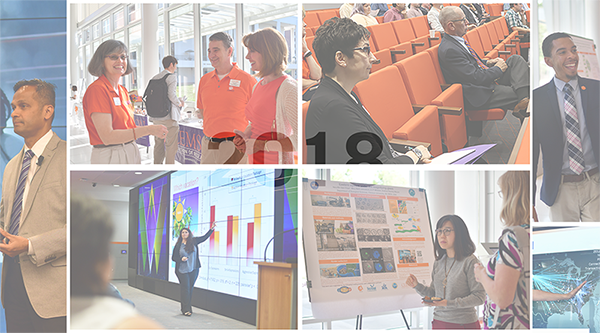
Faculty members from each College gathered at the 2018 Research Symposium to learn about research happening across campus and spark conversations about collaboration. The symposium served as a medium for dialog generation, for change, and for participation from the audience. It provided an opportunity for research work to be showcased and known across a growing audience each year.
Highlights
For questions reach out to Sarah White or Erin Goss.
