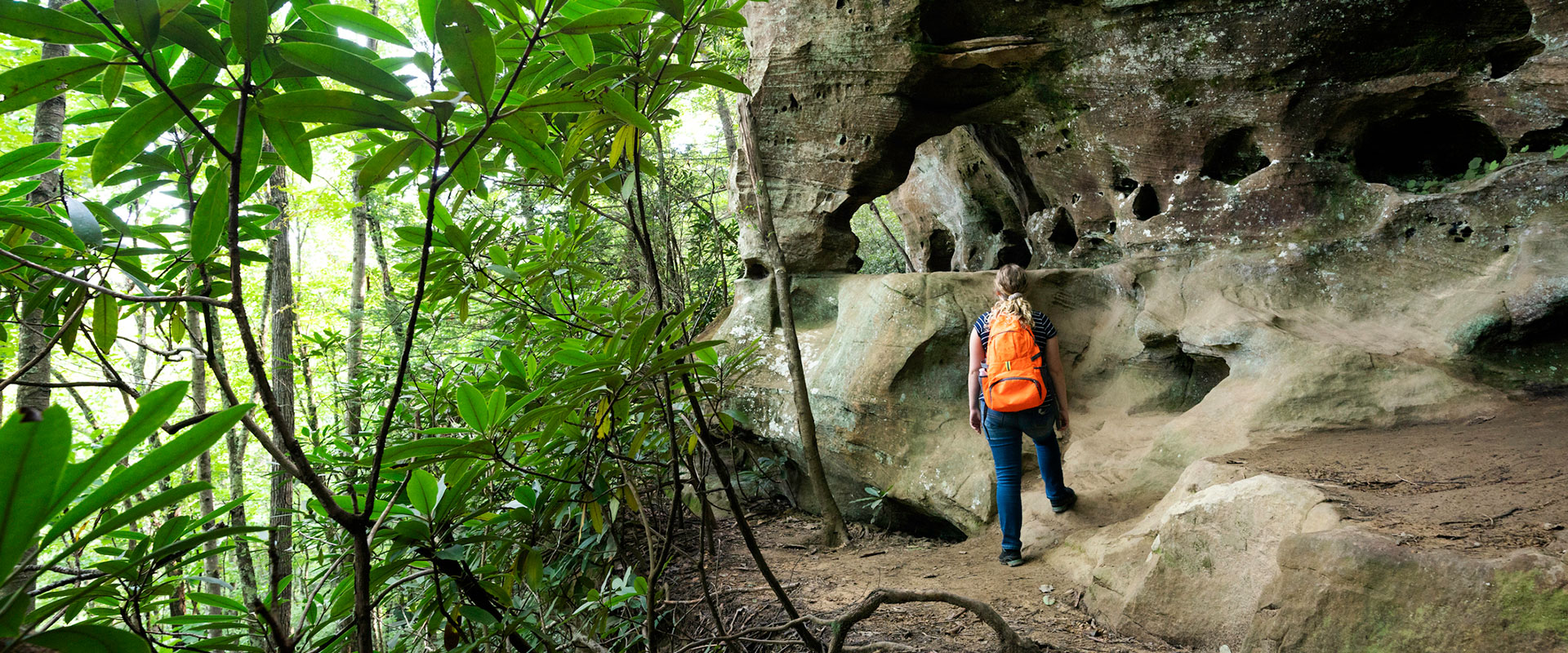
Field Camp: Learn Hydrogeology in the Real World
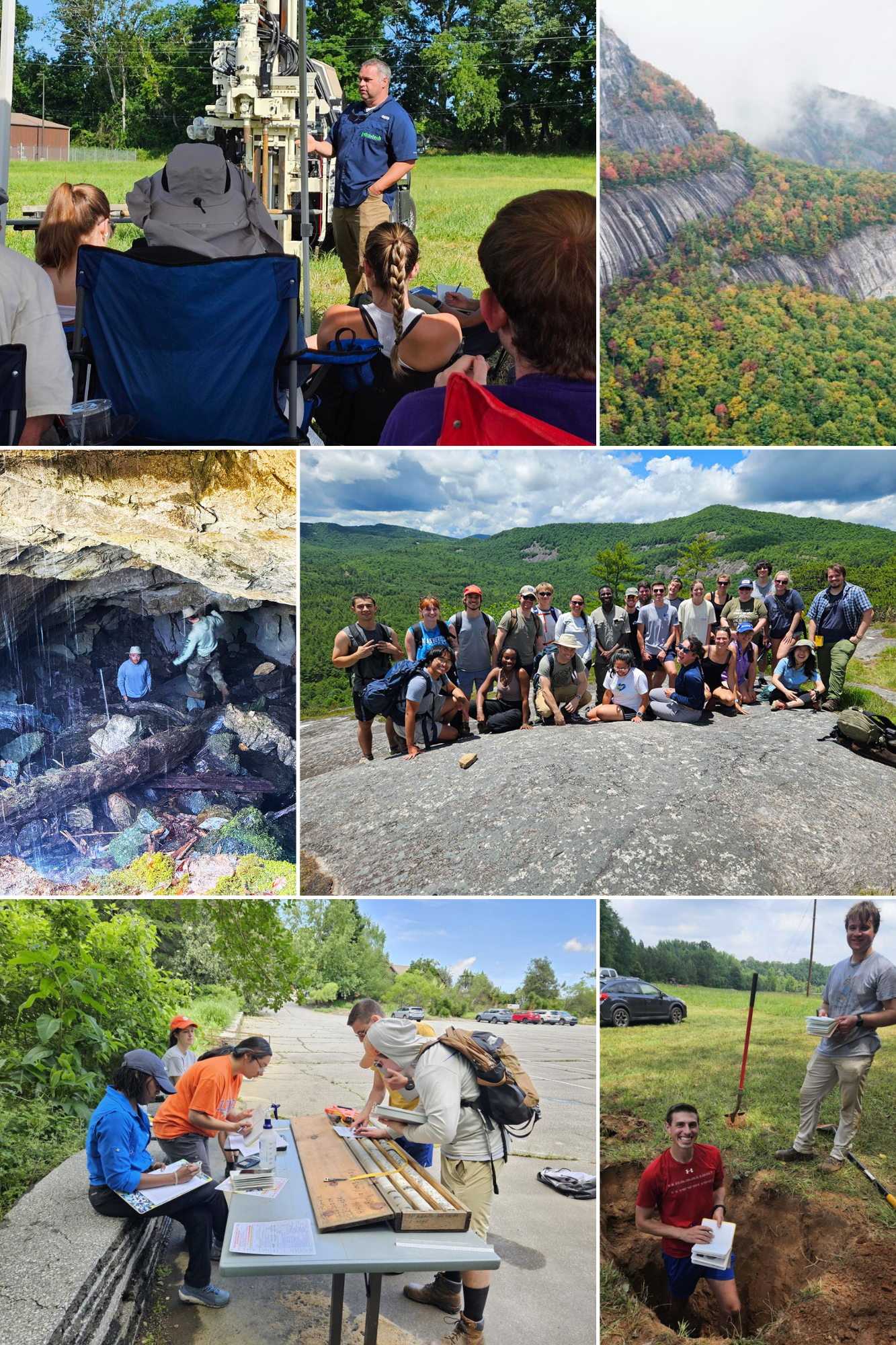
Field camp isn’t just about local sites; it’s about getting out into some of the most dynamic landscapes in the Southeast. Throughout the course, we take day-long and multi-day field trips to the Blue Ridge, Great Smoky Mountains, and Mammoth Cave regions, where you’ll see how geology directly shapes water movement in the real world.
Diverse Hydrogeologic Settings
Most field exercises are based around Clemson’s campus, located in the Piedmont, a region defined by fractured crystalline bedrock. Here, you’ll work directly with active wellfields, learning how groundwater behaves in complex subsurface systems. You’ll collect data from wells near streams, across groundwater divides, and in both shallow and deeper environments, gaining experience with the kinds of systems you’ll encounter in professional work. You’ll also investigate a shallow alluvial aquifer along the Seneca River floodplain, where you’ll help install monitoring wells and run aquifer tests in unconsolidated sediments. This setting offers a completely different perspective on groundwater flow and storage.
Regional Field Experience
Midway through the course, you’ll spend a week in Tennessee and Kentucky working in sedimentary aquifer systems. At the University of Tennessee field site, you’ll conduct aquifer tests in layered alluvial deposits over fractured bedrock, gaining experience with more complex subsurface conditions. You’ll also explore karst systems in and around Mammoth Cave National Park, where groundwater moves through caves, fractures, and hidden pathways. These environments highlight the challenges of tracing and understanding flow in real systems, skills that are critical for both research and industry.
Why It Matters
These trips aren’t just sightseeing; they’re where concepts click. You’ll see how geology controls water movement across different environments and scales, and you’ll leave with experience that applies whether you’re heading into hydrogeology, environmental science, engineering, or related fields.
Weekly Schedule
Events for 11 May through 15 June
| SUN | MON | TUES | WED | THURS | FRI | SAT | |
|---|---|---|---|---|---|---|---|
| WEEK 1 | 11-May | 12-May | 13-May | 14-May | 15-May | ||
| Intro | 1 | 2 | 3 | off | |||
| WEEK 2 | 16-May | 17-May | 18-May | 19-May | 20-May | 21-May | 22-May |
| off | 4 | Synthesis | 5 | 6 | 7 | Long-term pumping* | |
| WEEK 3 | 23-May | 24-May | 25-May | 26-May | 27-May | 28-May | 29-May |
| Long-term pumping* | 8 | Synthesis | Field Trip | Field Trip | Field Trip | Field Trip | |
| WEEK 4 | 30-May | 31-May | 1-June | 2-June | 3-June | 4-June | 5-June |
| off | 9 | 10 | 11 | 12 | Synthesis | off | |
| WEEK 5 | 6-Jun | 7-Jun | 8-Jun | 9-Jun | 10-Jun | 11-Jun | 12-Jun |
| off | 13 | 14 | 15 | 16 | Synthesis | off | |
| WEEK 6 | 13-Jun | 14-Jun | 15-Jun | ||||
| off | Field trip 1 | Field Trip 2 |
*Graduate Students only
Real Hydrogeology. Real Field Experience.
Spend your summer in rivers, mountains, and aquifers, applying hands-on methods across diverse geologic settings and building the skills to work as a field hydrogeologist.
