Administrative Services
CUPD Administrative Services and Professional staff play an essential role in ensuring the department functions efficiently and effectively. By overseeing key business, operational, and administrative activities, these team members provide critical support that enables CUPD to deliver high-quality public safety services to the University community.
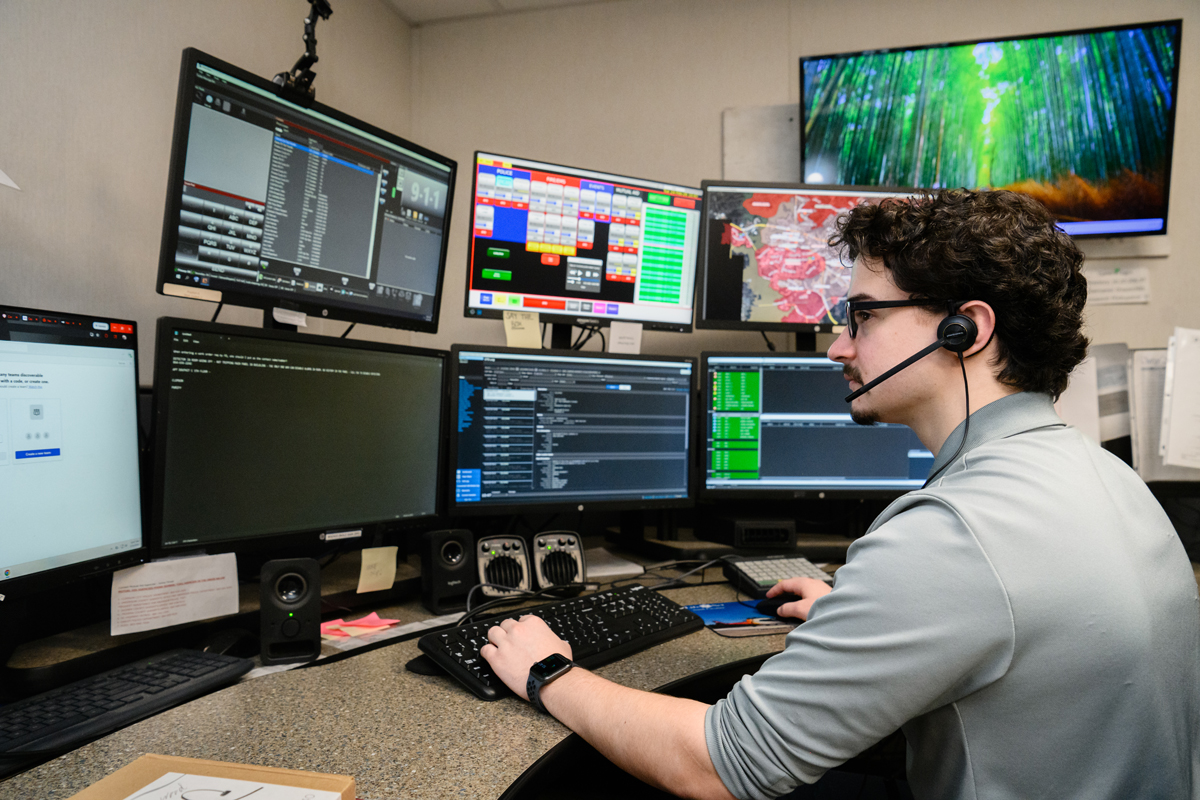
The team manages a broad range of responsibilities, including 911 telecommunications, records management, human resources, payroll, and specialized administrative functions, ensuring both the department’s internal operations and its external community services remain seamless.
Communications and Records
2025 marked a milestone year for CU Public Safety’s 911 Operations in many ways.
One of the most significant accomplishments was the successful implementation of CAD Unit Sharing within the Pickens County Public Safety Answering Point (PSAP) system. This project initiated with reviewing how we could streamline units to be on one call for service when a call has been initiated by another dispatcher center. Previously, if Pickens County Dispatch initiated a call for service requiring the response of Clemson University assets, two separate call for service records would be generated, one for Pickens County and one for CUPD or CUFD.
Concerns over this format were observed when it was identified that CUPD Dispatch did not possess the original details of the initial call, thus preventing responders from having accurate time logs and other pertinent details of the call. One of the associated challenges was how to handle a single CFS (call for service) log on calls dispatched by Pickens County.
Through collaboration with multiple agencies within the county, it was determined that sharing CAD units across each PSAP would best meet this need. By sharing CAD units in the system, responding units can see the same information along with the original call details, and each PSAP can update the call log as the response progresses, thereby preventing any miscommunication regarding the call and unit response.
Another milestone was the launching of APCO Emergency Medical Dispatch (EMD), Telephone CPR (T-CPR), and CPR training for 911 Telecommunicators. These certified training courses enable all Dispatchers to ask callers incident-related medical questions, provide pre-arrival instructions, and assist callers in cardiac arrest by providing CPR instructions via phone.
Along with this certification, finalization of APCO Intellicomm Guidecards software was approved county-wide, which automates pertinent and critical questions for the Dispatcher to query a caller and generates standardized pre-arrival instructions as an integrated feature of the computer-aided dispatch (CAD).
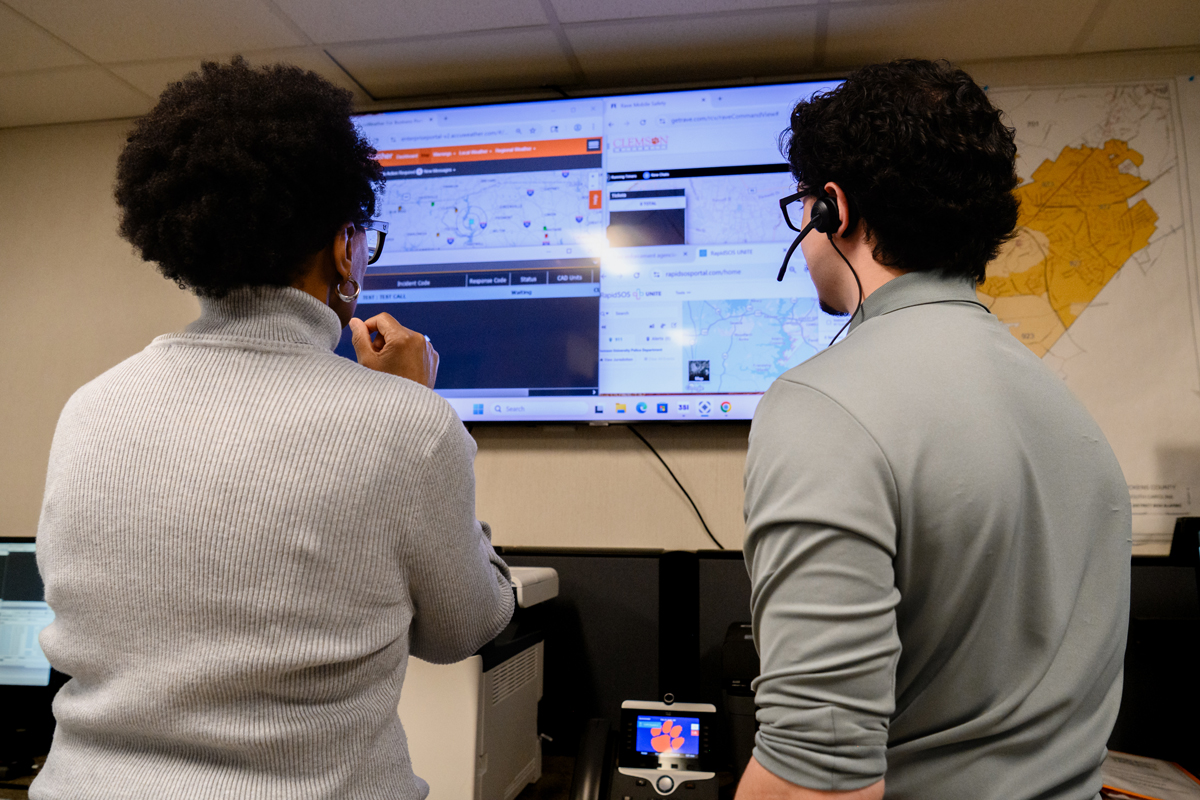
The Communications Training Officer program was completely redeveloped in 2025, introducing immersive training formats providing new 911 Telecommunicators with a mock center capability allowing the training officer to present materials on large screens alongside CAD system training modules.
Additionally, CUPD began the certification process for the first APCO Fire Service Communications Instructor, who will be available to support training for other PSAPs in the region.