Student Shop
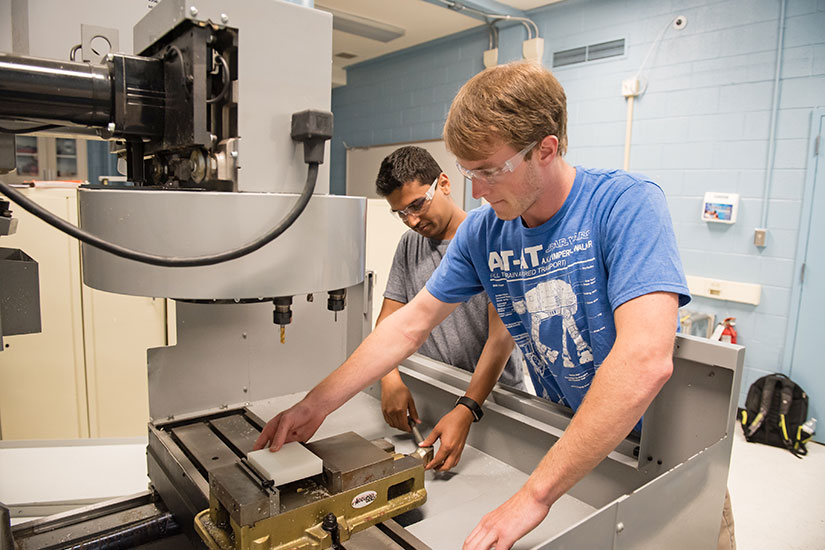
The Mechanical Engineering Student Shop is located on the first floor (basement) of Cook Engineering Laboratory, and emphasizes an educational environment for students to develop an appreciation for tools and machining processes.
The Mechanical Engineering Student Shop is located on the first floor (basement) of Cook Engineering Laboratory, and emphasizes an educational environment for students to develop an appreciation for tools and machining processes.
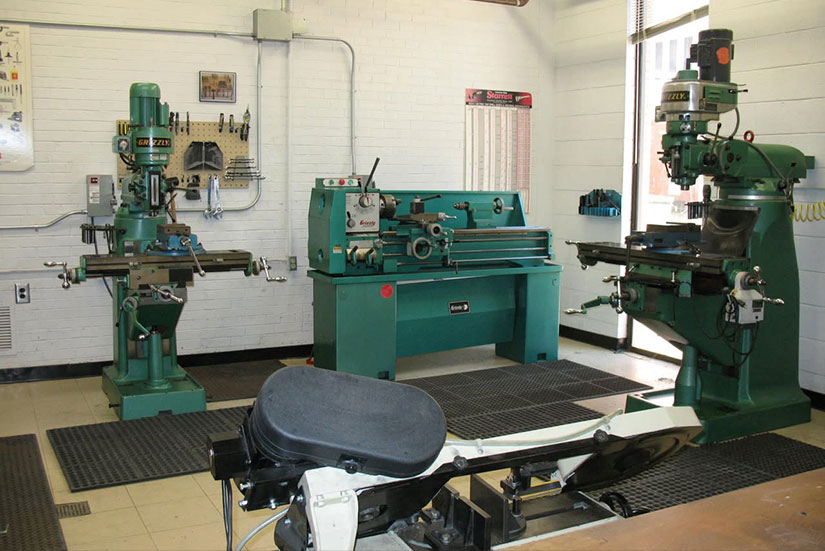
The department maintains a well-equipped machine shop staffed by departmental technicians in G09 Fluor Daniel. Equipment includes lathes, drill presses, band saws, and a welding station.
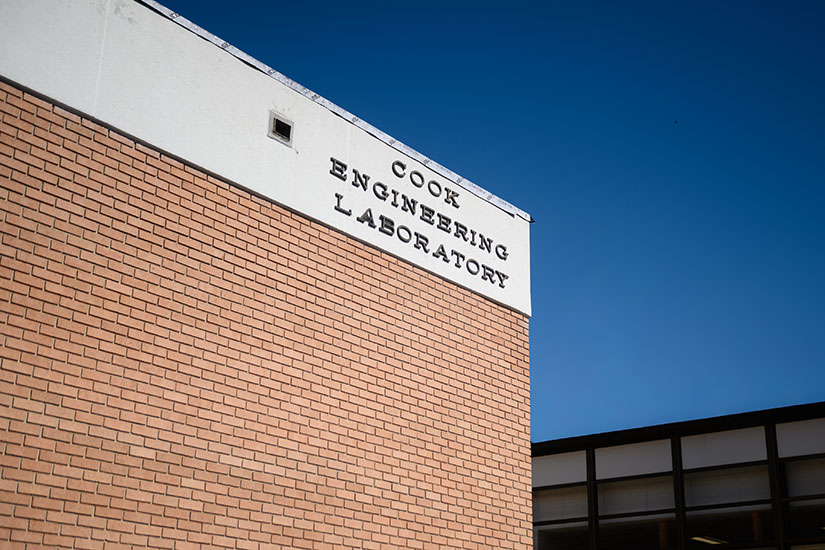
Cook Engineering Laboratory is a freestanding building situated behind Riggs, Rhodes, and Freeman Halls, just off Fernow Street. The facility houses many instruments used to teach undergraduate mechanical engineering lab classes.
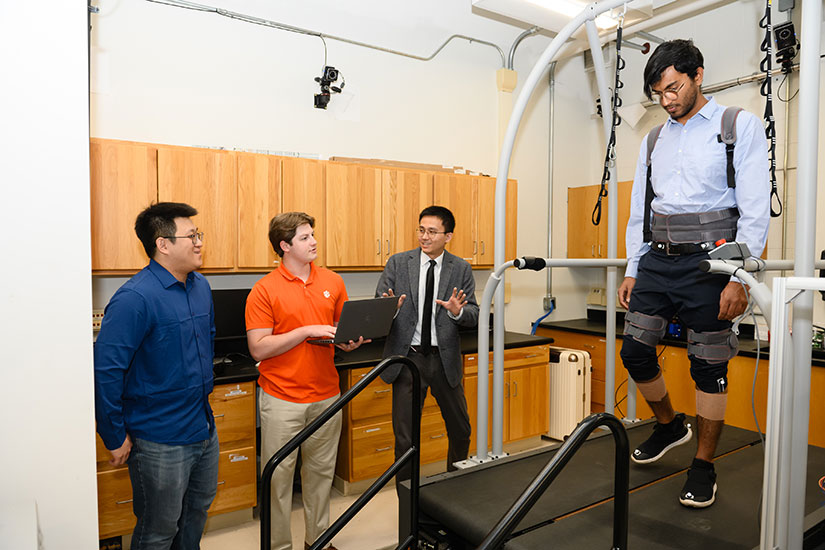
Mechanical Engineering faculty have a broad range of research focus areas, including design, robotics, cardiovascular modeling, and fluid mechanics. Graduate and undergraduate students can request to assist in their research.
Clemson’s undergraduate laboratory and design courses provide a hands-on progression that transforms classroom concepts into practical engineering experience.
Students begin by learning the fundamentals of experimentation. As their skills grow, experiments become increasingly open-ended, challenging students to make engineering decisions, troubleshoot unexpected results, and design their own approaches to solving problems. These experiences culminate in team-based projects where students integrate knowledge from across the mechanical engineering curriculum to address complex engineering challenges, including problems sponsored by industry.
By completing this sequence, students will have done much more than follow laboratory procedures. They will have learned how to work effectively on engineering teams, make decisions when the answer is not already known, and turn an idea into a tested solution, experiences that prepare them to contribute with confidence in internships, Co-op assignments, graduate study, and professional engineering careers.
Mechanical Engineering Laboratory I introduces students to the experimental side of mechanical engineering through hands-on investigations of fundamental engineering principles. The course emphasizes critical thinking and teamwork as students learn manufacturing, calibration, and material testing concepts. Students develop skills in laboratory safety, experimental methods, instrumentation, data analysis, and technical report writing, preparing students for advanced laboratory and design experiences.
Mechanical Engineering Laboratory II builds on students' experimental foundation through investigations in the thermal and fluid sciences. Students use modern data acquisition systems and instrumentation to study fluid flow, heat transfer, and HVAC performance while comparing experimental results with theoretical models. Students develop skills in sensor application, data acquisition, data-driven system design, and technical report writing, preparing students to evaluate the performance of real engineering systems.
Mechanical Engineering Laboratory III challenges students to design and conduct open-ended experiments that integrate concepts from across the mechanical engineering curriculum. Working entirely in teams, students pursue in-depth investigations of dynamic systems, PLCs, and fatigue life. Students develop skills in the design of experiments, collaborative problem solving, and technical report writing, preparing students to conduct and communicate independent engineering investigations.
Mechanical Engineering Capstone provides students with the opportunity to apply knowledge from across the mechanical engineering curriculum to solve an open-ended design challenge sponsored by industry. Working in teams, students apply the design process to develop an engineering solution, including technical analysis, prototyping, and testing. Students develop skills in collaborative design, technical communication, and engineering decision-making, preparing students to transition successfully into professional engineering practice.
Mechatronics System Design introduces students to the integration of control, sensors, actuators, and computers to create a variety of electromechanical products. Students develop skills in dynamic system modeling, analysis, sensors, actuating devices, and real-time microprocessor interfacing and control. Through experiments, simulation, and design projects, students are prepared to develop mechatronic solutions for a wide range of engineering problems.
Technical Papers | Citation Databases | Journal Articles | Market Research | Standards | Patents
Safety Training | Workshops | 3D Printer | Laser Cutter | 3D Scanner | CNC Mill | Fabric Printer
Career Fairs | Internships & Co-Ops | Networking | Resume Review | Certifications | Professional Development
Software List | Help Request | Remote Learning Resources | Help Article Database | Clemson Services Status
