
Explore Clemson
There are multiple pathways to Clemson’s Graduate School, and we invite you to explore them all. See which pathway fits you best, explore program requirements and deadlines, and consider your fit at Clemson.
Explore Graduate School at Clemson See Why Other Students Choose Clemson
Special Note: Please stay vigilant and know that funding and assistantship scams are circulating to students. Verify the email’s sender address before responding and know that Clemson University will never email asking for credentials via email, phone or online form.
Begin Your Clemson Journey With Graduate Admissions
Apply for Admission
The Graduate School oversees the admissions process for all graduate programs at Clemson. Criteria used in making admission decisions will vary according to the college and program you’re applying to, but all decisions include an evaluation of your potential for graduate-level work and the ability of a program to accommodate new students.
See the Application Process
Review Cost and Aid
Graduate education is an investment in yourself, and we are committed to helping you maximize your results at Clemson. Review tuition and costs, then consider the assistantships, fellowships and additional aid offered to graduate students at our institution.
View Cost and Aid
Enroll in Your Program
Your final steps with Graduate Admissions are enrolling as a student, completing Orientation, and then checking off the steps on your first-semester checklist. See the processes you can follow to complete your enrollment at Clemson.
Access the Enrollment Guide Enroll NowGraduate Student Highlights
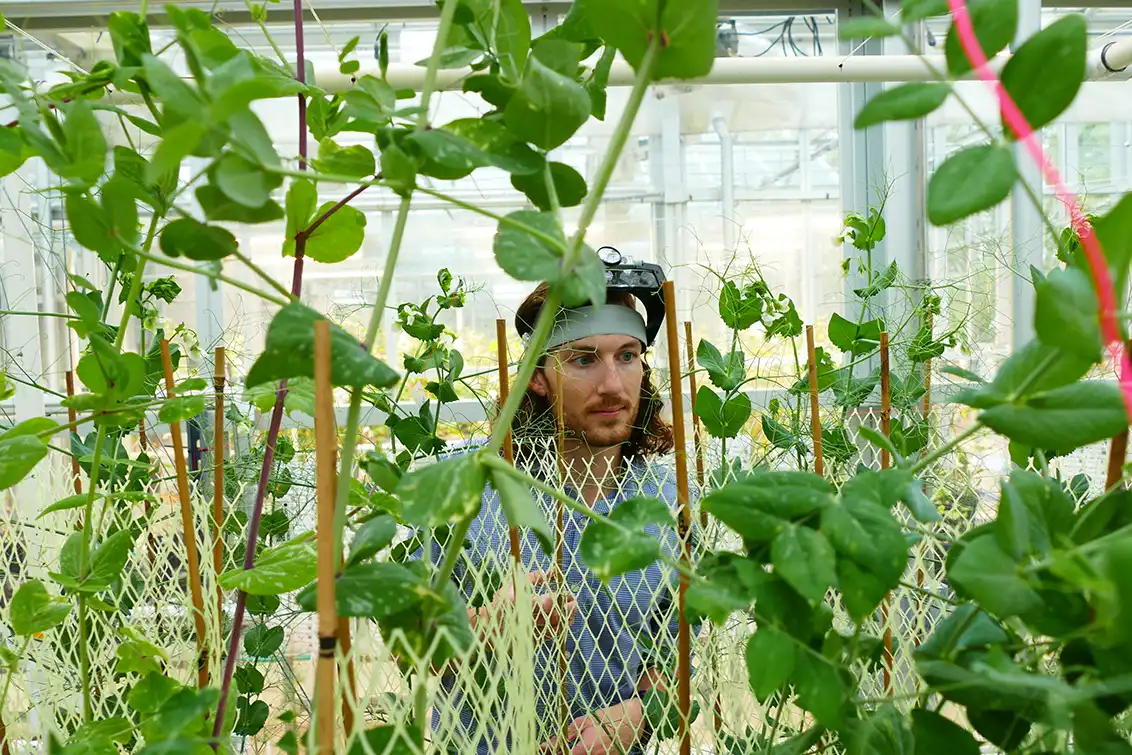
Cultivating New Knowledge
For Tristan Lawrence ’18, M ’26, the classroom is the plots of land where he conducts field research. A master’s student in plant and environmental sciences, Lawrence is among the scientists who have developed specific recommendations for growing field peas in the Southeast.
“Graduate classes helped me understand both the big picture and the complex details of plant breeding. Seeing what I learned in class come to life in real-world research has been incredibly rewarding.”
Lawrence’s studies determined that late January is the most productive window for growing field peas in South Carolina. This will provide farmers with a viable cool-season crop rather than leaving fields unplanted. And thanks to Lawrence’s work, five lines of field peas will soon be released to the public for growing in the state.
Read His Story Plant and Environmental Sciences at Clemson