Policy Studies, Ph.D.
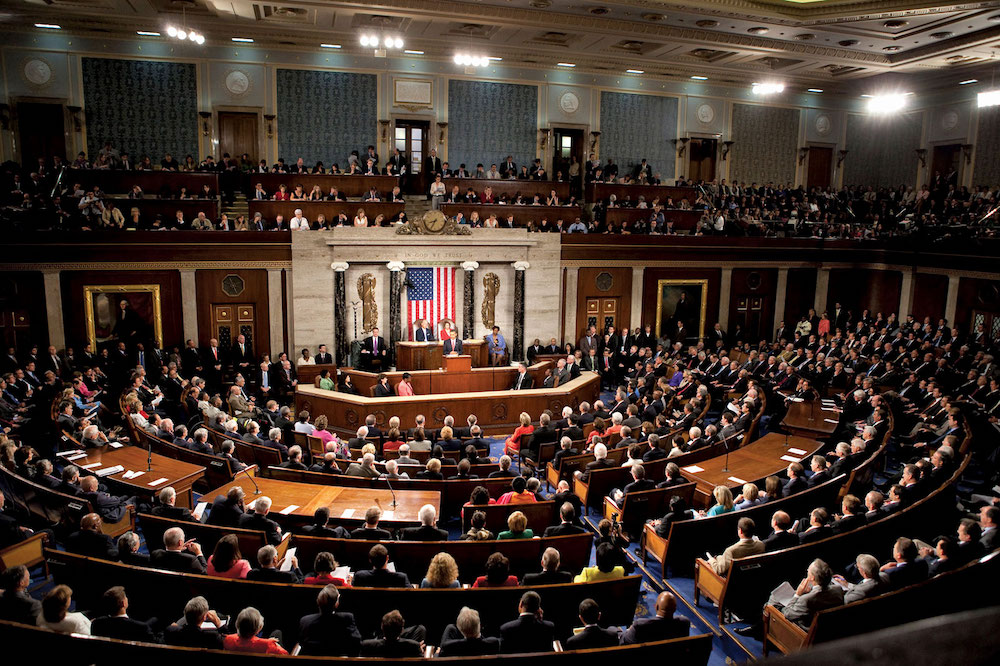
As our world and society become increasingly interdependent, the problems of one sector or group can frequently affect the welfare and concerns of the rest. Economic development, viable agriculture, natural resource allocation, property rights, rural development, small town and community development, and environmental issues are just some of the difficult policy issues that are on the agendas of national, state, and local policy makers. Business and government leaders must continue to make complex decisions that often have long term consequences. To meet this need, Clemson University’s interdisciplinary Policy Studies Program offers the Ph.D. in Policy Studies and a Graduate Certificate in Policy Studies.
The mission of the Policy Studies Program is to provide students with educational and research opportunities and to develop their leadership capacity in public policy analysis, policy design and evaluation, and for careers in the private, public and nonprofit sectors. The program further expands the capacity to conduct policy-relevant research to support and develop communities in support of the land grant university mission while adhering to the highest standards of academic rigor, objectivity, and independence.
-
Program Information
Two fundamental characteristics will underlie all of the aspects of the program:
- A multidisciplinary approach for studying public issues, the policy making process, problem-solving, and public policy analysis.
- The synthesis of core competencies in a policy domain leading to rigorous original research.
The core courses for the program are designed to expose and assist students with developing fundamental and rigorous quantitative and qualitative analytical skills necessary for effective policy analysis. he core curriculum consists of an interdisciplinary approach to developing competencies in the study of the public policy process and public policy analysis. The core includes coursework in methods (both quantitative and qualitative), the policy process, and policy theory. In addition to the core curriculum, students also acquire expertise in a policy domain, through a concentration. The concentrations are currently undergoing revisions, however they include: health policy; environmental and natural resources; regional community development & entrepreneurship; law & justice; homeland defense & security; communications law & policy; and, the policy process.
Policy Studies Ph.D. students are immersed in a course of study which focuses on the policy making process and state-of-the-art policy analysis methods and techniques, equipping them with the capacity to conduct high level policy research that provides useful information to decision makers and advances the body of knowledge about important policy concerns. Ph.D. graduates are expected to assume research positions in public policy “think tanks” and other policy research organizations; serve as officials in governmental agencies and non-governmental organizations involved in public policy; or, academia. Program alumni have done all of the above. Clemson’s Ph.D. in policy studies will provide students with a set of research, analytical, and management skills that are transferable across public, private, and nonprofit sectors as well as academic and non-academic settings.
-
Program Focus
In the Spring of 1999, Clemson University was granted approval by the South Carolina Commission on Higher Education to offer Ph.D. and certificate programs in Policy Studies. The programs are interdisciplinary, building on strengths of the College of Behavioral, Social and Health Sciences (CBSHS). In 2016, the program was moved from the Graduate School to CBSHS, and in 2017 to the Department of Political Science. Faculty associated with the program come from departments in CBSHS, as well as other departments across Clemson University.
Program Focus: As a land grant institution, Clemson faculty and students frequently participate in policy analysis and formulation working extensively within the state of South Carolina but also at the national and international level. The policy programs formalize within an academic program what has been an informal agglomeration of policy related work in the past. The program is currently developing a new set of concentrations, including:
- Natural Resource and Environmental Policy;
- Health Policy;
- Regional Community Development Policy & Entrepreneurship;
- Law and Justice Policy;
- Communications Law and Policy;
- Homeland Defense and Security Policy; and,
- The Policy Process.
Core Curriculum: The core curriculum is interdisciplinary drawing heavily from the policy sciences including economics, political science/public administration, quantitative methods, and social sciences. Concentration courses come largely from linkage disciplines related to each of the concentrations. Policy application is made through seminars, practicums, workshops, as well as in-house research activities.
Profile of Prospective Student: Students generally come from one of two backgrounds. For some concentration areas, a strong science base is essential. For other concentrations, a strong social science background is essential.
Relationship to Other Academic Programs on Campus: There is overlap with a number of other disciplines on campus including economics; agricultural and applied economics; political science/public administration; city and regional planning; parks, recreation, and tourism management; public health sciences; sociology, anthropology and criminal justice; and, communications. The program makes use of faculty and courses taught in these and other programs.
Prospects for Graduates: Graduates are expected to be employed in state and national government entities, ‘think tanks’, consulting firms, international lending institutions, and academia. Because of the interdisciplinary nature of the program, students are well grounded in both their concentration area and policy sciences, and capable of bridging the gap between policy theory and the policy-making realm. Analysts with this background are particularly valuable in an increasingly complex policy arena.
-
Program Contacts
Alexis Jennings
Graduate Programs Operations Manager
864-656-0765
award7@clemson.edu
