-
Academics
- Academics Overview
-
Undergraduate
- Undergraduate Overview
- Agricultural Education
- Early Childhood Education, B.A.
- Elementary Education, B.A.
- Middle Level Education, B.S.
- Mathematics Teaching, B.S.
- Modern Languages Education, B.A.
- Special Education, B.A.
- Secondary Education, B.A.
- Science Teaching, B.S./B.A.
- Athletic Leadership Minor
- Human Capital Education and Development
-
Master's and Specialist Programs
- Master's and Specialist Programs Overview
- Athletic Leadership (Online)
- Counselor Education
- Educational Leadership
- Human Resource Development
- Learning Sciences
- Literacy (Online)
- Middle Level Education, MAT
- Modern Languages, MAT
- Secondary Education, MAT
- Special Education (Online)
- Student Affairs
- Teaching and Learning (Online)
- Teaching and Learning, Ed.S.
- Doctoral Programs
- Certificates | Endorsements | Licensure
- Expressway to Tiger Town
- Bachelor's To Master's | Teacher Residency
- Teaching Fellows
- Research
- Programs
- Students
- About
Teacher Education Field and Clinical Experiences
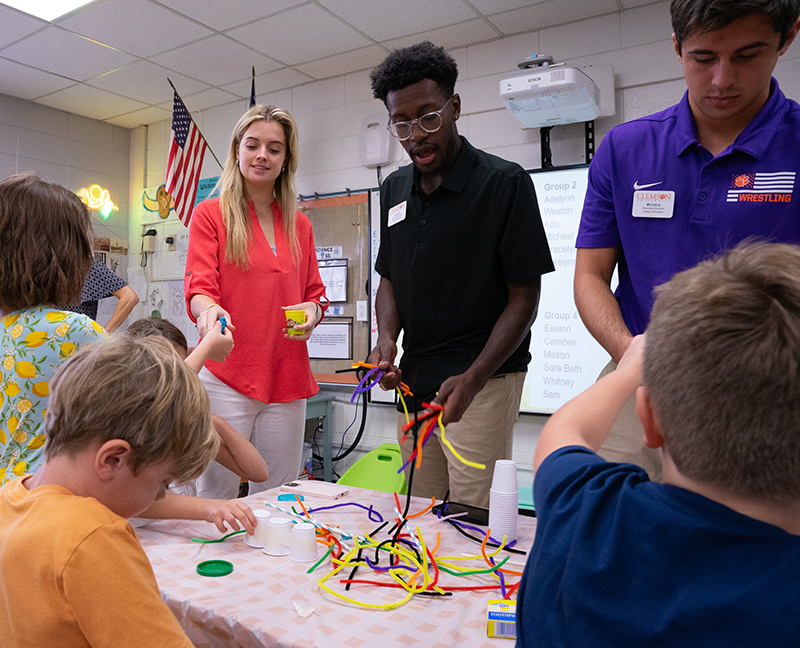
Clinical experiences are an integral part of teacher preparation. We are committed to providing candidates with purposeful, challenging and diverse clinical experiences. Placement coordinators intentionally track candidates’ field and clinical placements over time to ensure candidates have a wide range of opportunities, including working with diverse groups of students, in a variety of school settings, in different geographic regions, and in different grade levels/content areas. It is through a range of diverse, carefully constructed and challenging field-based experiences, in conjunction with classroom-based instruction, that candidates will recognize the inherent dignity and value of all individuals and advocate on behalf of children and families. Further, placement coordinators frequently communicate with school and district partners, are aware of districts’ hiring needs, and place candidates at sites where they have the potential to be employed. To maintain the integrity of established processes and protocols, candidates’ field and clinical placements must be coordinated by a placement coordinator.
The College of Education ensures partnerships with field and clinical placement sites are formally documented via a MOU process. MOUs outline mutually beneficial, relevant policies, and current operational procedures that exist between Clemson University through its College of Education and the field/clinical site in providing meaningful and quality experiences for candidates in teacher education programs, counselor education programs, and educational leadership programs.
Candidates will have clinical experiences throughout their four years, gradually increasing in scope and responsibility, with placements in classrooms, schools and districts that have longstanding commitments to high quality educational experiences for all children. Beginning with early tutoring experiences during their freshmen year, and continuing with a variety of early field observations throughout the sophomore and junior years, students are prepared for the culminating practicum and student teaching. Candidates are prepared to use high-quality instructional materials as part of their coursework and throughout their experiences in field and clinical sites.
Throughout their clinical experience, candidates are formally evaluated a minimum of seven times using the South Carolina State Department’s evaluation rubric for teachers, the South Carolina Teaching Standards (SCTS) rubric. Using this valid and reliable instrument prepared candidates for formal teaching evaluations throughout their career.
By the end of student teaching, candidates recommended for certification will have a strong base of disciplinary/content knowledge, classroom management skills, pedagogical skills and a deep understanding of foundational issues related to academic success and educational fairness.
At the end of their student teaching experience, teacher candidates and clinical educators are asked to complete an Exit Survey as a way to share feedback about their experiences. Feedback from candidates, cooperating teachers, and university supervisors is carefully considered in making decisions about future field and clinical placements. Additionally, candidates, cooperating teachers, and university supervisors have multiple opportunities to share feedback with placement coordinators throughout the academic year.
-
Early Childhood Education (PK-3 Certification)
Student teachers, cooperating teachers and University supervisors can access student teacher assignments by clicking on the assignment name (e.g. Unit Plan) in the ASSIGNMENTS/INSTRUCTIONS column in the table below. Forms used to evaluate these assignments can be accessed and downloaded by clicking on the form name (e.g. Unit Plan) in the EVALUATIONS column in the table below.
Assignments
ASSIGNMENT/INSTRUCTIONS EVALUATIONS Resources
- Assignments Overview
- Cooperating Teacher Roles and Responsibilities
- Syllabus
- Fall and Spring Calendars
- Field & Clinical Experience Handbook
- Sample Electronic Portfolio and Presentation
- SCTS 4.0 Rubric
- South Carolina Code of Conduct for Educators
- South Carolina Education and Economic Development Act (EEDA) Performance Standards
- South Carolina State Standards
- National Association for the Education of Young Children (NAEYC) Standards
- Professional Standards for Clinical Field Experiences
- Mandated Reporter Training for Child Abuse and Neglect
-
Elementary Education (2-6 Certification)
Student teachers, cooperating teachers and University supervisors can access student teacher assignments by clicking on the assignment name (e.g. Unit Plan) in the ASSIGNMENTS/INSTRUCTIONS column in the table below. Forms used to evaluate these assignments can be accessed and downloaded by clicking on the form name (e.g. Unit Plan) in the EVALUATIONS column in the table below.
Assignments
ASSIGNMENT/INSTRUCTIONS EVALUATIONS Resources
- Assignments Overview
- Cooperating Teacher Roles and Responsibilities
- Syllabus
- Fall and Spring Calendars
- Field & Clinical Experience Handbook
- SCTS 4.0 Rubric
- South Carolina Code of Conduct for Educators
- South Carolina Education and Economic Development Act (EEDA) Performance Standards
- South Carolina State Standards
- Association for Childhood Education International (ACEI) Standards
- Professional Standards for Clinical Field Experiences
- Mandated Reporter Training for Child Abuse and Neglect
-
Middle Level Education (5-8 Certification)
Student teachers, cooperating teachers and University supervisors can access student teacher assignments by clicking on the assignment name (e.g. Unit Plan) in the ASSIGNMENTS/INSTRUCTIONS column in the table below. Forms used to evaluate these assignments can be accessed and downloaded by clicking on the form name (e.g. Unit Plan) in the EVALUATIONS column in the table below.
Assignments
ASSIGNMENT/INSTRUCTIONS EVALUATIONS Resources
- Overview of Middle Grades Education Senior Practicum and Student Teaching Assignments
- Cooperating Teacher Roles and Responsibilities
- Syllabus
- Spring Calendar
- Field & Clinical Experience Handbook
- SCTS 4.0 Rubric
- South Carolina Code of Conduct for Educators
- South Carolina Education and Economic Development Act (EEDA) Performance Standards
- South Carolina State Standards
- Professional Standards for Clinical Field Experiences
- Mandated Reporter Training for Child Abuse and Neglect
-
Middle Level, Secondary, and Modern Languages MAT
Student teachers, cooperating teachers and University supervisors can access student teacher assignments by clicking on the assignment name (e.g. Unit Plan) in the ASSIGNMENTS/INSTRUCTIONS column in the table below. Forms used to evaluate these assignments can be accessed and downloaded by clicking on the form name (e.g. Unit Plan) in the EVALUATIONS column in the table below.
Assignments
ASSIGNMENT/INSTRUCTIONS EVALUATIONS Resources
- Overview of Practicum and Student Teaching Assignments
- Cooperating Teacher Roles and Responsibilities
- Syllabus
- Spring Student Teaching Calendar
- Field & Clinical Experience Handbook
- SCTS 4.0 Rubric
- South Carolina Code of Conduct for Educators
- South Carolina Education and Economic Development Act (EEDA) Performance Standards
- South Carolina State Standards
- Professional Standards for Clinical Field Experiences
- Mandated Reporter Training for Child Abuse and Neglect
-
Modern Languages
Student teachers, cooperating teachers and University supervisors can access student teacher assignments by clicking on the assignment name (e.g. Unit Plan) in the ASSIGNMENTS/INSTRUCTIONS column in the table below. Forms used to evaluate these assignments can be accessed and downloaded by clicking on the form name (e.g. Unit Plan) in the EVALUATIONS column in the table below.
Assignments
ASSIGNMENT/INSTRUCTIONS EVALUATIONS Resources
- Overview of Practicum and Student Teaching Assignments
- Cooperating Teacher Roles and Responsibilities
- Syllabus
- Spring Student Teaching Calendar
- Field & Clinical Experience Handbook
- SCTS 4.0 Rubric
- South Carolina Code of Conduct for Educators
- South Carolina Education and Economic Development Act (EEDA) Performance Standards
- South Carolina State Standards
- Professional Standards for Clinical Field Experiences
- Mandated Reporter Training for Child Abuse and Neglect
-
Secondary English Education (9-12 Certification)
Student teachers, cooperating teachers and University supervisors can access student teacher assignments by clicking on the assignment name (e.g. Unit Plan) in the ASSIGNMENTS/INSTRUCTIONS column in the table below. Forms used to evaluate these assignments can be accessed and downloaded by clicking on the form name (e.g. Unit Plan) in the EVALUATIONS column in the table below.
Assignments
ASSIGNMENT/INSTRUCTIONS EVALUATIONS Teacher Research Essay Evaluation (NCTE Assessment 5) - Scored in EDSC 4540 with input from Cooperating Teacher
Resources
- Overview of Secondary English Education Senior Assignments
- Cooperating Teacher Roles and Responsibilities
- Syllabus
- Spring Calendar
- Field & Clinical Experience Handbook
- SCTS 4.0 Rubric
- South Carolina Code of Conduct for Educators
- South Carolina Education and Economic Development Act (EEDA) Performance Standards
- South Carolina State Standards
- National Council of Teachers of English (NCTE) Standards
- Professional Standards for Clinical Field Experiences
- Mandated Reporter Training for Child Abuse and Neglect
-
Secondary Mathematics Education (9-12 Certification)
Undergraduate and MAT mathematics student teachers, cooperating teachers and University supervisors can access student teacher assignments by clicking on the assignment name (e.g. Unit Plan) in the ASSIGNMENT/INSTRUCTIONS column in the table below. Forms used to evaluate these assignments can be accessed and downloaded by clicking on the form name (e.g. Unit Plan) in the EVALUATIONS column in the table below.
Assignments
ASSIGNMENT/INSTRUCTIONS EVALUATIONS Resources
- Overview of Secondary Mathematics Senior Assignments
- Cooperating Teacher Roles and Responsibilities
- Syllabus
- Spring Calendar
- Field & Clinical Experience Handbook
- SCTS 4.0 Rubric
- South Carolina Code of Conduct for Educators
- South Carolina Education and Economic Development Act (EEDA) Performance Standards
- South Carolina State Standards
- National Council of Teachers of Mathematics (NCTM) Standards
- Professional Standards for Clinical Field Experiences
- Mandated Reporter Training for Child Abuse and Neglect
-
Secondary Science Education (9–12 Certification)
Undergraduate and MAT science student teachers, cooperating teachers and University supervisors can access student teacher assignments by clicking on the assignment name (e.g. Unit Plan) in the ASSIGNMENT/INSTRUCTIONS column in the table below. Forms used to evaluate these assignments can be accessed and downloaded by clicking on the form name (e.g. Unit Plan) in the EVALUATIONS column in the table below.
Assignments
ASSIGNMENT/INSTRUCTIONS EVALUATIONS Formative Lesson Observation Form
Summative Lesson Observation FormResources
- Overview of Secondary Science Education Senior Assignments
- Cooperating Teacher Roles and Responsibilities
- Syllabus
- Spring Calendar
- Field & Clinical Experience Handbook
- SCTS 4.0 Rubric
- South Carolina Code of Conduct for Educators
- South Carolina Education and Economic Development Act (EEDA) Performance Standards
- South Carolina State Standards
- National Science Teachers Association (NSTA) Standards
- Professional Standards for Clinical Field Experiences
- 3D Phenomenon Lesson Description
- Mandated Reporter Training for Child Abuse and Neglect
-
Secondary Social Studies Education (9-12 Certification)
Student teachers, cooperating teachers and University supervisors can access student teacher assignments by clicking on the assignment name (e.g. Unit Plan) in the ASSIGNMENTS/INSTRUCTIONS column in the table below. Forms used to evaluate these assignments can be accessed and downloaded by clicking on the form name (e.g. Unit Plan) in the EVALUATIONS column in the table below.
Assignments
ASSIGNMENT/INSTRUCTIONS EVALUATIONS Resources
- Overview of Secondary Social Studies Education Senior Assignments
- Cooperating Teacher Roles and Responsibilities
- Syllabus
- Spring Calendar
- Field & Clinical Experience Handbook
- SCTS 4.0 Rubric
- South Carolina Code of Conduct for Educators
- South Carolina Education and Economic Development Act (EEDA) Performance Standards
- South Carolina State Standards
- National Council for the Social Studies (NCSS) Standards
- Professional Standards for Clinical Field Experiences
- Mandated Reporter Training for Child Abuse and Neglect
-
Special Education K-12 Multi-Categorical Certification
Student teachers, cooperating teachers and University supervisors can access student teacher assignments by clicking on the assignment name (e.g. Unit Plan) in the ASSIGNMENTS/INSTRUCTIONS column in the table below. Forms used to evaluate these assignments can be accessed and downloaded by clicking on the form name (e.g. Unit Plan) in the EVALUATIONS column in the table below.
SPRING ASSIGNMENT/INSTRUCTIONS EVALUATIONS Resources
