-
Academics
- Academics Overview
-
Undergraduate
- Undergraduate Overview
- Agricultural Education
- Early Childhood Education, B.A.
- Elementary Education, B.A.
- Middle Level Education, B.S.
- Mathematics Teaching, B.S.
- Modern Languages Education, B.A.
- Special Education, B.A.
- Secondary Education, B.A.
- Science Teaching, B.S./B.A.
- Athletic Leadership Minor
- Human Capital Education and Development
-
Master's and Specialist Programs
- Master's and Specialist Programs Overview
- Athletic Leadership (Online)
- Counselor Education
- Educational Leadership
- Human Resource Development
- Learning Sciences
- Literacy (Online)
- Middle Level Education, MAT
- Modern Languages, MAT
- Secondary Education, MAT
- Special Education (Online)
- Student Affairs
- Teaching and Learning (Online)
- Teaching and Learning, Ed.S.
- Doctoral Programs
- Certificates | Endorsements | Licensure
- Expressway to Tiger Town
- Bachelor's To Master's | Teacher Residency
- Teaching Fellows
- Research
- Programs
- Students
- About
Counselor Education and Supervision, Ph.D.
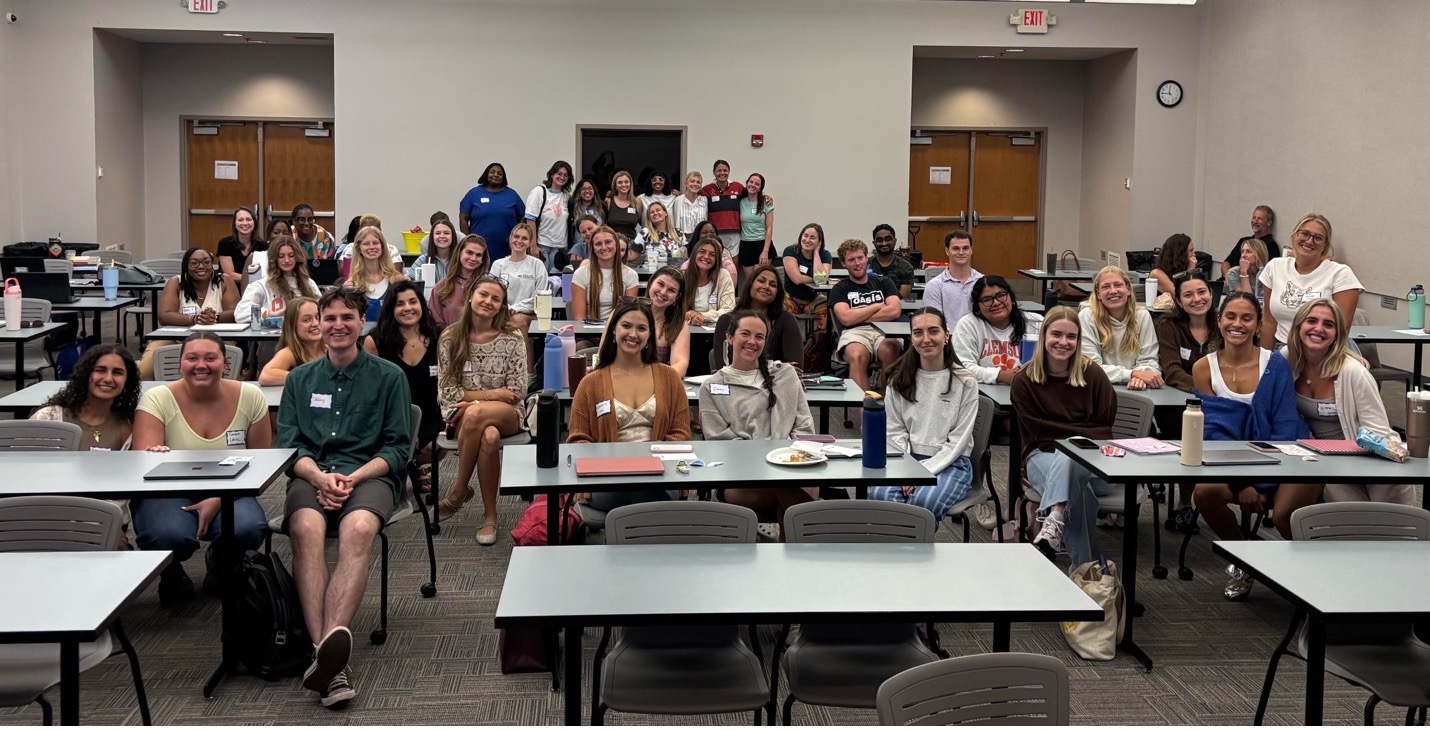
The Ph.D. in Counselor Education and Supervision prepares counselor educators, supervisors, clinical and administrative leaders, and advanced practitioners who are skilled in teaching, research, supervision, leadership, and counseling practice. The focus of the program is to prepare students to optimize their impact on the counseling profession and the mental health and development of people in communities and schools.
Pending approval by the Southern Association of Colleges and Schools Commission on Colleges.
-
Overview
The Counseling Education and Supervision Doctoral Program is a 61-credit hour program designed for individuals who seek to advance their knowledge and skills beyond the entry-level (master’s) degree in counseling to serve as counselor educators, supervisors, leaders, researchers, and advanced practitioners. Candidates for the Ph.D. in Counselor Education and Supervision will have a master’s degree in counseling or a closely related discipline, preferably from an accredited master’s program, and be seeking the terminal degree consistent with career goals and aspirations.
The Ph.D. program is intentional in providing rich opportunities to learn from expert faculty and their peers. The curriculum offers students a range of training, including doctoral-level professional orientation, clinical supervision, advanced counseling practice, leadership in counselor education, advanced theories, research methods, and advanced group work, along with a statistics and research sequence tailored to the individual student’s needs and internships in clinical practice, supervision, and teaching. The curriculum and co-curricular activities are structured to support students in developing their own research interests, culminating in a dissertation. Students work with faculty advisors and doctoral committees to design a program of study and co-curricular experiences unique to the goals of the individual student. The Ph.D. in Counselor Education and Supervision prepares future educators, supervisor, leaders, researchers, and clinicians in colleges and universities, school districts, and mental health settings to positively impact mental health services in a society with increasing mental health challenges and needs. Given the mental health provider shortages in South Carolina and other parts of the country, emphasis is placed on the mental health challenges and needs of rural populations, and evidence-supported and trauma-informed practices to best meet these needs.
-
Program Goals
Counselor Education and Supervision Ph.D. program goals:
- Develop expertise in areas of research that inform teaching, supervision, and counseling practice.
- Understand, describe, and critically evaluate issues of equity and identity in counselor training, supervision, research, and practice.
- Understand and apply supervision models and practices.
- Critically apply andragogical theories and practices into teaching practices.
- Develop leadership skills to be applied in service to counselors, counseling trainees, and the counseling profession.
- Ethically conduct high quality scholarly research that contributes to the fields of teaching and learning.
Counselor Education and Supervision Ph.D. program outcomes:
- Students will be prepared for professional positions in counselor education or other counseling appointments such as working in administrative leadership (e.g., District-wide Director of School Counseling), supervisory, and counseling practices.
- Students will co-teach at least one master’s-level course while taking Internship in University Teaching.
- Students will supervise master’s-level practicum and/or internship students while taking Internship in University Supervision.
- Students will complete a doctoral level counseling internship.
- Students will successfully complete a doctoral comprehensive exam prior to beginning work on their dissertation.
- Students will successfully complete and defend a doctoral dissertation.
-
Admission Requirements
Admission to the Program
The Counselor Education and Supervision doctoral program admits students for a fall entrance term. Only complete applications are considered for admission. To ensure consideration for an assistantship or University Fellowship, applicants are encouraged to apply by the priority deadline.
Application Deadlines
- January 15 for in-person applicants/those seeking funding
- March 1 for online applicants
Application requirements
To be considered for the program, applicants should:- Have a master's degree in counseling, with preference given to applicants with a master’s degree from a CACREP-accredited counseling program
- Submit an online Graduate School application which requires:
- Unofficial transcripts (official transcript(s) will be required if you are accepted into the program)
- A current resume
- Two recommendation forms
- Recommendation forms are emailed directly to recommenders via the online application process
- A letter of intent
- The letter should communicate the applicant’s purpose for seeking the doctorate, professional goals, and potential areas for research
- The letter should be a maximum of two single-spaced pages in length
- Official TOEFL/IELTS scores for international students
- Meritorious applicants will be invited to campus for a full day interview.
Additional information concerning supporting materials -
Program Requirements
Counselor Education and Supervision Ph.D. (61 credit hour minimum):
Core Courses (21 credit hours)
EDC 9000– Professional Orientation and Leadership
EDC 9180 – Andragogy in Counselor Education
EDC 9200 – Counselor Supervision
EDC 9280 – Research in Counselor Education
EDC 9100 - Advanced Theories of Counseling and Psychotherapy
EDC 9350 - Advanced Group Counseling
EDC 9110 - Advanced Counseling Practice
Research Courses (13 credit hours)
EDF 9270 – Quantitative Research Designs and Statistics for Educational Contexts
EDF 9271 – Quantitative Research Designs and Statistics for Educational Contexts Lab
EDF 9790 – Qualitative Research in Education
Must take at least two advanced research courses. Examples include: EDF 9080, 9710, 9720, 9730, 9740, 9750, 9770, 9780 or 9810.
Internships (9 credit hour minimum)
EDC 9150 - Counselor Education Doctoral Internship
*The internship course will be completed a minimum of three times for an internship in counseling, teaching, and supervision.
Dissertation Course (18 credit hour minimum)
EDF 9910 – Doctoral Dissertation ResearchAll students are required to complete a written and oral comprehensive examination prior to beginning work on their dissertation.
-
Financial Information
Tuition and Fees
Explore information on tuition and fees using the Student Financial Services’ graduate tuition and fee calculator (be sure to choose the correct tab - ‘graduate’ and indicate your modality via the ‘program location’ dropdown: on campus for in-person OR off campus for online). The selected modality, either in person or synchronous online, will determine the fee structure used in the tuition and fee calculator.
Financial Aid
For information regarding Financial Aid, please contact the Office of Student Financial Aid.
Assistantships
A limited number of graduate assistantships are available each year through the department, and they tend to be competitive. Assistantships are available to full-time students (enrolled in at least nine credit hours per semester) and typically require a 20-hour per week work commitment.
Online/HyFlex students are not eligible for departmental assistantships; however, they may still be eligible for grant assistantships when available.
To be considered for an assistantship, we encourage applicants to submit their applications by the priority deadline.
-
Program Delivery
Embedded within a R1 public university and designed for working professionals and full-time students alike, the Clemson Ph.D. in Counselor Education and Supervision is offered through a Hyflex option and can be completed through traditional face-to-face instruction or synchronous online instruction.
Our in-person option offers courses via the University Center Greenville campus and the main Clemson campus. All EDF courses will be held on the main campus. Classes may be offered Monday through Friday, most commonly with start times in the late afternoon EST.
Our synchronous online option provides students the chance to join our in-person courses virtually. Through the synchronous online option, students have the opportunity to develop relationships with peers and faculty and pursue the degree while maintaining their current employment and living situation.
-
Information Sessions & Calendar
Review our College of Education Graduate Calendar to view upcoming events and information sessions.
-
Find Out More
For more information regarding the program or questions associated with applying to the program, please contact Madison Hudson at mhedden@clemson.edu.
